Anguilla Entry Requirements, Customs & Travel Guide
Anguilla is the Caribbean with the volume turned down: a flat coral sliver at the top of the Leewards with thirty-odd beaches, no cruise ships, no casinos, no high-rises, just some of the finest sand in the hemisphere and a quiet kind of luxury. Getting in is straightforward, for most travelers there is no visa to arrange and no entry fee at the desk, but Anguilla keeps one piece of old-fashioned paperwork the bigger islands have dropped: the C-169 customs declaration, which every arriving passenger fills in by hand. What follows is what you actually need at immigration, what clears customs, and how to get from the airport or the ferry at Blowing Point to the sand at Shoal Bay.
- Capital
- The Valley
- Main airport
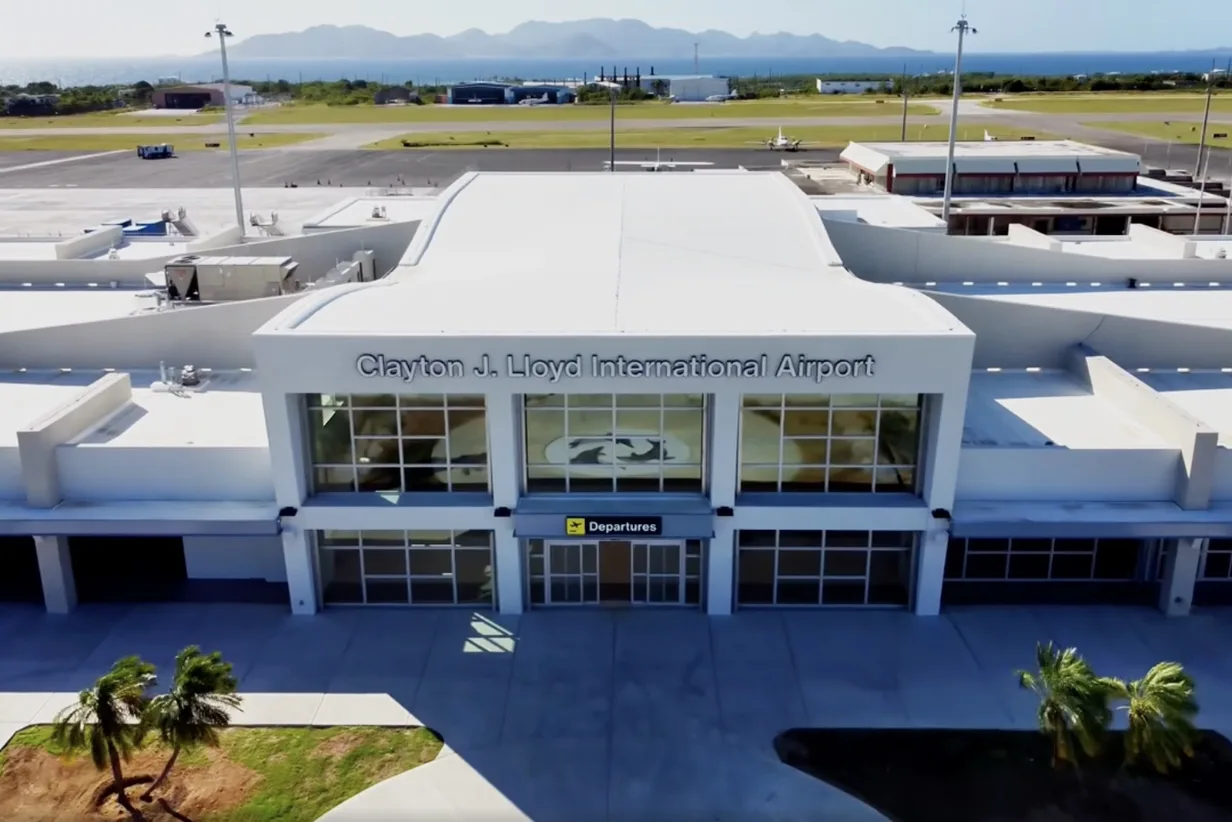
- Clayton J. Lloyd Intl (AXA)
- Currency
- East Caribbean $ (USD ok)
- Language
- English
- Time zone
- AST (UTC-4)
- Best time
- Dec to Apr
- Power
- 110V · Type A & B
- Entry form
- C-169 customs
Do I need a visa for Anguilla?
Probably not. Anguilla is a British Overseas Territory, and for tourism citizens of the US, Canada, the UK, the EU and most Commonwealth countries do not need a visa. You get an entry stamp on arrival, usually for an initial stay of up to three months, which can sometimes be extended on the island. There is no tourist card to buy and no online pre-registration to pay for.
A visa only enters the picture for specific nationalities that do not qualify for visa-free entry. If that is you, arrange it in advance through Anguilla Immigration or the nearest UK mission, and remember that most travelers connect through Sint Maarten or St. Kitts, so you may need that country's entry rules to line up too. Everyone else: your passport is the document that matters. Confirm your own status before you fly, because these lists change.
Entry requirements
Visa-free does not mean question-free. Have these ready before you reach the immigration desk, because any one of them can get asked for, and a return ticket gets checked at the airline counter or ferry desk before you even board.
- A valid passportAnguilla officially asks for validity covering the duration of your stay, but airlines and connecting countries like Sint Maarten still lean on the six-month rule, so carry six-plus months when you can.
- Proof of onward travelA return or onward ticket out of Anguilla. Airlines and the ferry enforce this because the carrier eats the cost of taking you back if you are turned away.
- Confirmed accommodation & fundsThe address where you are staying and evidence you can cover your trip, by card or bank statement. Rarely demanded, technically expected.
The C-169 customs declaration, the form Anguilla still uses
Where many islands have gone digital, Anguilla keeps a short paper form, and it is mandatory. The C-169 is filled in by every passenger arriving by air or sea, covering your identity, your flight or vessel, where you are staying, and anything you are bringing in over the duty-free limits. It is one A4 page and takes a couple of minutes.
- 1Required at every port of entry
Air arrivals at AXA, ferry arrivals at Blowing Point and private yachts all use the same C-169.
- 2One traveler can declare for the family
A single declaration may cover a spouse and children under 18 traveling together. Other adults complete their own. Passports are still checked individually.
- 3Fill it in before you reach the desk
Print and complete it before you fly, or fill it in en route, and pack a working pen in your carry-on so you are not borrowing one in the queue. Hand it over with nothing to declare, or tick what you are carrying if you are over the limits below.
Official forms & downloads
Download the official Anguilla C-169 customs declaration below, complete it before you reach the desk, and hand it over on arrival at AXA or Blowing Point. It is one A4 page; one form can cover a spouse and children under 18 traveling together.
Anguilla Customs Declaration (C-169)
The mandatory customs form for every passenger arriving by air or sea. Free to download, no account required.
How long can I stay in Anguilla?
Anguilla typically grants visa-free visitors an initial stay of up to three months, with the exact number of days at the immigration officer's discretion and written or stamped in your passport. Extensions are sometimes possible through the immigration department on the island for a fee. Glance at your stamp before you leave the desk so you know your authorized date, and do not overstay, it complicates your departure and any future visit.
Working, studying, or staying long term? That is a different permit entirely, and not something to improvise on a tourist stamp. Arrange it in advance through Anguilla Immigration before you travel.
Customs & duty-free allowances
Bring more than the personal allowance and it must be declared on the C-169. Officers may wave through small overages, but expect to pay duty on anything beyond the thresholds, and on commercial quantities. The figures below are the limits Anguilla Customs publishes for adults aged 18 and over claiming exemptions; confirm the current numbers with Anguilla Customs before you rely on them.
| Item | Allowance (per adult 18+) |
|---|---|
| Tobacco | 200 cigarettes or 50 cigars or 230g of tobacco |
| Spirits | 1 litre (40oz) of spirits |
| Wine | 1 litre (40oz) of wine |
| Perfume | 170ml (6oz) perfumed spirits and 340ml (12oz) eau de toilette |
| Foodstuffs | Up to EC$150 in value |
| Currency | Declare cash over US$10,000 equivalent |
Prohibited & restricted items
The following are prohibited or controlled on arrival. Penalties for undeclared restricted goods range from confiscation to fines and prosecution. When in doubt, declare it on the C-169.
- Permit / inspection requiredFirearms and ammunition (advance permit from the Royal Anguilla Police Force), drones (may be subject to aviation restrictions and permit requirements, verify before you pack one), and pets (health certificate and import permit).
- Declare on arrivalFresh fruit, plants, seeds and meats (subject to agricultural inspection), and cash over US$10,000. Carry prescription medicines in original packaging with the prescription.
- ProhibitedIllegal drugs and controlled substances, spearguns and certain fishing gear, counterfeit goods, and protected marine life or coral taken from local waters.
Arriving in Anguilla, by air & by sea
There are two ways in. Fly directly into Clayton J. Lloyd International Airport (AXA), or fly into Sint Maarten (SXM) and cross to Blowing Point by ferry. Whichever you choose, passport and onward ticket in hand, the drill is short:
- 1 · ImmigrationHand over your passport. They may ask why you are here, where you are staying and how long. Check the stamp shows the right date and your authorized days before you walk away.
- 2 · BaggageCollect your bags before customs (a short walk at AXA; handled dockside at Blowing Point).
- 3 · Customs (C-169)Hand over your completed C-169. Nothing over the limits? Walk through. Otherwise declare it; random screening happens.
Get a local driver waiting
Skip the queue at AXA or Blowing Point. Book a private transfer, arrange an island tour, or find a local driver for a day at Shoal Bay or a boat trip to Sandy Island.
Money matters in Anguilla
The official currency is the East Caribbean Dollar (XCD), pegged to the US Dollar at about EC$2.70 to US$1. In practice, US dollars are accepted almost everywhere, and you will often be quoted and given change in a mix of the two. Cards are widely taken at hotels and restaurants; carry some cash for beach bars, taxis and small vendors.
| Feature | Details |
|---|---|
| Currency | East Caribbean Dollar (XCD) · ~EC$2.70 = US$1 · US dollars widely accepted |
| Entry cost | No visa fee or tourist card for visa-free travelers; a departure tax applies on the way out |
| Cards & ATMs | Accepted at hotels and restaurants; ATMs in The Valley and at the airport. Carry cash for small vendors |
| Tipping | A service charge is often added to bills; 10% to 15% is customary where it is not |
| Departure tax | About US$28 per adult by air; by ferry roughly US$28 to French St. Martin and US$36 to Dutch Sint Maarten. May already be in your fare; confirm rates and bring cash |
| Driving | On the left; visitors must buy a temporary Anguilla driving permit (around US$20, confirm the current fee) on top of a valid home licence |
| Electricity | 110V, 60Hz; Type A & B plugs (UK/EU travelers need an adapter) |
Best time to visit Anguilla
Warm and breezy year-round, roughly 26°C to 31°C (79°F to 88°F). The trade winds keep it comfortable, but timing affects price, crowds and which restaurants are open.
| Season | Months | What to expect |
|---|---|---|
| Dry / peak | Dec to Apr | Sunniest, driest, liveliest, and most expensive; book hotels and villas well ahead |
| Shoulder | May to Jun & Nov | Warm, quieter and better value; most places open |
| Low / hurricane | Aug to Oct | Hottest and wettest, some hotels and restaurants close; lowest prices |
Top things to do in Anguilla
The beaches are the headline, thirty-three of them, but there is sailing in the island's blood, offshore cays made for snorkeling, and a low-key food and music scene that punches far above the island's size.
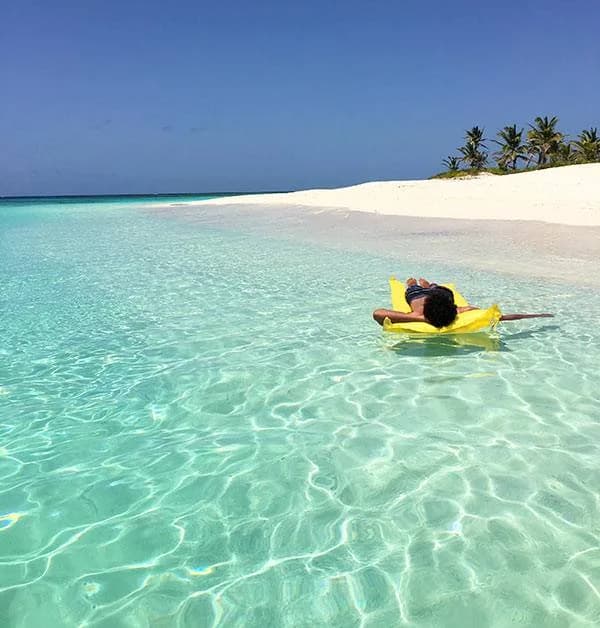
Shoal Bay East
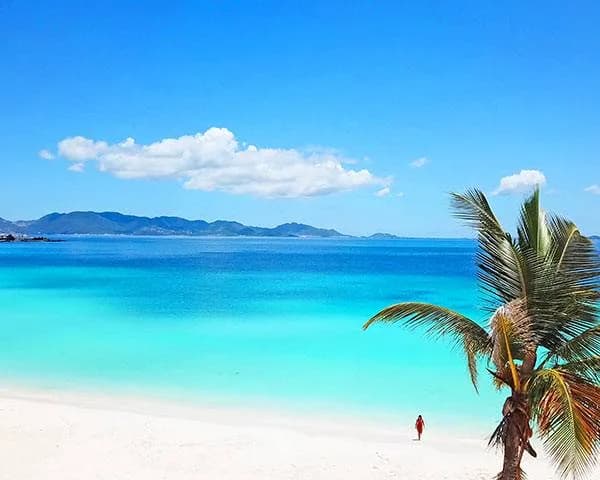
The postcard beach: two miles of soft white sand and clear shallow water, with beach bars and easy snorkeling at the reef's edge. Routinely rated among the best beaches in the Caribbean.
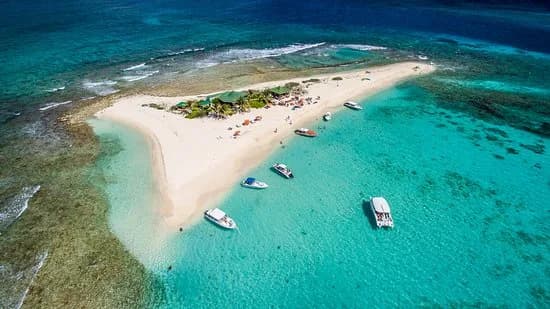
Sandy Ground & Sandy Island
The island's sailing and nightlife hub on Road Bay, with beach bars and live music. Hop a short boat to Sandy Island, a tiny palm-dotted cay with a grill and snorkeling just offshore.
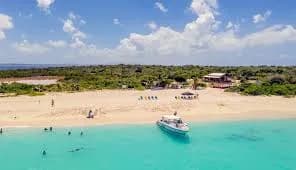
Prickly Pear Cays
A pair of uninhabited cays a short sail from Road Bay: vivid reefs, a shipwreck snorkel, a sandbar lunch and water in every shade of blue. A classic day trip.
A sample day in Anguilla
Built around the beaches and a boat trip. Adapt to your base: an early swim before the heat, a long lunch by the water, an afternoon on a cay, and dinner with your toes in the sand.
- 7:30 amSunrise swim at Shoal BayThe sand to yourself before the day-trippers arrive, coffee and a pastry at a beach café.
- 10:00 amBoat to Sandy IslandShort hop from Sandy Ground; snorkel the reef and laze on the cay.
- 1:00 pmLunch on the sandGrilled Anguillian crayfish or fresh lobster at a beach grill on Road Bay.
- 3:30 pmExplore the cays or restSnorkel Prickly Pear, or a quiet afternoon at your villa.
- 6:00 pm
Where to stay, best areas in Anguilla
There is no single resort strip, accommodation is spread along the beaches. Choose your bay based on the trip you want:
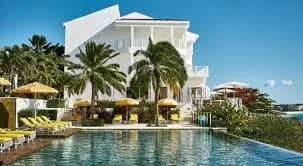
Meads Bay
Flagship resorts and some of the island's best restaurants on a long west-coast beach. Best for fine dining, sunsets and upscale comfort.
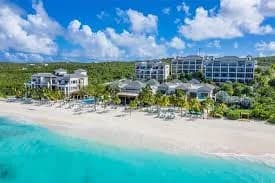
Shoal Bay East
Smaller hotels and villas on a world-famous beach with bars and snorkeling. Best for laid-back beach days and value.
Official Anguilla resources
This is an independent travel guide by CustomsBreeze. Always confirm current requirements with the official sources below before you travel:
- gov.aiGovernment of Anguilla, including the Customs Department and Immigration
- ivisitanguilla.comAnguilla Tourist Board, official visitor information