Caribbean Customs Forms & Entry Requirements
Everything you need to clear customs and immigration across the Caribbean and Central America, in one place. Find your destination's official entry form, duty-free allowances, prohibited items, currency rules, and airport arrival steps, based on official government sources. Free to read, no signup required.
- Based on official government sources
- Always free
- No signup to read
Last reviewed June 2026 · Compiled from official customs and immigration authorities. View sources

How Caribbean entry forms work
Every Caribbean nation handles arrivals differently. Some, like Jamaica and Belize, use free online declaration portals you complete before you fly. Others, such as Turks & Caicos, still hand out paper immigration cards on the plane. A few, including St. Vincent & the Grenadines, take a verbal customs declaration at the desk with no online form at all. Knowing which system your destination uses, and what you're allowed to bring, is the difference between a five-minute arrival and a stressful one. Choose your country below for the exact, current process.
Traveler-type guides
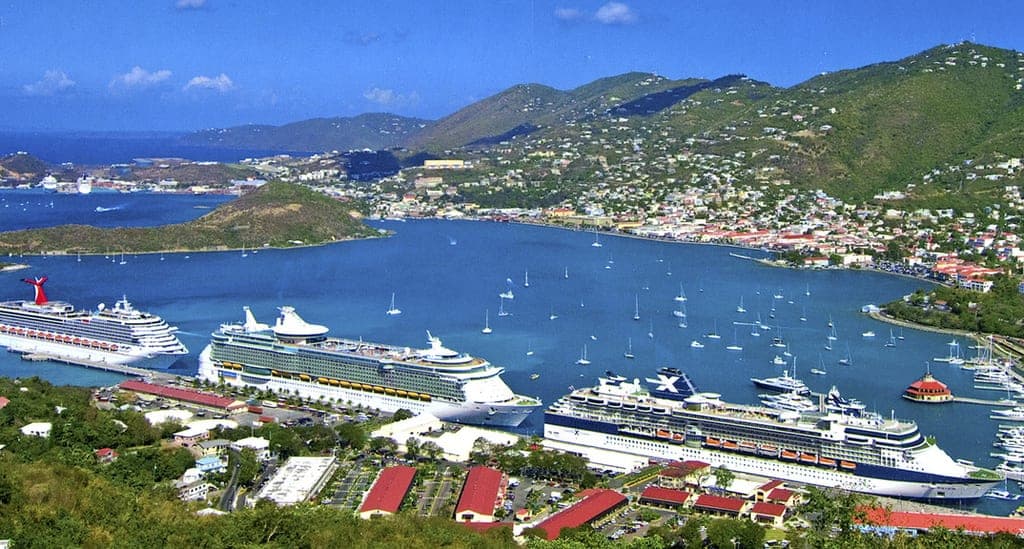
Cruise Passenger Guide
Day visitor vs. home-port arrivals, what forms cruise lines file for you, and what you still need to complete yourself at each Caribbean port.
What Can I Bring Back?
US $800 exemption (or $1,600 from the USVI), UK, Canada, and EU duty-free allowances for travelers returning home from the Caribbean, with per-country tables.
Choose your destination
Select a country for its complete entry guide: the official customs form, immigration requirements, duty-free limits, restricted items, currency thresholds, airport and cruise-port arrival steps, and how to arrange a private transfer once you land.
Greater Antilles & Atlantic
6 destinations
Paper on arrivalFull guideThe BahamasC7 immigration card plus a customs declaration on arrival at Nassau or Freeport.
Online formFull guideJamaicaFree Enter Jamaica online immigration & customs declaration before you fly.
No customs formFull guidePuerto RicoA US territory, so no customs form for domestic arrivals, but a USDA agriculture check applies.
Leeward & Virgin Islands
5 destinations
Paper on arrivalFull guideAnguillaMandatory paper C-169 customs declaration completed by every passenger arriving by air at AXA or by ferry at Blowing Point.
Paper on arrivalFull guideSt. Kitts & NevisImmigration & customs cards completed on arrival at Robert L. Bradshaw International.
Online formFull guideAntigua & BarbudaFree ArriveAntigua digital entry form completed online before you fly into V.C. Bird International.
Windward Islands
4 destinations
Online formFull guideSaint LuciaOnline immigration form before travel, with a customs declaration at Hewanorra International.
Verbal declarationFull guideSt. Vincent & the GrenadinesNo online portal, just a paper immigration card plus a verbal customs declaration at the desk.
Southern Caribbean
4 destinations
Online formFull guideBarbadosFree online Barbados Immigration/Customs (ED) form completed before arrival at Grantley Adams.
Central America
3 destinations
Online formFull guideBelizeFree Belize online immigration & customs declaration completed before you fly into BZE.
Caribbean customs at a glance
Form type, duty-free allowance, cash declaration threshold, and the cruise-passenger process for every destination in this guide. Allowances are a guide, always confirm the exact figures on your country page before you pack.
| Destination | Entry form | Duty-free allowance | Cash declaration | Cruise process |
|---|---|---|---|---|
| Colombia | Online formCheck-MIG (free online, within 72h) | Personal allowance set by DIAN; verify limits | US$10,000 | Cartagena cruise terminal (Manga); DIAN if over allowance |
| Costa Rica | No customs formNo universal form (declaration if asked) | 5L alcohol, 400 cigarettes, goods to US$500 | US$10,000 | Customs channel on arrival; Puntarenas & Limón ports |
| The Bahamas | Paper on arrivalPaper on arrival | 1L spirits/wine, 200 cigarettes, goods to ~US$100 | BSD 10,000 (~US$10,000) | Paper form in arrivals hall if not pre-filed |
| Jamaica | Online formOnline (Enter Jamaica) | 1L spirits, 1L wine, 200 cigarettes, personal effects | US$10,000 | Computer stations at airport if not pre-filed |
| Puerto Rico | No customs formNone (US territory) | No customs allowance between PR and US mainland | US$10,000 (US federal rule) | USDA agriculture screening on departure |
| Turks & Caicos | Paper on arrivalPaper on arrival | Goods to ~US$1,000, ~1L spirits, 200 cigarettes | US$10,000 | Paper form only if over the allowance |
| Dominican Republic | E-ticket portalE-Ticket | 3L alcohol, 20 packs cigarettes, goods to ~US$500 | US$10,000 | Free E-Ticket required arrival and departure |
| Cayman Islands | Paper on arrivalPaper on arrival | 200 cigarettes, 1L spirits or 4L wine, personal effects | CI$10,000 (~US$12,000) | Streamlined, cruise line may handle paperwork |
| St. Kitts & Nevis | Paper on arrivalPaper on arrival | 200 cigarettes, ~1.5L wine or spirits, personal effects | Declare over ~US$10,000 | Simplified processing for day visitors |
| Antigua & Barbuda | Online formOnline (ArriveAntigua) | 1L spirits, 200 cigarettes, personal goods | US$10,000 | Digital form with QR code required on arrival |
| St. Thomas (USVI) | No customs formNone (US territory) | US$1,600 CBP exemption on return to mainland | US$10,000 (US federal rule) | US Customs clearance on departure |
| Sint Maarten | Paper on arrivalPaper on arrival | Free port, personal goods admitted duty-free | ~US$11,000 equivalent | Cruise line generally handles day visitors |
| Saint Lucia | Online formOnline (immigration form) | ~1.1L spirits/wine, 200 cigarettes, gifts to ~US$100 | US$10,000 | Form via travelslu.gov.lc, QR on arrival |
| St. Vincent & the Grenadines | Verbal declarationVerbal + paper card | ~1.1L spirits/wine, 200 cigarettes, goods to ~US$250 | Declare over ~US$10,000 | Paper card on flight, verbal declaration at desk |
| Grenada | Online formOnline (ED Card) | 1L wine or spirits, 200 cigarettes, goods to ~US$110 | US$10,000 | ED Card required arrival and departure |
| Dominica | Online formOnline (ED Card) | 200 cigarettes or 50 cigars, ~1L spirits, personal effects | Declare over ~US$10,000 | Day visitors processed at cruise terminal |
| Barbados | Online formOnline (immigration & customs) | 1L spirits or wine, 200 cigarettes, gifts to ~US$50 | BDS 10,000 (~US$5,000) | Same online travel form may be required |
| Aruba | Online formOnline (ED Card) | 1L spirits or 2.25L wine, 200 cigarettes | US$10,000 (~AWG 17,900) | Cruise passengers generally handled by ship |
| Trinidad & Tobago | Online formOnline (Arrival/Departure Card) | 1.5L wine or spirits, 200 cigarettes, goods to ~TT$3,000 | TT$20,000 (~US$3,000) | Same online card with QR may be required |
| Curaçao | Online formDigital Immigration Card | 1L spirits or 2.25L wine, 200 cigarettes | ANG 20,000 (~US$11,000) | Digital Immigration Card may be required |
| Belize | Online formOnline (immigration & customs) | ~1L spirits or wine, 200 cigarettes, personal goods | US$10,000 | Day-call visitors processed at cruise terminal |
| Panama | No customs formNone (passport stamp) | Personal-use alcohol & tobacco for adults 18+ | US$10,000 (free traveler's affidavit) | No form unless over the allowance or US$10,000 |
Do I need a visa for the Caribbean?
For tourism, holders of US, UK, EU, and Canadian passports do not need a visa in advance for any destination in this guide. You receive a visa-free entry stamp or permit on arrival, valid for a set number of days. The table below shows how long you can stay, plus any digital permit you still need to complete first.
| Destination | Visa (US / UK / EU / Canada) | Entry permit to complete |
|---|---|---|
| Colombia | Visa-free, up to 90 days (most nationalities) | Check-MIG (free online, within 72h) |
| Costa Rica | Visa-free, up to 180 days (Group 1) | No universal form (declaration if asked) |
| The Bahamas | Visa-free, 90 days | Paper on arrival |
| Jamaica | Visa-free, 6 months | Online (Enter Jamaica) |
| Puerto Rico | US rules; ESTA/visa for non-US | None (US territory) |
| Turks & Caicos | Visa-free, 30 days (extendable) | Paper on arrival |
| Dominican Republic | Visa-free, 30 days (extendable) | E-Ticket |
| Cayman Islands | Visa-free, 30 days | Paper on arrival |
| St. Kitts & Nevis | Visa-free, 90 days | Paper on arrival |
| Antigua & Barbuda | Visa-free, 90 days | Online (ArriveAntigua) |
| St. Thomas (USVI) | US rules; ESTA/visa for non-US | None (US territory) |
| Sint Maarten | Visa-free, 90 days | Paper on arrival |
| Saint Lucia | Visa-free; US/Canada 42 days, UK/EU up to 90 | Online (immigration form) |
| St. Vincent & the Grenadines | Visa-free, 1 month (extendable) | Verbal + paper card |
| Grenada | Visa-free; US/Canada 3 months, UK/EU up to 90 | Online (ED Card) |
| Dominica | Visa-free, ~21 to 90 days | Online (ED Card) |
| Barbados | Visa-free, up to 6 months | Online (immigration & customs) |
| Aruba | Visa-free; US 90 days, others 30 days | Online (ED Card) |
| Trinidad & Tobago | Visa-free, up to 90 days | Online (Arrival/Departure Card) |
| Curaçao | Visa-free, short stays | Digital Immigration Card |
| Belize | Visa-free, up to 30 days | Online (immigration & customs) |
| Panama | Visa-free, up to 180 days (US/Canada), 90 (most others) | None (passport stamp) |
Puerto Rico and the U.S. Virgin Islands are US territories, so US citizens enter as a domestic trip, while non-US travelers must meet standard US entry rules (ESTA or a US visa). Visa-free stay lengths can differ by nationality and are subject to change, so confirm your exact allowance on the destination page and with the official authority before you travel.
Understanding Caribbean customs & entry
The plain-English answers travelers search for most, what each form does, what you can bring, and how arrival actually works.
What is a customs declaration?
A customs declaration is your formal statement to a country's customs authority about what you are bringing across its border. It typically covers four things: currency above the reporting threshold, goods that exceed your personal duty-free allowance, commercial or business items, and anything restricted such as food, plants, seeds, medicines, or animal products. Most Caribbean nations accept one declaration per traveler, and many let a single declaration cover a family traveling together.
Being honest matters. If you have nothing to declare you still complete the form and use the green channel. If you do exceed an allowance, declaring it usually means paying a small duty, while failing to declare can mean fines, seizure, or delays. When you are unsure whether an item counts, declare it and ask, the officer would far rather you ask than guess.
Immigration form vs customs form
An immigration form records who you are and where you are staying, while a customs form records what you are carrying. Immigration (sometimes called an embarkation or disembarkation card) captures your passport details, flight, length of stay, and accommodation address. Customs captures goods, currency, and restricted items. They serve different agencies even when they are printed on one piece of paper.
Some countries now merge both into a single online process, for example Jamaica's Enter Jamaica portal or the Dominican Republic E-Ticket, so you complete one digital form and receive a single QR code. Others still hand out two separate paper cards on the plane. Your destination page shows which model applies and whether you complete it before you fly or on arrival.
Online & digital entry forms
A growing number of Caribbean countries have moved their declarations online, so you complete entry before you reach the airport. Jamaica, Belize, Grenada, Saint Lucia, Barbados, Aruba, Curaçao, Antigua, and, since 2026, Trinidad and Tobago all use free online portals. You enter your details, submit, and receive a QR code or confirmation to show on arrival.
Three habits save you stress. First, use only the official government portal, third-party sites often charge a fee to submit a form that is free. Second, complete it within the window the country allows, commonly up to 72 hours before travel. Third, screenshot or download the QR code rather than relying on airport signal, so you can present it instantly even when you are offline in the arrivals hall.
Duty-free allowances
Most Caribbean nations allow each adult a personal duty-free allowance before any duty is charged. As a rough regional norm, that allowance covers around 1 liter of spirits or wine, 200 cigarettes (or 50 cigars or 250 grams of tobacco), and a capped value of gifts and personal goods. Allowances apply per adult, so a couple can usually combine them, and the alcohol and tobacco allowance is generally limited to travelers aged 18 and over.
These figures are a guide, not a guarantee. Some places are more generous, the U.S. Virgin Islands for example gives returning U.S. travelers a US$1,600 exemption, well above the US$800 norm for most of the Caribbean. Others are stricter on specific goods. Always confirm the exact alcohol, tobacco, and value limits on your destination page before you pack, especially if you are carrying gifts or electronics.
Restricted & prohibited items
Common Caribbean-wide restrictions include firearms and ammunition, illegal drugs, and fresh food, plants, and seeds. Agricultural controls are taken seriously. Fresh produce, meat, plants, soil, and seeds are frequently banned or need a permit because they can introduce pests and disease that threaten local farming. Commercially packaged, sealed foods are usually more accepted. Spearguns, marine products like coral and turtle shell, and some medicines also face restrictions.
Two specifics catch travelers out. Cannabis is decriminalized for personal use on several islands, but importing it across any border remains a criminal offense everywhere, local tolerance does not extend to bringing it in. And camouflage clothing is illegal for civilians in several Eastern Caribbean nations, including Barbados and Saint Lucia, so leave camo-print clothing and bags at home. Check the prohibited-items list on your destination page before you travel.
Currency declaration rules
Most Caribbean countries require you to declare cash above a set threshold, commonly the equivalent of US$10,000. The threshold usually covers all monetary instruments combined, not only banknotes, so traveler's cheques, money orders, and similar bearer instruments count toward the limit. It typically applies per person, and in some countries per family group, so a couple carrying a large sum together should check whether they declare jointly.
The exact figure varies. Trinidad and Tobago uses TT$20,000, Curaçao uses ANG 20,000 (about US$11,000), and the Cayman Islands uses CI$10,000 (about US$12,000). Declaring cash is a reporting requirement, not a tax, and carrying over the limit is legal as long as you declare it. Failing to declare, however, can mean seizure and penalties, so confirm your destination's threshold before you travel.
Arrival procedures, step by step
Caribbean arrivals follow the same five-step order almost everywhere, and knowing it keeps a busy customs hall stress-free. First, complete any required online entry form before you fly and save the QR code or confirmation offline. Second, on landing, head to immigration and present your passport, return ticket, and accommodation details. Third, collect your checked baggage. Fourth, present your customs declaration and use the correct channel, green for nothing to declare or red if you are carrying goods over your allowance.
Fifth, exit to the arrivals hall and meet your transfer. The biggest single time-saver is doing the paperwork in advance and pre-booking your ride, so you walk straight from baggage claim to a waiting driver instead of joining a taxi queue after a long flight.
Cruise passenger requirements
Cruise arrivals usually follow a different process from air passengers. On most Caribbean itineraries the cruise line files a bulk declaration with the port on behalf of all passengers, so you simply walk ashore with your cruise card and a photo ID. You generally do not complete the online entry form air travelers use, because you are a day visitor rather than an overnight arrival.
Two situations still need attention. If you buy goods ashore, especially alcohol, tobacco, or jewelry, those purchases may need declaring when you reboard or when you return home, where your home country's duty-free limits apply. And if you are joining or leaving a ship rather than staying onboard, an embarkation or disembarkation port, you go through full immigration and customs like an air passenger. Port-specific details are on each country page.
Getting around once you land
Form filed, bags collected, now sort the ride. Pick what fits your trip, all booked with licensed local operators and a fixed price agreed before you travel.
Private Airport Transfer
Meet & greet at arrivals, fixed price, direct to your hotel. Your driver tracks your flight, no taxi-rank scramble.
Book a transferCar Rental
Prefer to drive yourself? Reserve a vehicle from a trusted local agency and explore the island on your own schedule.
Browse rental carsLocal Drivers
Book a vetted local driver by the trip or the day, someone who knows the parish roads, ports, and best stops.
Find a driverTours & Experiences
Waterfalls, rum tours, reef snorkeling and more, handpicked experiences led by locals who grew up there.
Explore toursCaribbean customs & entry FAQs
Land, clear customs, and you're on your way.
Find your destination's exact entry process, then lock in your ride before you fly. Request a fixed-price quote, book a licensed local driver, or reserve a rental car and skip the airport taxi line.
Sources & how we keep this current
Last reviewed June 2026Every entry requirement on this site is compiled directly from the official customs and immigration authority for each destination, and re-checked on a rolling basis. Rules change, so always confirm details on the official government portal before you travel. Representative primary sources include: