Dominican Republic · La Hispaniola
Dominican Republic E-Ticket, Customs & Entry Requirements
Before the first cold Presidente, before the rice and beans, before that wall of wet Caribbean heat hits you on the jet bridge, there is a form. The Dominican Republic's is the E-Ticket, and the good news is it's free, digital and takes about ten minutes. Fill it out at the official portal, eticket.migracion.gob.do, save the QR code to your phone, and walk through customs like you've done this before. This guide covers the E-Ticket, passports, visas, the tourist card, duty-free allowances, and how to get out of Punta Cana (PUJ) or Santo Domingo (SDQ) and into the part of the trip that actually matters.
Planning your Dominican Republic trip?
Lock in your airport transfer early — book a verified private driver, or request a tailored travel quote.
- Capital
- Santo Domingo
- Main airports
- Punta Cana (PUJ) & SDQ
- Currency
- RD$ / DOP (floating)
- Language
- Spanish
- Time zone
- AST (UTC−4)
- Best time
- Dec to Apr
- Power
- 110–120V · Type A & B
- Entry form
- E-Ticket (free, mandatory)
A note on accuracy. Entry, visa and customs rules change without notice. Every figure here was checked against the Dirección General de Migración and official government sources, but always confirm current requirements through the official links before you travel.
How to complete the Dominican Republic E-Ticket
The E-Ticket is mandatory for every traveller, foreign visitors and Dominicans coming home alike. You fill out a separate form for arrival and for departure. It lives at eticket.migracion.gob.do, where immigration, customs and the public-health questions are bundled into one submission that produces a QR code. The E-Ticket is not a visa, and it does not replace the tourist card.
- Open the official portalGo to eticket.migracion.gob.do on any phone, tablet or computer. Select English in the top-right language menu and choose “New E-Ticket.” Have your passport, flight details and accommodation address ready.
- Enter your arrival details & declarationAdd personal and passport information exactly as printed, your flight number and airline, where you are staying, and answer the customs and health questions. One submission per person.
- Submit & save your QR codeSave the QR code to your phone and keep a printed or screenshot backup — airport Wi-Fi can be slow and sometimes requires an SMS code you can't yet receive. Complete a second E-Ticket before your departure flight.
Is the E-Ticket free? Watch for third-party fees
Yes, the official E-Ticket is free. It's a government form on the state portal eticket.migracion.gob.do (look for the .gob.do domain and the Dominican seal). There is a cottage industry of third-party "assisted service" sites, some with very official-sounding names, that will fill in the same free form for you and charge for the privilege. That's optional — it's your money.
If a site charges you to file the E-Ticket itself, you're paying a middleman, not the government. The tourist card is a separate thing and is normally already baked into your airfare — see "Money matters" below.
The Dominican Republic E-Ticket official website
The official website is eticket.migracion.gob.do, operated by the Dirección General de Migración (the country's General Directorate of Migration). It is the only official site to complete the E-Ticket, and it is free to use. Look for the .gob.do domain and the Dominican government seal before entering any personal or passport details.
To reach it, go directly to eticket.migracion.gob.do, select English in the top-right language menu, and choose "New E-Ticket." Avoid third-party or look-alike sites that charge a fee for the same free government form.
Entry requirements
Have these ready before you reach immigration at any Dominican airport:
- A valid passport bookRequired for all visitors arriving by air. Passport cards are not accepted for international flights. A temporary measure through 31 December 2026 lets tourists from the US, Canada, UK, EU and several Latin American countries enter on a passport valid for the duration of stay; otherwise six months' validity beyond your dates is standard. Verify current rules with a Dominican consulate.
- E-Ticket QR codeYour arrival E-Ticket confirmation from eticket.migracion.gob.do, ready on your phone or in print. This is the most common cause of delays at the airport.
- Tourist cardNormally included in your airfare for air arrivals — check your ticket. If arriving by land or sea, pay around US$10 / €10 at the border or port.
- Return or onward travel & accommodation
Do I need a visa? Visa requirements by nationality
Most short-stay tourists don't need a visa and are admitted for up to 30 days, which can be extended. Permitted length is ultimately the immigration officer's call — confirm your own nationality's status with a Dominican embassy or consulate before you travel.
| Country / region | Visa status | Typical stay |
|---|---|---|
| USA & Canada | Visa free (tourist card) | Up to 30 days, extendable |
| United Kingdom | Visa free (tourist card) | Up to 30 days, extendable |
| EU / Schengen | Visa free (tourist card) | Up to 30 days, extendable |
| Most Latin American countries | Visa free (tourist card) | Up to 30 days, extendable |
| Holders of valid US / Canada / UK / Schengen visa or residency | Generally admitted | Up to 30 days, extendable |
| Other nationalities | May require a visa | Apply or confirm in advance |
Stay longer without extending and you'll pay an overstay fee on departure (reported from ~US$26; confirm officially). Extension applications are handled by the Dirección General de Migración in Santo Domingo.
Duty-free allowances for the Dominican Republic
These apply per traveller aged 18 and over, for personal, non-commercial goods. Go over the line, or bring anything commercial, and it's dutiable. When in doubt, declare. Confirm current limits with the Dirección General de Aduanas (aduanas.gob.do) before relying on them.
| Category | Allowance |
|---|---|
| Alcohol | Up to 3 litres |
| Tobacco | 20 packs of cigarettes OR 25 cigars OR 200g of tobacco (one option; some sources cite up to 35 cigars — verify) |
| Electronics | One camera, one laptop, one phone treated as personal baggage |
| Gifts & other goods | New goods & gifts up to about US$500 in value; excess is dutiable |
| Cash & currency | Declare US$10,000+ (or equivalent) on entry or exit |
Go over and you may owe Dominican import tax, ITBIS (18%) plus, on luxury items, a selective-consumption tax. Allowances are per adult and don't pool between travellers. Confirm tax rates and the US$500 threshold with Customs before relying on them for 2026.
Prohibited & restricted items
Violations mean seizure, fines or worse. When in doubt, declare.
- Must be declaredCash of US$10,000 or more, commercial merchandise, and large quantities of anything. Carry prescription medications in original packaging with the prescription — psychotropics especially.
- Permit / inspection requiredFirearms and ammunition (import licence required), pets (full vaccination record plus a recent vet health certificate), and plants, seeds and some agricultural products.
- ProhibitedIllegal narcotics and narcotic-containing medications, fresh meat and many animal or agricultural products, counterfeit and pirated goods, and protected cultural artefacts (including anything pulled from the sea). Some orchids and protected species cannot be exported. Keep vapes in carry-on and confirm current rules.
At the airport — arrival
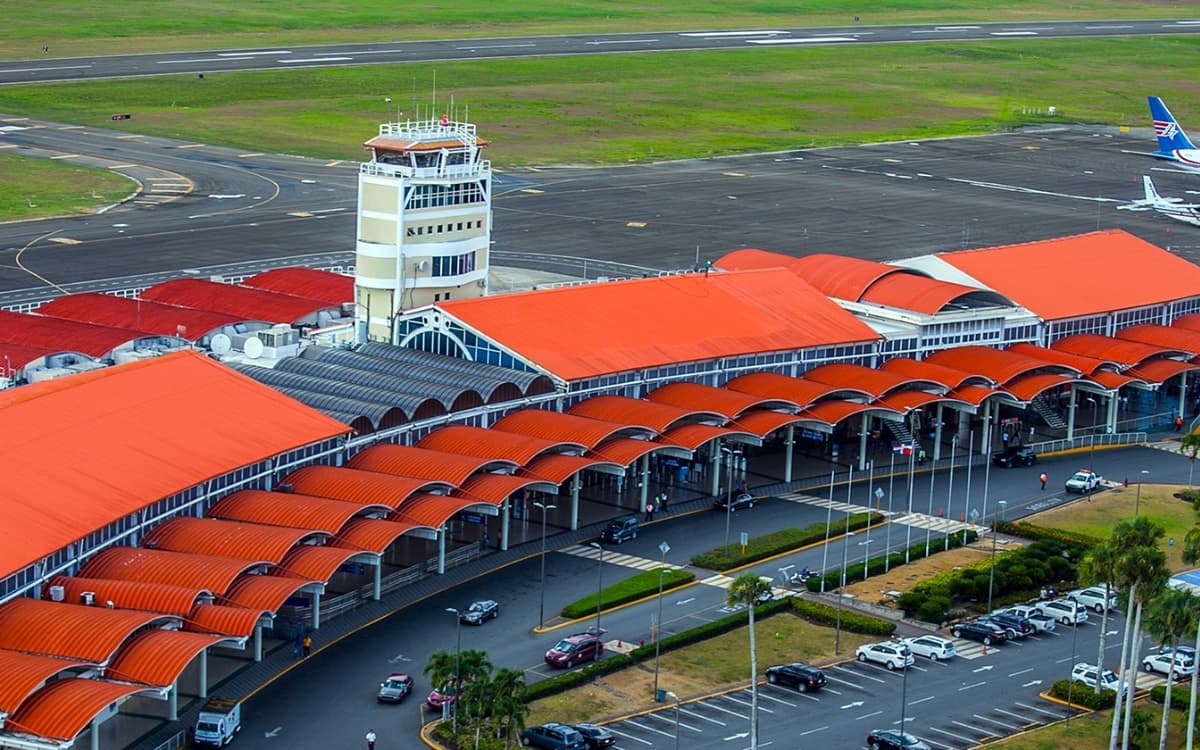
Most people land at Punta Cana (PUJ) in the east or Las Américas (SDQ) outside Santo Domingo; the rest come through Santiago (STI), Puerto Plata (POP), La Romana (LRM) or Samaná El Catey (AZS). They all run the E-Ticket system. Passport and QR code in hand:
- 1 · ImmigrationPresent your passport and E-Ticket QR code. Officers may scan it straight off your phone and ask how long you're staying and where.
- 2 · Baggage claimGrab your checked bags before proceeding to customs.
- 3 · CustomsDeclare anything restricted; expect possible screening. Luggage may go through an X-ray machine.
- 4 · Arrivals hall
Skip the arrivals-hall scramble
Land, walk out, and find your name on a sign. Book a verified English-speaking driver to your hotel or resort before you fly.
Money matters
The Dominican Peso (RD$ / DOP) is the local currency, and unlike some of its Caribbean neighbours it floats — no fixed peg. It's hovered around RD$60 to US$1 recently, but check the current rate. Dollars work in tourist areas; you'll often do better paying in pesos or by card.
| Feature | Details |
|---|---|
| Exchange rate | Floating; approximately RD$60 ≈ US$1 (verify the current rate) |
| Tourist card | Normally included in your airfare (~US$10) for air arrivals; by land/sea, pay ~US$10 / €10 at entry |
| US dollars | Widely accepted at resorts; cards at most hotels and larger restaurants |
| Tipping | A service charge is often added; ~10% extra for good service is customary |
| Departure tax | Generally included in airfare for air passengers |
| Overstay fee | Sliding-scale fee paid on departure if you stay past your authorised period (reported from ~US$26; confirm officially) |
| Currency declaration | Declare cash or negotiable instruments at or above US$10,000 |
| Electricity | 110–120V; Type A & B plugs (UK and EU travellers need a plug adapter) |
| Driving | On the right; most tourists use their home licence for short stays, though some rental companies recommend an International Driving Permit |
Health, water & food
The Dominican Republic is easy on most travellers, but a little sense goes a long way.
- Before you goCheck current advice with your doctor and an official health authority (CDC or your national equivalent). Dengue turns up in the Caribbean, so pack repellent. Vaccination recommendations vary by traveller and itinerary — confirm what applies to you. Travel insurance with medical-evacuation cover is strongly recommended.
- Water & foodStick to bottled water — tap water is not reliably safe to drink outside resorts. Resort buffet food is generally safe; outside resorts, favour busy spots with high turnover. Dominican cooking — sancocho, la bandera, fresh seafood — is a highlight.
- SunIt's stronger than your ego. Hydrate, find shade and wear sunscreen, especially the first few days.
Best time to visit the Dominican Republic
Warm year-round, roughly 25°C to 31°C (77°F to 88°F). What changes is rain, crowds and price.
| Season | Months | What to expect |
|---|---|---|
| Peak / dry season | Dec to Apr | Sunniest, calmest seas, busiest and priciest — book early |
| Shoulder season | May to Jun | Good value, warm temperatures, occasional brief showers |
| Rainy / hurricane season | Jun to Nov | Lowest prices, lush scenery; rain often comes in short bursts; direct storm hits are possible — check forecasts |
Humpback whale season in Samaná runs roughly January to March — one of the best whale-watching experiences in the Caribbean. The Atlantic hurricane season runs June to November; consider travel insurance.
Top things to do in the Dominican Republic
White-sand beaches, the oldest European-founded city in the Americas, a protected island of shallow pools, whale-filled bays and limestone waterfalls you climb and slide through. The DR is far bigger than its lobby bar.
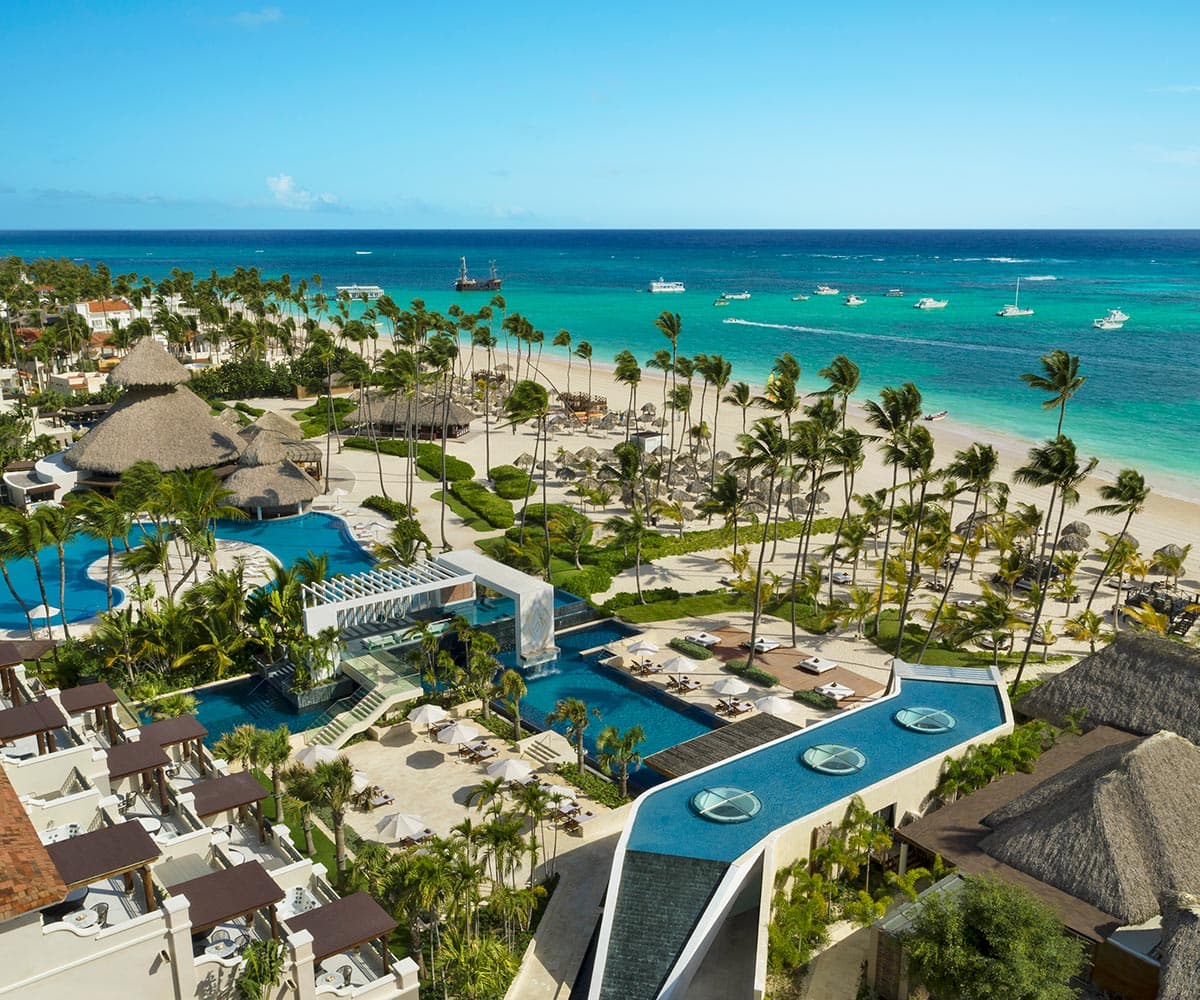
Punta Cana & Bávaro beaches
The resort engine room: miles of white sand and turquoise water, all-inclusives stacked along the coast. It's the postcard, and the postcard is real — just don't let the wristband become the whole trip.
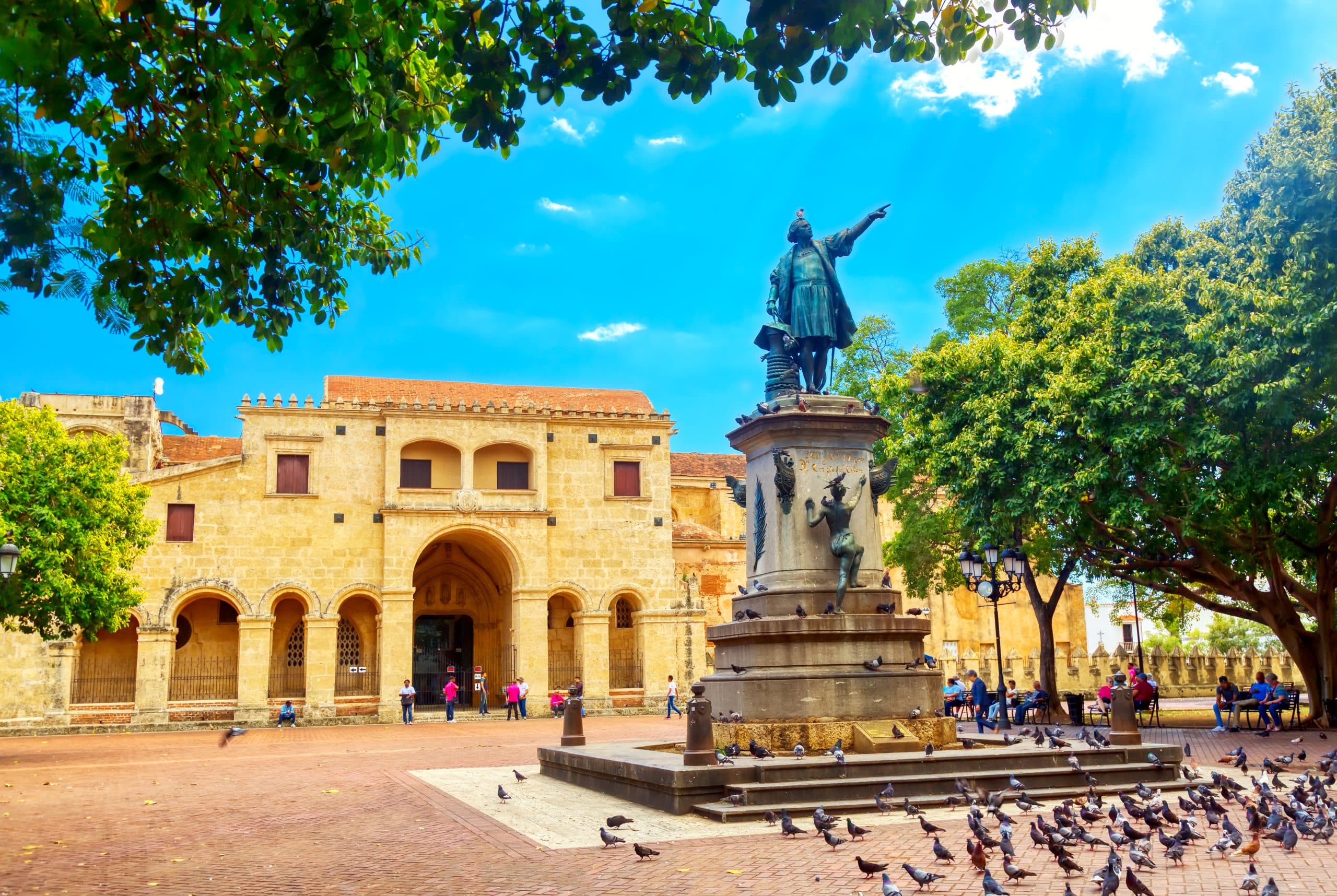
Santo Domingo's Colonial Zone
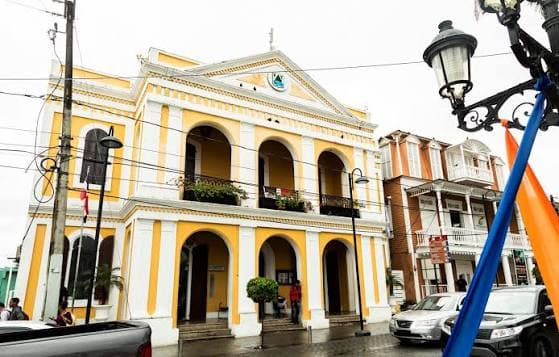
A UNESCO World Heritage site and the oldest continuously inhabited European-founded city in the Americas: the first cathedral, the Alcázar de Colón, five centuries underfoot on Calle Las Damas. Go at dusk, when the stone goes gold.
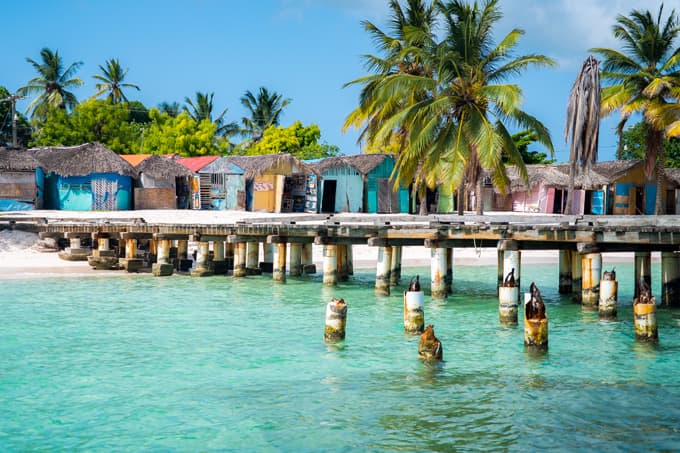
Saona Island
A protected island off the southeast in Cotubanamá National Park — catamarans, shallow natural pools and palms doing exactly what palms are supposed to do. Touristy? Sure. Worth it anyway.
A sample day in the Dominican Republic
A Santo Domingo day that mixes five centuries of history with beach time and the city's best food.
8:00 am
Breakfast like a localMangú with the works and coffee strong enough to file a complaint.9:30 am
Colonial ZoneWalk Calle Las Damas, the Cathedral and the Alcázar de Colón before the heat sets in.11:30 am
A fort or a museumFortaleza Ozama, or the Museo de las Casas Reales.1:00 pm
Lunch on the MalecónFresh fish, sea breeze, no rush.3:00 pm
BeachFind sand and stay there.6:30 pm
Sunset, then dinnerLa bandera or grilled fish, a glass of local rum, and the feeling of having earned the day.
Where to stay — best regions in the Dominican Republic
The DR is geographically varied — choosing the right base shapes your whole trip. Here is how the most popular visitor areas compare:
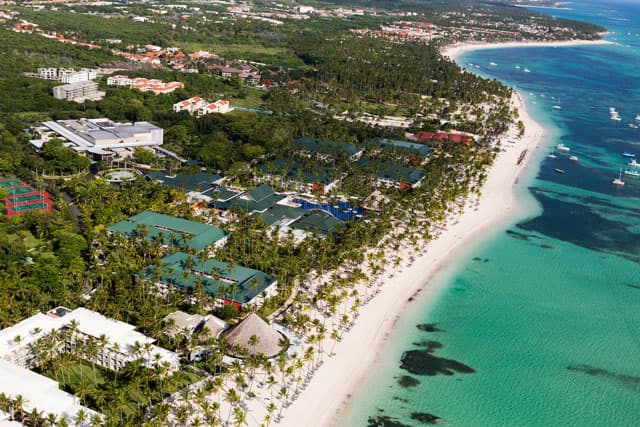
East coast
Punta Cana / Bávaro
The all-inclusive capital of the Caribbean — everything on one wristband, the airport 20 minutes away, world-class beaches at the door. Best for: First-timers, families and resort holidays.
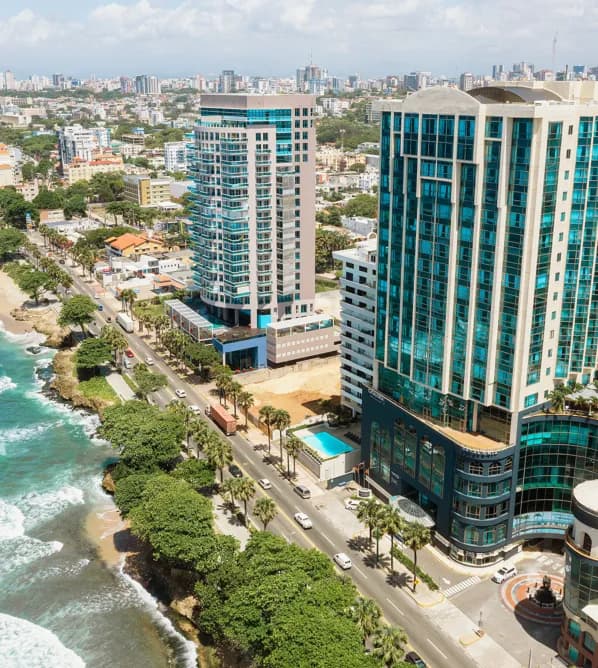
South coast / capital
Santo Domingo
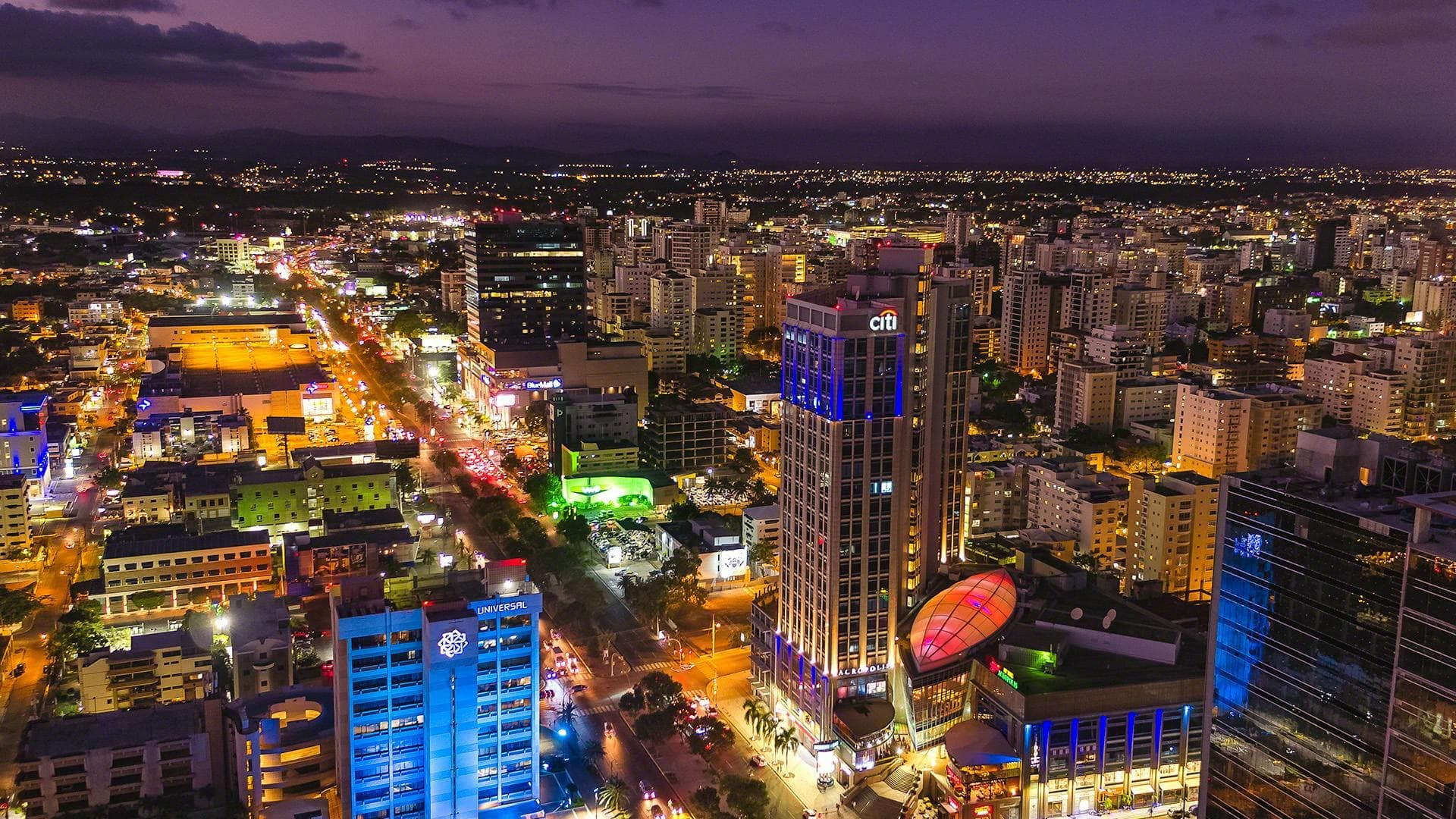
The country's capital and cultural heart — history, dining, nightlife and the UNESCO Colonial Zone, an hour from Boca Chica beach. Best for: Culture, history, city travellers and business.
Official Dominican Republic resources
This is an independent travel guide by CustomsBreeze. Always confirm current requirements with the official sources below before you travel:
- eticket.migracion.gob.doDirección General de Migración — official E-Ticket portal (.gob.do verified)
- aduanas.gob.doDirección General de Aduanas — Dominican Customs duty-free allowances & prohibited goods
- godominicanrepublic.comMinistry of Tourism — official travel information, visa requirements & attractions