Colombia Entry Requirements, Customs & Travel Guide 2026
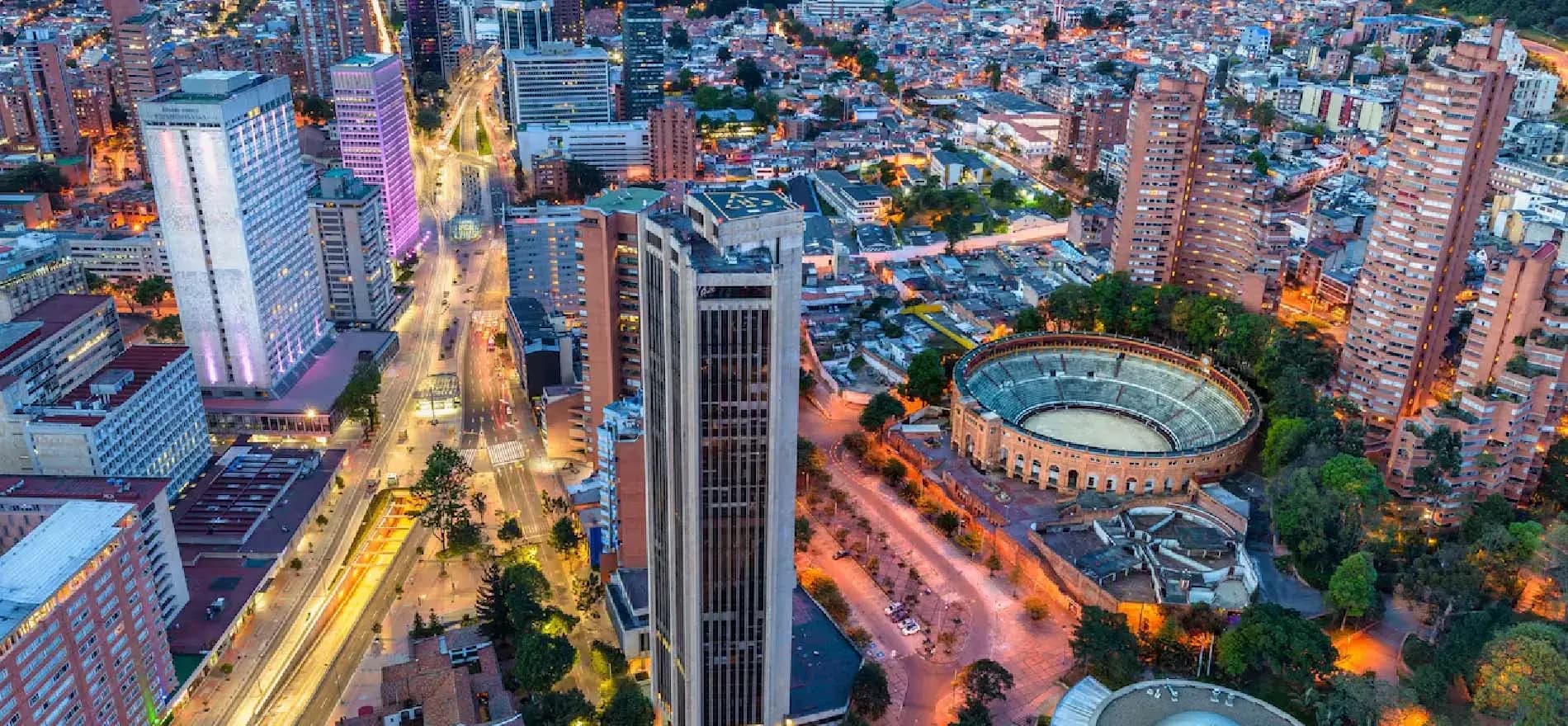
Colombia is one of those countries that rewards the traveler who actually arrives. The stigma of an earlier era is long behind it, and what you find instead is a country of staggering geographic variety — Caribbean coast, Andean highlands, Pacific rainforest, and Amazon lowlands — packed with some of the most genuinely warm people in South America. Getting in is straightforward for most of the world: complete the Check-MIG online before you fly, clear immigration at BOG or MDE, hand over the customs declaration if prompted, and then the country begins in earnest.
- Capital
- Bogotá
- Main airports
- BOG (Bogotá) · MDE (Medellín)
- Currency
- Colombian Peso (COP)
- Language
- Spanish
- Time zone
- COT (UTC−5), no DST
- Best time
- Dec to Mar (dry season)
- Power
- 110V · Type A & B
- Visa-free stay
- Up to 90 days (most nationalities)
Airport Transfers in Colombia
Once your entry paperwork is sorted, the next decision is the ride into town. Fixed-price private transfers and local drivers from every major airport — arranged before you land.
The Check-MIG: Colombia's online pre-entry form
Before anything else, Colombia requires most international travelers to complete the Check-MIG (Check Migratorio) — an online pre-arrival registration form managed by Migración Colombia. This replaced the paper migration card that used to be distributed on flights. It is free, takes a few minutes, and should be completed within 72 hours before your scheduled arrival.
Do I need a visa for Colombia?
Most travelers do not. Colombia grants visa-free entry to nationals of a broad range of countries, with the stay authorized on arrival by the immigration officer. The total stay in a calendar year generally should not exceed 180 days, though the specific terms depend on nationality and current regulations.
| Category | Includes | Stay |
|---|---|---|
| Visa-free | US, Canada, UK, EU member states, Australia, New Zealand, Japan, South Korea, Singapore, most of South America (Brazil, Argentina, Chile, Peru, etc.), Mexico, Panama, and others | Up to 90 daysStamp on arrival · generally extendable · total calendar-year limit applies · confirm at migracioncolombia.gov.co |
| Visa required | China, India, Russia, and others not included in the visa-free list | Consular visaApply via a Colombian consulate before travel · passport valid 6+ months required |
| Long-stay / Migrant visa | Pensioners, digital nomads, investors, retirees, and family reunification applicants | 1–3 yearsApplied via Migración Colombia · various income and documentation requirements |
The immigration officer writes the authorized days in your passport on arrival. That number is your legal deadline to leave, regardless of what the category ceiling says. Read the stamp before you walk away from the desk. The full nationality list is at .
What to have ready at immigration
Colombian immigration is generally efficient at BOG and MDE. Have these items in hand before you join the queue; officers at the desk move quickly and expect you to be ready.
- A valid passportMust be valid for the full duration of your stay; airlines typically require six months beyond arrival. Renew before you travel if your passport is close to expiry.
- Check-MIG confirmationThe QR code or confirmation number from your completed Check-MIG pre-registration. Have it on your phone or printed. Officers may ask for it.
- A return or onward ticketColombia requires visitors to hold a ticket out of the country. Airlines check this at check-in; immigration officers ask for it on arrival. Have it in your email before departure.
The DIAN customs declaration
Colombia's customs authority is the DIAN (Dirección de Impuestos y Aduanas Nacionales). After collecting your bags, you proceed through customs where you may be asked to complete a declaration covering your identity, travel details, and what you are carrying. Follow the instructions of DIAN officers on arrival; procedures and the use of paper or digital forms have evolved over time.
- Green and red channelsGreen means nothing to declare and within limits. Red means goods to declare or items above duty-free thresholds. Random baggage screening occurs in both channels.
- Declare if in doubtColombian customs officers are experienced at identifying undeclared goods. Declaring and paying any applicable duty is always preferable to the alternative.
- Cash over USD $10,000Must be declared to DIAN at the customs checkpoint. Failure to declare can result in confiscation and penalties.
How long can I stay in Colombia?
For visa-free nationals, the stay authorized at immigration is typically up to 90 days per entry. The total stay for most nationalities in a given calendar year generally should not exceed 180 days, though this can vary; the immigration officer's stamp in your passport is your legal deadline.
Check the authorized days written in your stamp before you leave the desk. Overstaying in Colombia results in fines payable to Migración Colombia before you can exit the country; amounts are updated periodically. Extension of a tourist stay is possible through Migración Colombia offices before expiry, but it is not guaranteed. The Digital Nomad Visa (Nómada Digital) is an option for remote workers; check current income and documentation requirements at migracioncolombia.gov.co.
Customs and duty-free allowances
The following figures reflect DIAN's published personal-use allowances for arriving travelers. Verify current limits at dian.gov.co before you travel, as regulatory updates can change them without much notice. Limits apply per adult; families cannot pool tobacco or alcohol allowances.
| Item | Allowance |
|---|---|
| Cigarettes | Up to 200 cigarettes or 50 cigars or 250g of tobacco (verify with DIAN before travel) |
| Alcohol | A reasonable quantity for personal use; verify current bottle limits at dian.gov.co |
| Personal goods & gifts | Approximately USD $1,500 in value for items not intended for resale (subject to DIAN updates) |
| Perfume & cosmetics | A reasonable quantity for personal use |
| Prescription medicine | Personal supply in original packaging; carry prescription or doctor's letter for controlled substances |
| Cash | Declare USD $10,000 or more (or equivalent in any currency) at the DIAN checkpoint |
Prohibited and restricted items
Colombia's DIAN and the ICA (Instituto Colombiano Agropecuario) jointly control what enters. The rules around agricultural products are taken seriously, and anything involving narcotics is treated with particular gravity.
- Prohibited on arrivalIllegal drugs and narcotics; unauthorized weapons and ammunition; counterfeit currency or goods; materials harmful to public health or the environment; items in violation of intellectual property law.
- Declare or surrender at customsFresh fruit, vegetables, plants, seeds, and unprocessed meat or animal products — subject to ICA inspection and possible confiscation; cash of USD $10,000 or more; firearms and ammunition, which require advance INDUMIL authorization.
- Prohibited on departurePre-Columbian artifacts and cultural heritage items without official authorization; protected wildlife species and CITES-regulated products; narcotics.
Arriving at BOG, MDE, and CTG: what actually happens
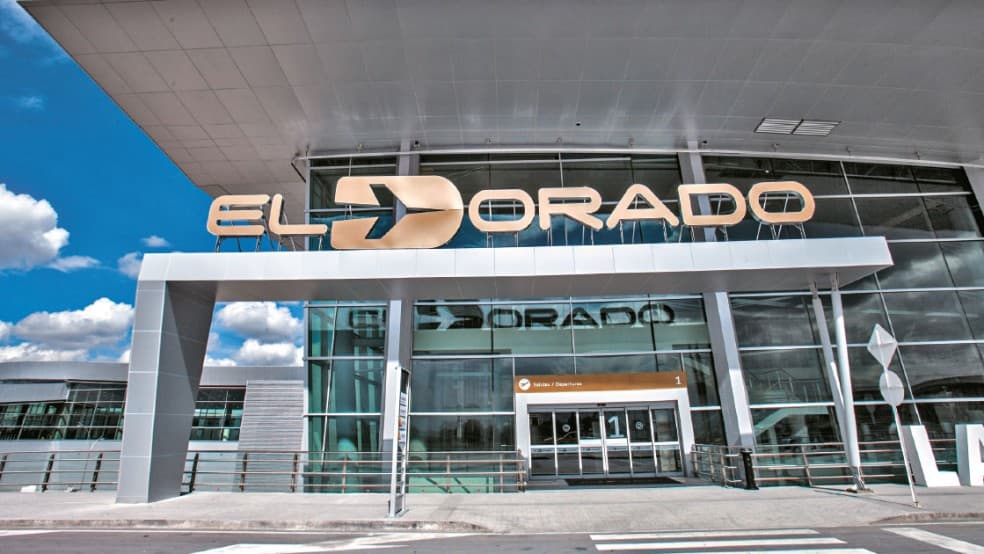
El Dorado (BOG) is a large modern airport and Colombia's main gateway. It can be busy, particularly in the evening peak hours. Medellín's José María Córdova (MDE) is about 45 km from the city center and serves a rapidly growing number of international routes. Cartagena's Rafael Núñez (CTG) is a smaller airport that puts you very close to the walled city. Once you clear customs, the ride into town is the last thing to sort — you can arrange a fixed-price Colombia airport transfer in advance rather than improvise at the curb.
- 1. ImmigrationQueue for foreign nationals. Have your passport, Check-MIG confirmation, and onward ticket ready. The officer will ask your destination and accommodation. The stamp goes in the passport — read it before leaving the desk.
- 2. Baggage claimAt BOG the terminal is large and well-signposted. At MDE and CTG the buildings are smaller and more navigable. Carousels are clearly labelled by flight.
- 3. DIAN customsGreen channel if you are within limits and have nothing to declare. Red if you have declarable goods. Random X-ray screening can occur regardless of which channel you use. Declare anything questionable rather than risk confiscation.
Money in Colombia
The currency is the Colombian Peso (COP). US dollars are not widely accepted outside major hotels and some tourist operators. Cards work well in Bogotá, Medellín, and Cartagena; carry cash for markets, small restaurants, local transport, and anything away from the main tourist zones. ATMs are plentiful in cities; use those inside banks or shopping malls rather than standalone street machines.
| Practical item | Details |
|---|---|
| Currency | Colombian Peso (COP) · USD accepted at some hotels and tour operators only |
| Cards | Visa and Mastercard widely accepted in cities; Amex limited; contactless common in newer establishments |
| ATMs | Good availability in Bogotá, Medellín, Cartagena, Cali; use bank-branch ATMs where possible |
| Tipping | A 10% voluntary propina is often suggested on restaurant bills; you may decline it; additional tipping at discretion |
| Driving | On the right; home country license valid for tourist stay; carrying your passport and license together is advisable |
| Electricity | 110V, 60Hz; Type A and B plugs (same as the US); no adaptor needed for US/Canada devices |
| Digital nomad visa | Nómada Digital visa available for remote workers; check current income requirements at migracioncolombia.gov.co |
Best time to visit Colombia
Colombia sits near the equator, so weather patterns are driven by altitude and region rather than a simple summer/winter cycle. Bogotá and the Andes have two dry seasons; the Caribbean coast is sunny for most of the year. The coffee region can be visited year-round, with heavier rains in April–May and October–November.
| Season / Region | Months | What to expect |
|---|---|---|
| Dry season (main) | Dec to Mar | Best weather across most of the country; peak season for Bogotá, the coffee region, and Cartagena; book ahead |
| Second dry season | Jun to Aug | Good conditions in the Andes and Medellín; popular with local travelers; slightly lower prices than Dec–Mar |
| Caribbean coast (Cartagena) | Year-round, drier Nov to Apr | Hot and humid throughout; light rain possible outside peak months; sea breezes moderate the heat |
| Rainy seasons | Apr–May and Oct–Nov | Afternoon rain in the Andes and coffee region; some roads affected; lush, green landscapes and lower prices |
What to do in Colombia
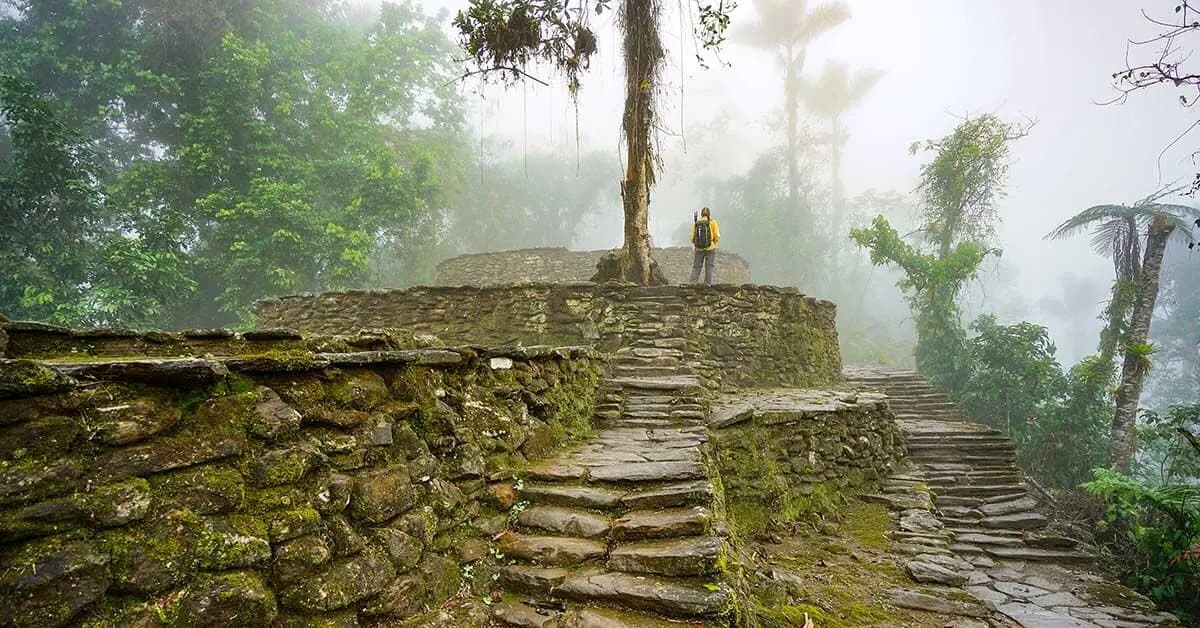
From a walled colonial city on the Caribbean to cloud forests above Medellín to the Lost City in the Sierra Nevada to an Amazon outpost at Leticia — Colombia is not a single destination but a collection of very different ones. The hard part is not finding things to do; it is choosing which corner of the country to prioritize.
Cartagena's Walled City
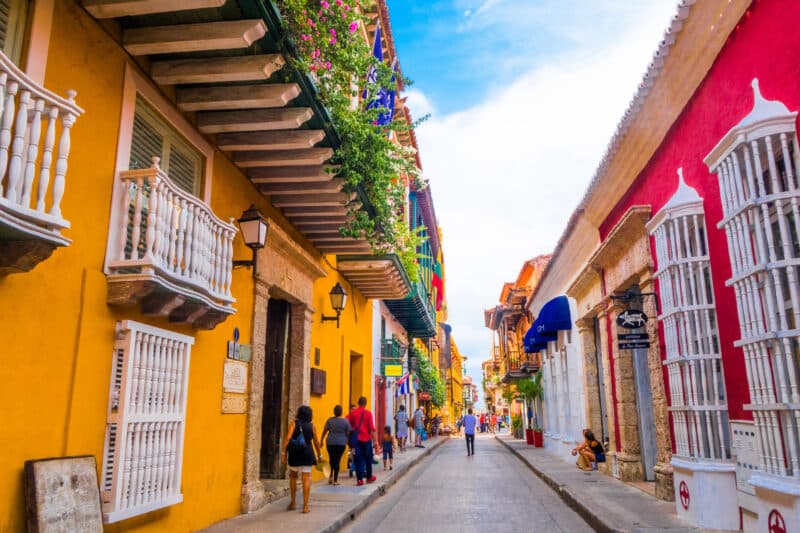
A UNESCO-listed colonial city of coloured houses, bougainvillea, and cannon-topped ramparts above the Caribbean. Walk the walls at sunset, eat ceviche in the Getsemaní neighbourhood, and find the rooftop bars before the tour groups do.
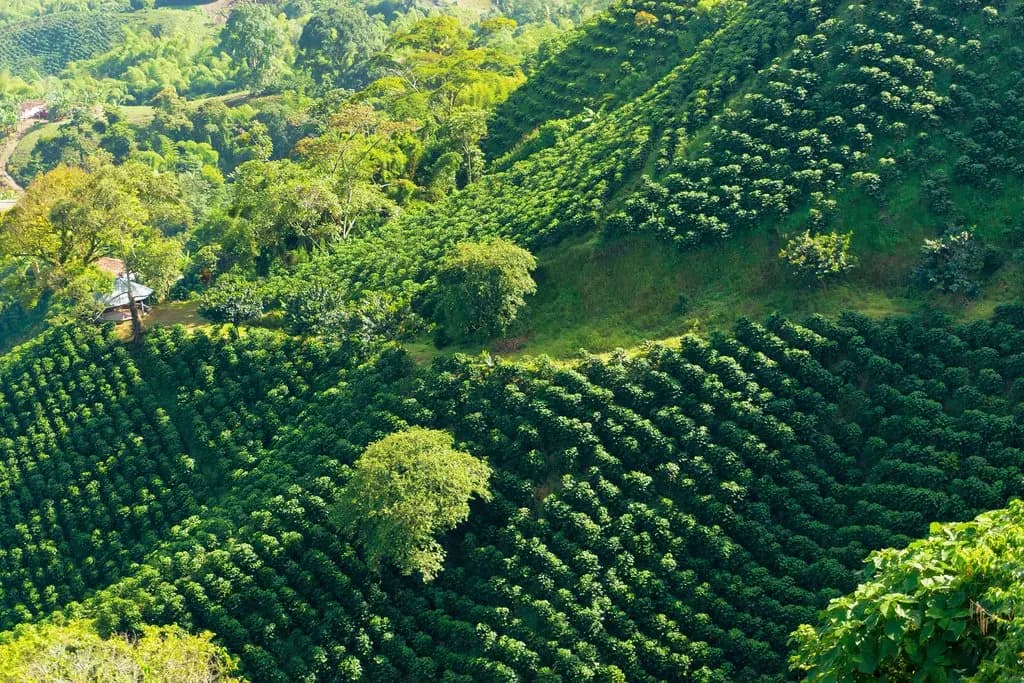
Coffee Cultural Landscape
The Eje Cafetero — Salento, Quindío, and the Valle de Cocora — is a UNESCO World Heritage landscape of cloud forest, wax palms, and working coffee farms. Colombia's finest coffee is grown here and you can drink it where the beans were picked.
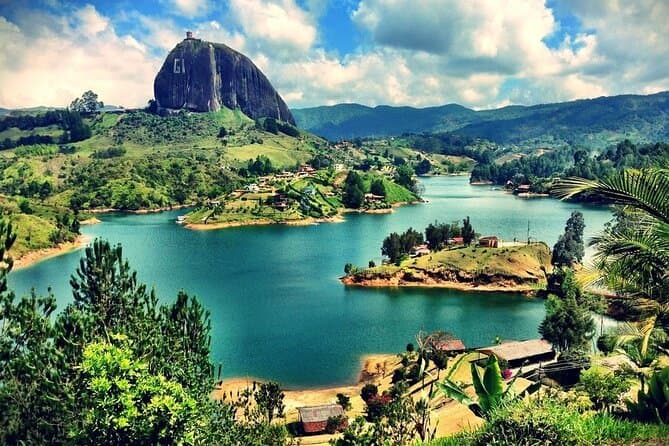
Medellín and Guatapé
The city's transformation from the most dangerous in the world to one of the most innovative is a genuine story worth understanding. The Metrocable over the hillside comunas and the boulder at Guatapé — El Peñón — with its 650 steps and panoramic view make two of the best day trips in South America.
A sample day in Colombia
Built around Cartagena — the most logistically straightforward entry point for first-time visitors, and a place that works on its own terms from 7am to midnight.
- 7:00 amMorning walk in the walled city before the heat buildsThe streets of the old city are empty before 9am. Walk the ramparts, find the Plaza de Bolívar, and have coffee at a panadería before the tour groups arrive.
- 9:30 amSancocho and arepas for breakfastThe local morning meal. Sancocho de gallina is a chicken and root vegetable soup that is more restorative than it sounds. Find it at a local place in Getsemaní, not the hotels on the square.
- 11:00 amBoat to the Islas del RosarioThirty minutes from the dock to a chain of small coral islands in clear Caribbean water. Snorkelling, hammocks, and ceviche eaten on the beach. Several operators run day trips; book the night before.
- 3:00 pmBack to the city and the Getsemaní neighbourhoodThe former working-class barrio adjacent to the walled city is the most interesting part of Cartagena right now — street murals, tiendas, and a local rhythm that the old city is gradually losing.
Where to stay: the best bases in Colombia
Colombia's geography is so varied that the right base depends entirely on what kind of trip you want. These three cover the country's three most distinct registers:
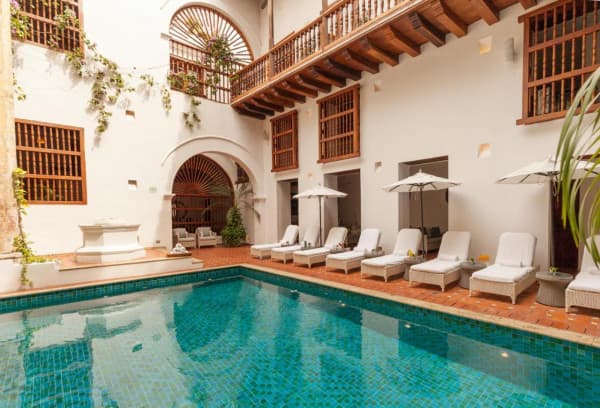
Cartagena Old City
Boutique hotels in restored colonial buildings inside the walls, or characterful guesthouses in Getsemaní. The Caribbean, the islands, and the nightlife are all within reach. Best for first visits, beach access, and the full Colombian atmosphere.

Medellín — El Poblado
Modern hotels, boutique stays, excellent restaurants, and easy Metrocable access to the hillside comunas. Guatapé is a 90-minute day trip. The city is cooler and greener than the coast.
Official Colombia resources
This guide is an independent travel resource. Confirm entry requirements and customs rules with official sources before you fly:
- migracioncolombia.gov.coMigración Colombia — Check-MIG form, visa categories, nationality list, and extensions
- dian.gov.coDIAN — Colombia's customs and tax authority; duty-free allowances, prohibited items, and current declaration procedures