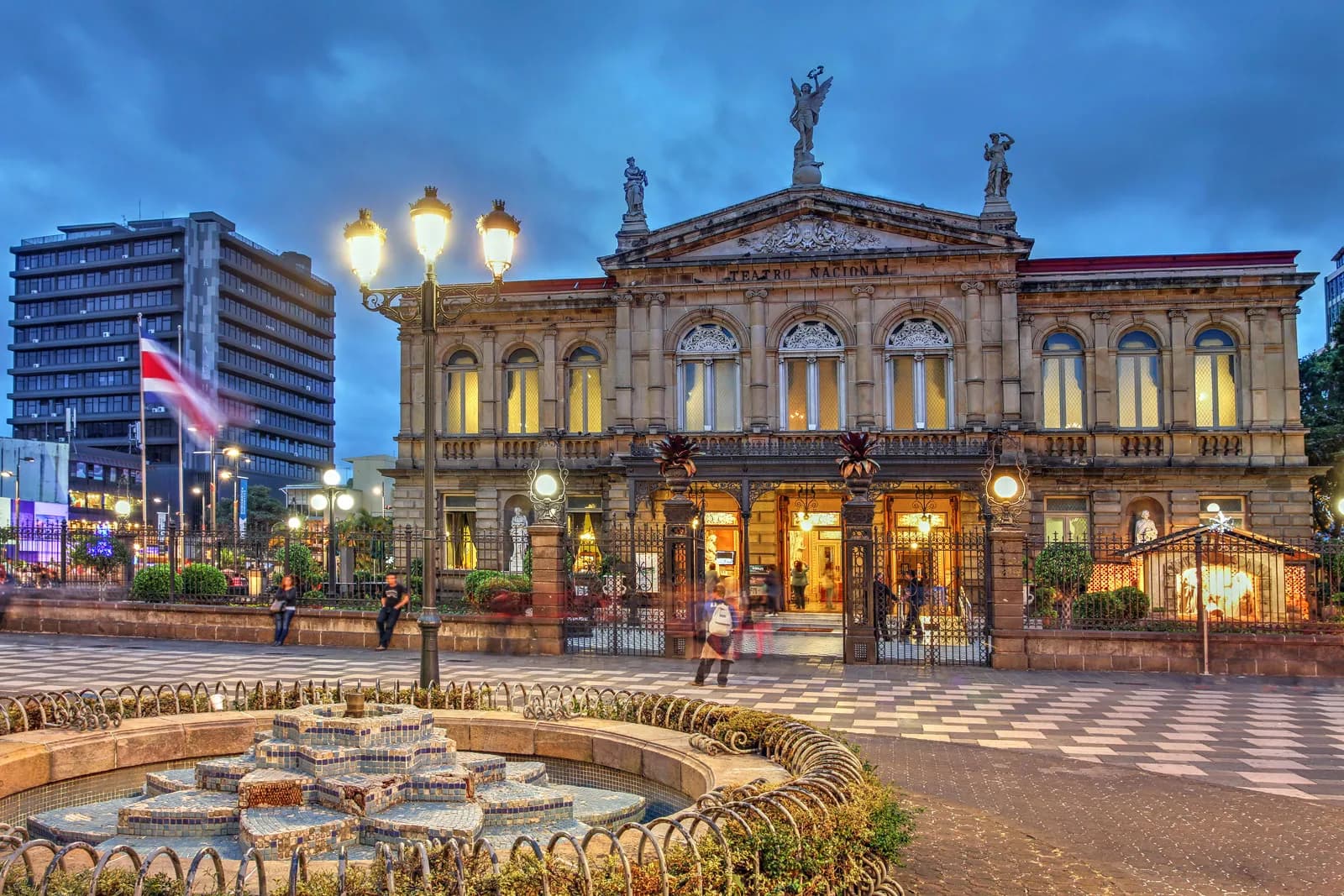
Costa Rica Entry Requirements, Customs & Travel Guide
Two coastlines, five active volcanoes, and more biodiversity per square kilometre than almost anywhere on earth. Costa Rica makes most of arrival straightforward — for the majority of visitors there is no online arrival system to wrestle with and no tourist card to buy — but straightforward is not the same as no rules. The country still expects a valid passport, proof that you intend to leave, and it protects its famous nature with strict agricultural checks. A customs declaration is not demanded of every passenger, but you may be asked for one. Here is exactly what you need for 2026, whether you land at San José (SJO) or Liberia (LIR), and what you can safely ignore.
- Capital
- San José
- Main airports
- San José (SJO) · Liberia (LIR)
- Currency
- Costa Rican Colón (USD widely accepted)
- Language
- Spanish
- Time zone
- Central (UTC-6, no DST)
- Best time
- Dec to Apr (dry season)
- Power
- 110V · Type A & B (US-style)
- Entry form
- No universal form · declare cash US$10k+
Do I need a customs or immigration form for Costa Rica?
This is the question most travelers arrive with, and the honest answer is: not a single universal one. There is no mandatory online immigration arrival form for most visitors, and no tourist card to buy. You clear immigration with your passport. At customs, you may be asked to complete a declaration — it is not demanded of every passenger every time, and procedures vary, so follow the channel and instructions at your airport.
- 1Immigration: a passport stamp, not an online form
Present your passport to an immigration officer at SJO or LIR. They confirm your visa group, may ask about onward travel, and record your authorized stay. There is nothing to file online in advance for most visitors.
- 2Customs: a declaration only if asked or required
You may be handed a customs declaration, or asked about goods you carry. Use the green channel with nothing to declare and within the allowances, or the red channel for declarable goods or cash of US$10,000 or more. Follow the signage and officer instructions.
- 3Visa-required nationalities: sort it out first
If your nationality is in Group 3 or 4, apply for a consular or restricted visa before you travel. Check your group on the official DGME list — do not rely on sorting anything out at the airport.
Entry requirements: what to have ready at immigration
Have these ready before you reach immigration at SJO or LIR:
- A valid passportGroup 1 nationals need a passport valid for the duration of their stay; other groups need 90+ or 180+ days of validity. Airlines often require six months, so carry six-plus months when you can.
- Proof of onward travelA return or onward ticket out of Costa Rica — a flight, a dated cross-border bus ticket, or cruise documentation. Airlines check this at check-in; it is the most common reason travelers are delayed.
- Funds for your stayOfficers can ask for evidence you can support yourself. A card and a recent statement are enough in practice; it is rarely demanded of visitors from North America or Europe.
Do I need a visa for Costa Rica? Visa groups & length of stay
Costa Rica sorts nationalities into four visa groups. Most travelers from North America, Europe and the southern cone of Latin America are Group 1 and enter visa-free. Admission and the exact stay are the immigration officer's decision, recorded in your passport.
| Group | Includes (examples) | Visa status & stay |
|---|---|---|
| Group 1 | US, Canada, UK, EU states, Australia, New Zealand, Japan, South Korea, Singapore, Argentina, Brazil, Chile, Mexico, Panama, Uruguay & others | Visa-free · up to 180 days · passport valid for stay |
| Group 2 | Bolivia, El Salvador, Guatemala, Honduras, Philippines, Malaysia, Russia, Taiwan, Turkey & others | Visa-free · up to 30 days (extendable to 90) · passport 90+ days |
| Group 3 | Colombia, Ecuador, India, Indonesia, Nicaragua, China, Vietnam, Venezuela & others | Consular visa required · up to 30 days (extendable to 90) · passport 180+ days |
| Group 4 | Any nationality not in Groups 1, 2 or 3 | Restricted visa, approved by commission before arrival · up to 30 days · passport 180+ days |
How long can I stay in Costa Rica?
For Group 1 nationals the legal maximum is 180 days, but the officer decides the actual number and writes it in your passport — it varies by officer, onward ticket and travel history, so do not assume the full 180. Read the date granted before you leave the desk. Overstaying can mean fines and may affect future entry; confirm the current penalty with the DGME.
The customs declaration: what it covers and when you need it
Costa Rica does not require a customs declaration from every arriving traveler as a matter of course, and there is no single online form to file in advance. You may be asked to complete one — covering your identity, travel details and what you are carrying — depending on current procedures and whether you have declarable goods. If a form is distributed (on the plane or in the hall), fill it in before you reach the desk.
At the customs exit you choose a channel: the green channel if you have nothing to declare and are within the duty-free allowances, or the red channel if you carry goods to declare or cash of US$10,000 or more. Bags may be X-rayed either way. When you are unsure, declare and ask — it is free and avoids fines.
Customs & duty-free allowances
For personal, non-commercial use, per adult. Figures are updated periodically — verify with Costa Rican Customs before you rely on them. When in doubt, declare.
| Category | What to know |
|---|---|
| Tobacco | 400 cigarettes or 50 cigars or 500g of tobacco (adults 18+). Figures change periodically — verify with Costa Rican Customs before travel |
| Alcohol | Up to 5 litres of alcoholic beverages (adults 18+) |
| Other goods | Up to US$500 in value; the exemption is stamped in your passport when used, and amounts over US$500 are dutiable |
| Perfume | A reasonable quantity for personal use |
| Prescription medicine | Personal quantities in original packaging; prescription or doctor's letter for controlled substances |
| Cash | Declare US$10,000 or more (or equivalent) at the immigration/customs checkpoint |
Allowances are per person and not transferable — families cannot pool tobacco or alcohol limits. Confirm exact figures with the Dirección General de Aduanas before relying on them.
Prohibited & restricted items
Costa Rica guards its biodiversity hard. Violations can mean seizure, fines or prosecution. When in doubt, declare.
- ProhibitedIllegal narcotics and drug paraphernalia, counterfeit goods, and obscene material. Drug laws are enforced strictly.
- Agriculture & food (the big one)Fresh fruit, vegetables, soil, seeds and unprocessed meat or plant products face agricultural inspection and are frequently confiscated. Declare anything organic; eat or leave perishables before you land.
- Permit or permission requiredFirearms and ammunition, and CITES-listed items (certain animals, plants and their products, including some marine and wildlife souvenirs) need permits. Never buy turtle-shell, coral or hardwood curios.
Yellow fever & health requirements
Costa Rica requires a yellow fever vaccination certificate only if you are arriving from, or have recently transited, a country where yellow fever is a risk (parts of South America and sub-Saharan Africa). Travelers coming directly from the US, Canada, the UK or Europe are not asked for one. If your route touches a listed country, carry a valid International Certificate of Vaccination. No other vaccinations are mandatory for entry, but a travel-health consultation is wise — and travel insurance, while not legally required, is strongly recommended for a country built on rafting, zip-lines and remote rainforest.
Arriving at SJO and LIR: what actually happens
Most international visitors land at Juan Santamaría International (SJO), about 20 km northwest of San José, or Daniel Oduber Quirós International (LIR) in Liberia for Guanacaste. The arrival flow is the same at both:
- 1 · ImmigrationPresent your passport. Answer brief questions on your stay; have onward travel ready. The officer records your authorized days — check them before you move on.
- 2 · Baggage claimCollect your checked luggage.
- 3 · CustomsChoose the green channel (nothing to declare, within allowances) or the red channel (declarable goods or cash US$10,000+). Complete a declaration if you are handed one. Bags may be X-rayed.
Get a local driver waiting
Land, walk out, and find your name on a sign. Book a local Costa Rica driver from SJO or LIR to Arenal, Monteverde, Manuel Antonio or the Guanacaste beaches — fixed prices, no airport haggling.
Money in Costa Rica
The official currency is the Costa Rican Colón (CRC), but US dollars are widely accepted in tourist areas. Cards are common in cities; carry some colones for rural areas, small sodas (local eateries) and tips.
| Practical item | Details |
|---|---|
| Currency | Costa Rican Colón (CRC); USD accepted widely in tourist areas |
| Cards | Visa and Mastercard widely accepted; Amex more limited; contactless common in cities |
| ATMs | Plentiful in San José and tourist hubs; fewer in rural areas; prefer bank ATMs |
| Tipping | A 10% service charge is added to restaurant bills by law; extra tipping is at your discretion |
| Driving | On the right; home licence valid 90 days; carry passport and licence together; fines can exceed US$500 |
| Electricity | 110V, 60Hz; Type A & B plugs (US-style); no adaptor needed for US/Canada |
| Cash declaration | Declare US$10,000 or more on arrival and departure |
| Digital nomad visa | Available for remote workers with US$3,000/month income; valid up to two years |
Best time to visit Costa Rica
Tropical and warm year-round. The big variable is rain, and the two coasts run on different rhythms.
| Season | Months | What to expect |
|---|---|---|
| Dry / high season | Dec to Apr | Sunny, low humidity on the Pacific; most popular and most expensive; book well ahead |
| Green season | May to Nov | Afternoon rain, lush vegetation, lower prices, fewer crowds; mornings often clear; great value |
| Caribbean coast | Sep to Oct | Drier on the Caribbean when the Pacific is wettest; excellent for wildlife and surfing |
What to do in Costa Rica
Volcanoes, cloud forest, two coastlines and some of the most accessible wildlife on earth — most of it within a few hours of SJO or LIR.
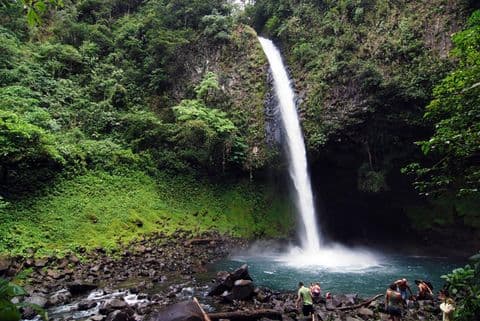
Arenal Volcano & La Fortuna
A near-perfect cone above hot springs, hanging bridges and waterfalls. The country's adventure hub — rafting, canyoning and volcano hikes from a relaxed base town.
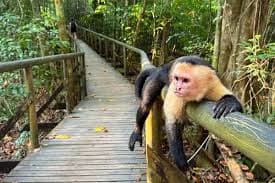
Manuel Antonio
Rainforest meeting white-sand Pacific beaches, with sloths, capuchin and squirrel monkeys in an easy-to-walk national park. Costa Rica's most popular park for good reason.
A sample day in Costa Rica
Built around La Fortuna and the Arenal Volcano — the classic first base after landing at SJO.
- 6:30 amSunrise & coffeeClear volcano views are best early; fuel up with Costa Rican coffee and gallo pinto.
- 8:00 amHanging bridgesWalk the canopy bridges of the Arenal rainforest for birds, sloths and volcano vistas.
- 11:00 amLa Fortuna WaterfallA steep stair down to a 70-metre fall and a cool swim in the pool below.
- 1:30 pmLunch in townCasado (rice, beans, plantain and protein) at a local soda in La Fortuna.
- 3:30 pmAdventure slot
Where to stay: the best bases in Costa Rica
Most itineraries chain two or three bases. Choose by what you want to do:
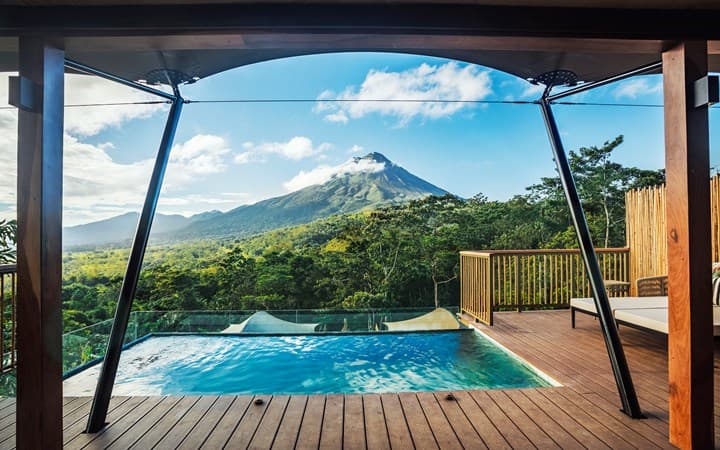
La Fortuna & Arenal
Hot springs, waterfalls and adventure tours under a textbook volcano. Best for first-timers, families and adventure.
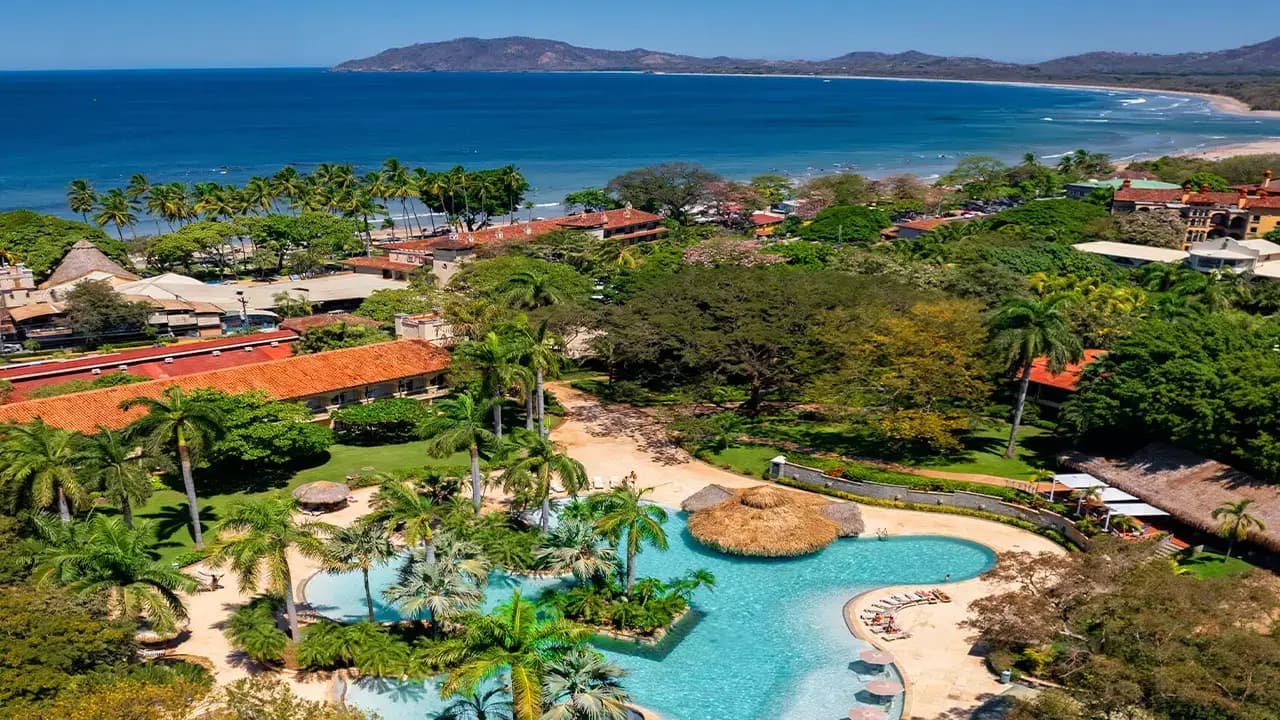
Guanacaste & Tamarindo
Pacific-northwest beach towns and resorts served by LIR. Best for surfing, sun and the shortest transfer from LIR.
Official Costa Rica resources
This is an independent travel guide by CustomsBreeze. Confirm current requirements with the official sources below before you travel:
- migracion.go.crDirección General de Migración y Extranjería (visa groups, length of stay)
- hacienda.go.crMinisterio de Hacienda / Dirección General de Aduanas (customs & duty-free)