Cayman Islands Customs Form, Entry Requirements & Arrival Guide
Here is the small miracle of arriving in the Cayman Islands. In a world that has gone mad with pre-travel portals, QR codes and websites that want twenty bucks to fill out a free government form on your behalf, there is none of that here. Somewhere over water so blue it looks retouched, a flight attendant hands you a paper card. You find a pen. You fill it in like it is 1985. That is the paperwork, all of it. This guide covers that card, who strolls through immigration and who needs a visa, what you can bring in and what earns you a long joyless chat with a Customs officer, the CI$10,000 cash rule, how the cruise tender works at George Town, and how to get off the plane at Owen Roberts and onto Seven Mile Beach before the ice melts in your first rum punch.
The 30-second version
- Fill in the paper Customs Declaration card in flight. One per person, or one for the whole family.
- There is no online passenger form. The COLS system on gov.ky is for cargo, not for you.
- Most US, UK, EU and Canadian visitors walk in visa-free, usually good for 30 days.
- Declare currency of CI$10,000 or more, roughly US$12,000, and anything over your duty-free limit.
- US dollars work everywhere, they drive on the left, and cruise ships tender into George Town.
Cayman Islands quick facts
- Territory
- British Overseas Territory
- Capital
- George Town, Grand Cayman
- Currency
- Cayman $ (CI$1 = US$1.20 fixed)
- Language
- English
- Airport
- Owen Roberts Intl (GCM)
- Time zone
- EST year-round (UTC-5)
- Driving side
- Left
- Power
- 110V · Type A & B (US-style)
- Emergency
- 911
- Entry form
- Paper customs card, on arrival
Planning a run to Grand Cayman?
Sort the ride before you fly, or grab a rental car and take the island at your own pace.
How to complete the Cayman Islands Customs Declaration card
Everybody coming in by air or sea fills out a paper Customs Declaration card. One per person, or one card for a family travelling together. There is no online version for passengers. The Customs Online System, COLS, that you will find mentioned on gov.ky is for people importing cargo, not for you and your carry-on.
- 1Get the card in flight, and bring a pen
The cabin crew hand these out before landing, or you can grab one in the Customs hall when you touch down. Filling it in at 35,000 feet beats scribbling on a counter while three more flights pile in behind you. Have your passport number, flight number and hotel address ready.
- 2One card per person, or one per family
The head of a family travelling together can do a single card for everyone. List anything you need to declare, goods over the duty-free limit, food or plants, commercial stuff, and currency of CI$10,000 or more.
- 3Hand it over, and answer straight
After immigration and baggage claim you give the card to a Customs and Border Control officer. Bags get screened, and anything that grew in soil gets a hard look. Declaring is free and fast. Not declaring is what turns a five-minute formality into a bad afternoon. When in doubt, declare.
Do you need a visa for the Cayman Islands?
Most tourists do not. The Cayman Islands are a British Overseas Territory that runs its own front door, so a UK visa does not automatically get you in. Visitors usually get up to 30 days, though the officer at the desk decides on the day, and you can apply to extend. The officer always has the final word.
| Country / region | Visa status (tourism) | Stay granted |
|---|---|---|
| USA | Visa free | Up to 30 days, extendable |
| Canada | Visa free | Up to 30 days, extendable |
| United Kingdom | Visa free | Up to 30 days, extendable |
| EU / EEA | Visa free | Up to 30 days, extendable |
| Most Commonwealth countries | Visa free | Up to 30 days, extendable |
| Other nationalities | Visa may be required in advance | As granted |
Visa lists change. If your passport is not on the list above, confirm your status with the Cayman Islands government or the nearest British embassy before booking.
Passport validity and onward travel
Your passport should stay valid for the length of your stay, though plenty of airlines want to see six months, so aim for six months and stop worrying about it. Carry proof of onward or return travel and know where you are sleeping, because officers can ask for both. And a US passport does not fly, you need the book.
Required travel documents checklist
- Valid passportFor every traveller including children and infants, with six months of validity to be safe.
- Customs Declaration cardCompleted in flight or on arrival, one per person or per family travelling together.
- Onward or return ticketProof you will leave, ready to show at immigration.
- Accommodation confirmationHotel, condo or villa details with an address for the card.
Arriving by air, step by step at Owen Roberts (GCM)
Owen Roberts is a modern, sane, blessedly small airport a few minutes from George Town and the bottom of Seven Mile Beach. Here is the order it happens.
- 1Finish the card before the door opens
If you did not fill it in on the plane, grab a card in the hall. Doing it in advance saves real time when several flights land together.
- 2Immigration
Hand over your passport, and have your onward ticket and hotel address ready. The officer stamps your stay, usually up to 30 days for visitors.
- 3Baggage claim
Collect your checked bags before you walk into the customs hall.
- 4Customs
The three islands and their airports
Unlike a lot of small Caribbean islands, Grand Cayman has nonstop flights from a stack of US cities plus Canada and London, so no puddle-jumper connection. The two Sister Islands ride on Cayman Airways, and there is no scheduled ferry between any of them.
| Island | Airport | Notes |
|---|---|---|
| Grand Cayman | Owen Roberts International (GCM) | Main gateway, nonstops from US hubs, Canada and London |
| Cayman Brac | Charles Kirkconnell International (CYB) | Cayman Airways from Grand Cayman, around 40 min, and Miami |
| Little Cayman | Edward Bodden Airfield (LYB) | Small aircraft from Grand Cayman, famous for diving |
Arriving by cruise, George Town is a tender port
Here is the thing nobody tells the first-timers. Ships do not dock in Grand Cayman. They drop anchor off George Town and you ride a tender in to the Royal Watler landing on the waterfront. It is a short, pretty ride, and it eats time in both directions, so do not be the person sprinting for the last tender back.
- Follow the ship's leadCruise arrivals get a streamlined process run by the line, and day visitors usually do not fill out the customs card one by one.
- Budget for the tenderAllow 15 to 30 minutes each way, more on busy days with several ships anchored. Do not cut your all-aboard time fine.
Want the island on your own terms?
There is no ride-hailing on Grand Cayman, so a rental car is freedom. Left-side driving, a quick visitor permit at the desk, and Rum Point is yours.
What you must declare
The card asks a handful of yes or no questions. Answer them straight. Declaring costs nothing in most cases, while getting caught with something undeclared can mean seizure, fines or prosecution. Declare the following.
- Goods over your duty-free allowance, or anything for resale or commercial use
- Currency or negotiable instruments of CI$10,000 or more, about US$12,000, or the equivalent
- All food, fresh produce, plants, seeds, soil and animal products
Cayman Islands duty-free allowances
Per arriving traveller aged 18 and over, for personal, non-commercial use.
| Category | Allowance (per adult 18+) |
|---|---|
| Tobacco | 200 cigarettes OR 250g of tobacco |
| Alcohol | 1 litre of spirits OR 4 litres of wine OR 1 case of beer, max 8 litres, one option |
| Personal effects | Clothing, toiletries, camera, laptop, phone, for personal use |
| Cash & currency | No limit, but declare CI$10,000 or more, about US$12,000, or the equivalent |
Allowances are per person and cannot be pooled. Figures get updated by Customs and Border Control from time to time, so verify the current limits on gov.ky before relying on them, especially for larger quantities.
Prohibited and restricted items
A few of these are distinctly Caymanian and catch visitors out.
- Illegal drugs, strictly prohibitedNarcotics are illegal with severe penalties, including substances legal elsewhere. Do not assume.
- Firearms and weapons, permit requiredFirearms and ammunition need prior authorisation. Do not arrive with them undeclared.
- Spear guns, bannedSpear guns, pole spears and Hawaiian slings are prohibited without a licence, which visitors generally cannot get. A signature Cayman rule.
Travelling with children
- Every child needs a passportInfants included. One customs card can cover the whole family, completed by the head of the family.
- Consent letter for lone or single-parent travelIf a child travels without both parents, carry a signed consent letter from the absent parent or parents plus supporting ID or a birth certificate.
- Guardians and groupsAdults travelling with children who are not their own should carry written authorisation from the parents.
Travelling with pets
Bringing a pet takes planning, so start weeks ahead.
- Import permitApply to the Cayman Islands Department of Agriculture before travelling. Some breeds are restricted.
- Microchip, rabies and health certificateA microchip, current rabies vaccination and a recent veterinary health certificate are typically required.
- Airline rulesCheck your airline's pet policy and any transit-country requirements on your route.
Bringing medicines
- Original packaging plus prescriptionKeep medicines in labelled original packaging with a copy of the prescription or a doctor's letter.
- Controlled medicines, declare themNarcotic and controlled medicines, and large quantities, should be declared with documentation.
- Insulin, CPAP and liquid medsMedical devices and liquid medication are allowed, carried in hand luggage with documentation.
- Pack essentials in carry-onBring enough for the trip plus a buffer. Pharmacies are good on Grand Cayman but may not stock everything.
Money and currency in the Cayman Islands
The Cayman Islands Dollar is worth more than the greenback, pegged at a fixed CI$1 = US$1.20, which is a mild shock the first time you see a menu. US dollars work everywhere. The catch is that you pay in dollars and your change comes back in Cayman dollars, often at a shop rate of 1.25, so if you are counting pennies, pay by card.
| Feature | Details |
|---|---|
| Currency | Cayman Islands Dollar (KYD), fixed at CI$1 = US$1.20 |
| US dollars | Accepted almost everywhere, change usually given in CI$ |
| Cards & ATMs | Widely accepted, ATMs dispense CI$ and often US$ across Grand Cayman |
| Tipping | A 10 to 15% service charge is often added, tip similarly where it is not |
| Currency declaration | Declare CI$10,000 or more, about US$12,000, or the equivalent, in or out |
| Cost level | One of the Caribbean's priciest islands, so budget accordingly |
| Electricity | 110V, 60Hz, US-style Type A & B plugs |
| Driving | On the left, visitors need a temporary permit issued by rental agencies |
What happens at customs?
- You hand over your completed Customs Declaration card with your passport.
- Most travellers are waved through in seconds.
- Bags may be x-rayed or spot-checked, and food and agricultural items get particular attention.
- If you have declared goods over the allowance, duty is worked out and paid on the spot.
Common reasons travellers get delayed, and how to dodge them
- Blank customs card at the deskFill it in on the plane. A pen in your carry-on is the cheapest time-saver in travel.
- Undeclared food or agricultureDeclare all food, produce and plant items. When in doubt, declare.
- Passport too close to expiryAim for six months of validity, and renew early if you are close.
- No onward ticket or addressHave your return booking and accommodation details ready to show.
Best time to visit the Cayman Islands
| Season | Months | What to expect |
|---|---|---|
| Peak / dry | Dec to Apr | Sunny, calm seas, unreal diving visibility, busiest and priciest |
| Shoulder | May to Aug | Warm, good value, still gorgeous water |
| Low / storm season | Sep to Nov | Cheapest and quietest, but inside Atlantic hurricane season, so watch forecasts |
Hurricane season runs June to November across the Atlantic, so travel insurance earns its keep in those months.
Health, water and food
- Water, drink itGrand Cayman runs on desalinated water treated to a high standard and safe to drink. On a place with a cistern, ask your host.
- Before you goCheck current advice with your doctor and a real health authority like the CDC. Care here is good and expensive for visitors, so insurance with medical cover is not optional in my book.
- Sun and seaReef-safe sunscreen, shade, water. The snorkelling is the real deal, so respect the marine-park rules and keep your hands off the coral.
Top things to do in the Cayman Islands
Card handed in, bags through. Now the good part.
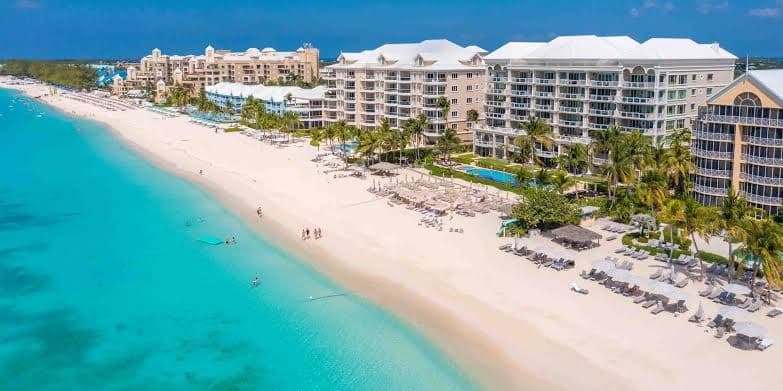
Seven Mile Beach
The famous one, and for once the hype holds. Powder sand, calm water, a short hop from the airport. Get there early and it is almost yours.
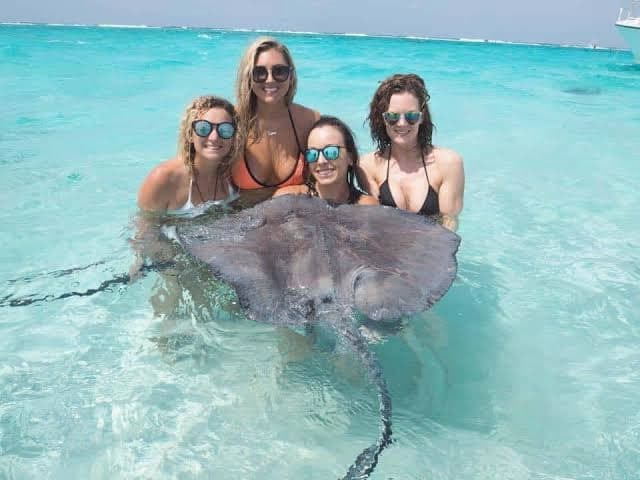
Stingray City
Stand chest-deep on a sandbar while wild southern rays glide over your feet like wet velvet. Touristy, unforgettable, worth every cliche.
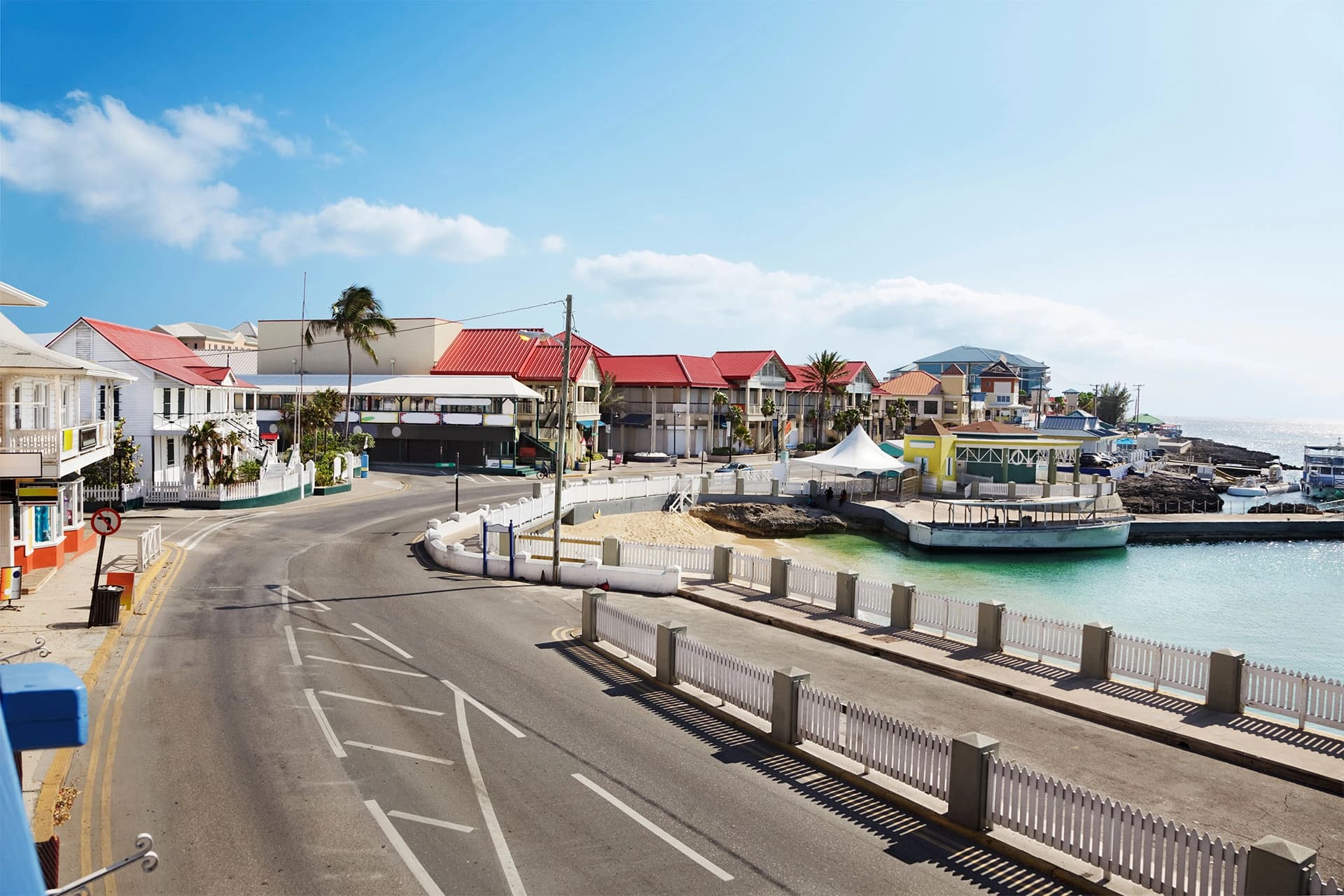
George Town
The capital, the cruise landing and a duty-free strip. Skip the diamond shops, find the fish fry.
A sample day on Grand Cayman
- 7:30 amBreakfast on Seven Mile BeachCoffee with your toes nearly in the sand.
- 9:00 amStingray City sandbarMorning boats beat the cruise crowd to the rays.
- 12:30 pmFish-shack lunchConch fritters and grilled catch on the waterfront.
- 2:30 pmRum PointHammocks, shallow water and a famous mudslide.
- 5:30 pmCamana BaySunset from the tower, shops and dinner.
- 8:00 pm
Where to stay
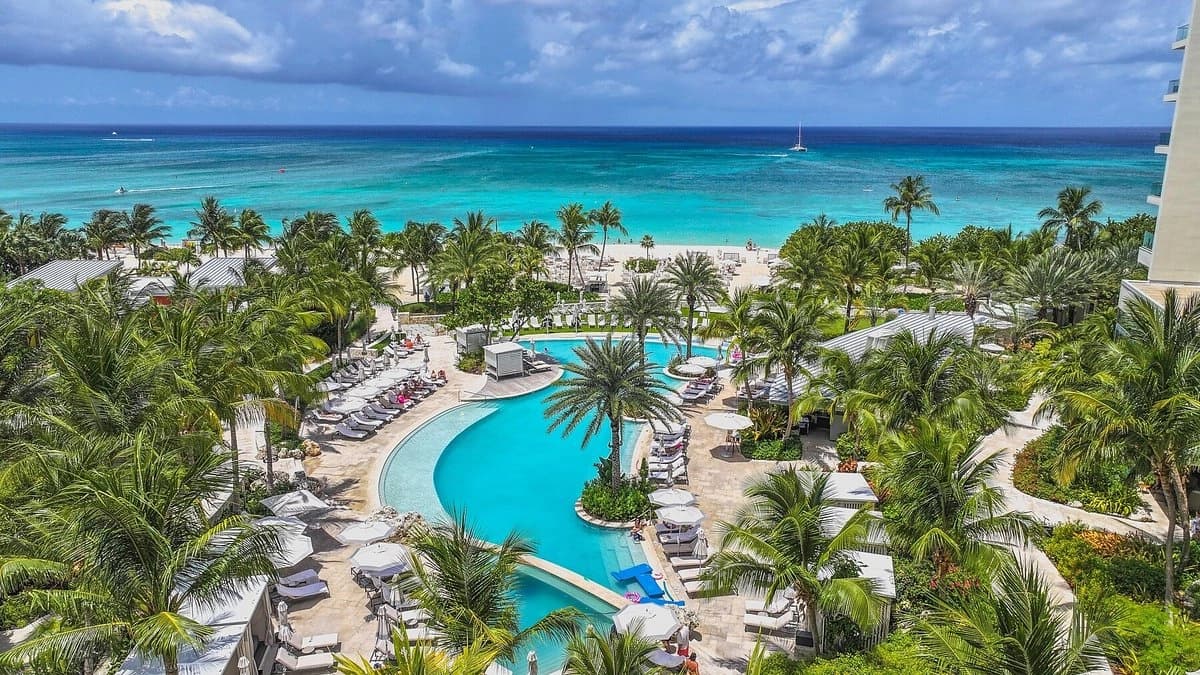
Seven Mile Beach
Resorts and condos on the famous sand, everything within reach. Best for first-timers and families.

George Town & Camana Bay
Walkable food, shops and harbour life. Best for eaters and short stays.
Practical travel tips
Fill in the card mid-flight
Pen in the carry-on, card done before descent, and you beat three planeloads to the desk.
US plugs, no adapter for US kit
110V, Type A and B. UK and EU visitors need an adapter.
Sort connectivity
Check roaming or grab a local SIM or eSIM from Flow or Digicel. Wi-Fi is everywhere.
Left-side driving, no Uber
Official Cayman Islands resources
This is an independent travel guide by CustomsBreeze. Confirm the current requirements with the official sources below before you travel.
- gov.ky/web/cbcCayman Islands Customs & Border Control Service, allowances, prohibited items, declarations
- visitcaymanislands.comCayman Islands Department of Tourism