

Tortola & BVI Entry Requirements, Customs & Arrival Guide
Tortola is where a British Virgin Islands trip begins, the biggest island, the site of the capital, Road Town, and the launch pad for the world's most famous stretch of sailing water. You come for the beaches at Cane Garden Bay, the granite boulders of The Baths a short ferry away, and the run of anchorages that make the BVI a bucket-list charter. Before any of that, there's a little paperwork, and it changed recently. Since 1 January 2025 most travellers must file an online embarkation card before arriving. This guide walks through that form, passports and visas, the arrival and departure taxes, exactly what customs lets you bring, and how to arrive smoothly whether you come by plane, cruise, ferry or yacht.
The 30-second version
- File the online embarkation card at bviedcard.gov.vg (up to 72 hours before arrival).
- Bring a valid passport; most nationalities are visa-free for up to one month.
- Expect arrival and departure taxes (often built into airline tickets); confirm current fees.
- The currency is the US dollar; English is the language; they drive on the left.
- Fly into Beef Island (EIS) via San Juan or St. Thomas, or arrive by ferry or yacht.
Tortola and BVI quick facts
- Territory
- British Overseas Territory
- Main island
- Tortola (capital: Road Town)
- Currency
- US Dollar (USD)
- Language
- English
- Airport
- Beef Island / EIS
- Time zone
- Atlantic (UTC-4, no DST)
- Driving side
- Left
- Power
- 110V · Type A & B (US-style)
- Emergency
- 999 (also 911)
- Entry form
- Online embarkation card
Planning your trip to Tortola?
Sort your airport or ferry transfer, or rent a car for exploring the island before you even land.
How to complete the BVI online embarkation card
Since 1 January 2025, most travellers entering the British Virgin Islands must complete an online embarkation card before arriving. It is filed at the official government portal, bviedcard.gov.vg, and it covers both Immigration and Customs in one submission, replacing the old paper cards for most arrivals.
- 1File within 72 hours of arrival
You can submit the form up to 72 hours before you arrive by air, sea or cruise. Do it a day or two before you travel, enough buffer to fix a typo without it becoming a crisis at the desk.
- 2One form per traveller
Every traveller needs their own entry, including children and infants. Enter your passport details, flight or vessel information, and your BVI accommodation address exactly as they appear on your documents.
- 3Save your Immigration & Customs receipts
On submission you receive receipts for Immigration and Customs. Save them to your phone and, ideally, print a copy, phones die at the worst moment. Present them with your passport on arrival. Submitting the form does not guarantee entry; the officer makes the final call.
Arrival & departure taxes and fees
The embarkation card is filed on the government portal. Separately, the BVI applies passenger taxes when you arrive and leave, and yacht arrivals pay additional cruising fees. How these are collected depends on how you travel, many airline tickets already include the applicable fees, while ferry, cruise and charter passengers may pay separately. Recent published figures for reference:
| Fee | Who pays | Amount |
|---|---|---|
| Arrival tax | Arriving travellers (often in airfare) | ~US$10 |
| Departure tax | Departing travellers (often in airfare) | ~US$20 |
| Cruising permit (yachts) | Per person, per day, seasonal | From ~US$0.75 to US$4 |
| National Parks mooring | Yachts using park moorings | Separate permit fee |
These amounts have changed several times and are collected differently depending on your mode of travel, so treat them as a guide, not a guarantee. Confirm the current fees with BVI Customs and Immigration, and check whether your airline ticket already includes them, before you travel.
Do you need a visa for Tortola? Visa & length of stay
Most tourists don't need a visa. The BVI is a British Overseas Territory with its own entry rules, so it is not the same as entering the UK, and a UK visa does not automatically apply. Visitors are generally admitted for up to one month (about 30 days), though officers may grant a shorter period at their discretion, and the stay is extendable through the BVI Immigration Department. Admission is always the officer's final call.
| Country / region | Visa status (tourism) | Stay granted |
|---|---|---|
| USA | Visa free | 1 month, extendable |
| Canada | Visa free | 1 month, extendable |
| United Kingdom | Visa free | 1 month, extendable |
| EU / EEA | Visa free | 1 month, extendable |
| Most Commonwealth countries | Visa free | 1 month, extendable |
| Other nationalities | Visa may be required in advance | As granted |
Visa lists change. If you hold a passport not listed above, or a travel document rather than a national passport, confirm your status with the BVI Immigration Department or the BVI London Office before booking.
Passport validity & onward travel
The BVI generally requires your passport to remain valid for the duration of your stay, although many airlines recommend or require six months' validity, especially for US and Canadian travellers, so aim for six months to be safe. Carry proof of onward or return travel and your accommodation details; officers can ask for both, and may ask about your funds for the trip. A US passport card is not valid for air travel, you need the passport book.
Required travel documents checklist
Have these ready before you reach the immigration desk, whether you arrive by air, cruise, ferry or yacht:
- Valid passportFor every traveller including children and infants; six months' validity recommended. US passport book, not the card, for air travel.
- Online embarkation card receiptsImmigration and Customs receipts from bviedcard.gov.vg, saved to your phone or printed.
- Onward or return ticketProof you will leave, a flight, ferry or charter itinerary.
- Accommodation confirmationHotel, villa, or the yacht/charter details, with an address for the form.
- Vessel papers (if arriving by sea)Boat registration, charter documents and your SailClear notification for yacht clearance.
- Consent letter (children)For a child travelling without both parents, a signed consent letter and supporting ID.
Entry requirements by traveller type
The essentials are the same for everyone, valid passport, embarkation card, proof of onward travel, but a few details differ by how and who you are:
US, Canadian, UK & EU visitors
Visa-free for one month. Passport plus embarkation card. US travellers pay in their own currency, the BVI uses the US dollar.
Caribbean & regional travellers
Most Commonwealth and CARICOM nationals are visa-free; confirm your specific status with BVI Immigration.
Cruise passengers
Usually processed with cruise-line assistance, but the embarkation card can apply, check your line's guidance. Carry your passport ashore.
Yacht & charter arrivals
The captain clears everyone at a port of entry via SailClear, plus a cruising permit. All crew need valid passports.
Private aircraft
Must land at a designated port of entry (EIS) and clear Customs and Immigration; coordinate with your handler and the airports authority in advance.
Business travellers
Short business visits generally use the same visitor entry, but paid work needs a work permit arranged in advance, don't wing it at the desk.
Arriving by air: step by step at Beef Island (EIS)
Terrance B. Lettsome International Airport (EIS) is small and usually quick. Here's the flow once you land:
- 1Disembark & walk to immigration
It's a compact terminal; the walk from the aircraft to immigration is short.
- 2Immigration
Present your passport and your embarkation card receipt. The officer stamps your one-month stay.
- 3Baggage claim
Collect your checked bags from the single baggage belt.
- 4Customs
Hand over your Customs receipt and declare anything restricted or over your allowance; bags may be screened.
- 5Pay any arrival tax
Settle the US$10 arrival tax if it applies to your arrival channel.
- 6Arrivals & onward transport
Taxis, pre-booked drivers, car-rental desks and the road across the Queen Elizabeth II Bridge to Tortola are all just outside.
Beef Island Airport (EIS) guide
Terrance B. Lettsome International Airport (IATA: EIS, ICAO: TUPJ), still widely called Beef Island Airport, sits on Beef Island just east of Tortola, linked by the Queen Elizabeth II Bridge. The runway handles regional aircraft, not long-haul jets, so there are no direct flights from the US mainland or Europe, you connect.
| Connect via | Typical carriers | Notes |
|---|---|---|
| San Juan (SJU) | American Eagle, regional carriers | The main US connection; short turboprop hop to EIS |
| St. Thomas (STT) | Cape Air (or ferry from STT) | Fly the short hop or take a ferry to Tortola |
| Antigua / St. Maarten / Barbados | interCaribbean, Winair & regional lines | Useful from Europe via a Caribbean hub |
Facilities
Compact terminal with car-rental desks, taxis, basic dining and shops. Come prepared, it's small.
Getting to Tortola
Taxis and pre-booked drivers meet arrivals; it's a short drive over the bridge into Tortola and on to Road Town.
Onward ferries
Many travellers connect to a ferry for Virgin Gorda, Jost Van Dyke or Anegada; allow transfer time.
Timing tip
For tight ferry or flight connections, build in a buffer; regional schedules can shift.
Arriving by cruise ship
Cruise ships dock at Tortola Pier Park in Road Town, a walkable complex of shops, bars and tour operators. Immigration for cruise passengers is generally handled with help from the cruise line, but bring your passport ashore and check whether the embarkation card applies to your sailing.
- Follow your ship's instructionsThe cruise line coordinates clearance; listen for announcements and carry the documents they specify.
- Carry your passportEven for a day ashore, take your passport or the ID your ship requires.
- Mind the tender/return timeNote the all-aboard time and give yourself a buffer, especially if you take a ferry day trip to a sister island.
- Shopping & tours at the pierTortola Pier Park has taxis, tour desks and shops right at the dock.
Arriving by ferry
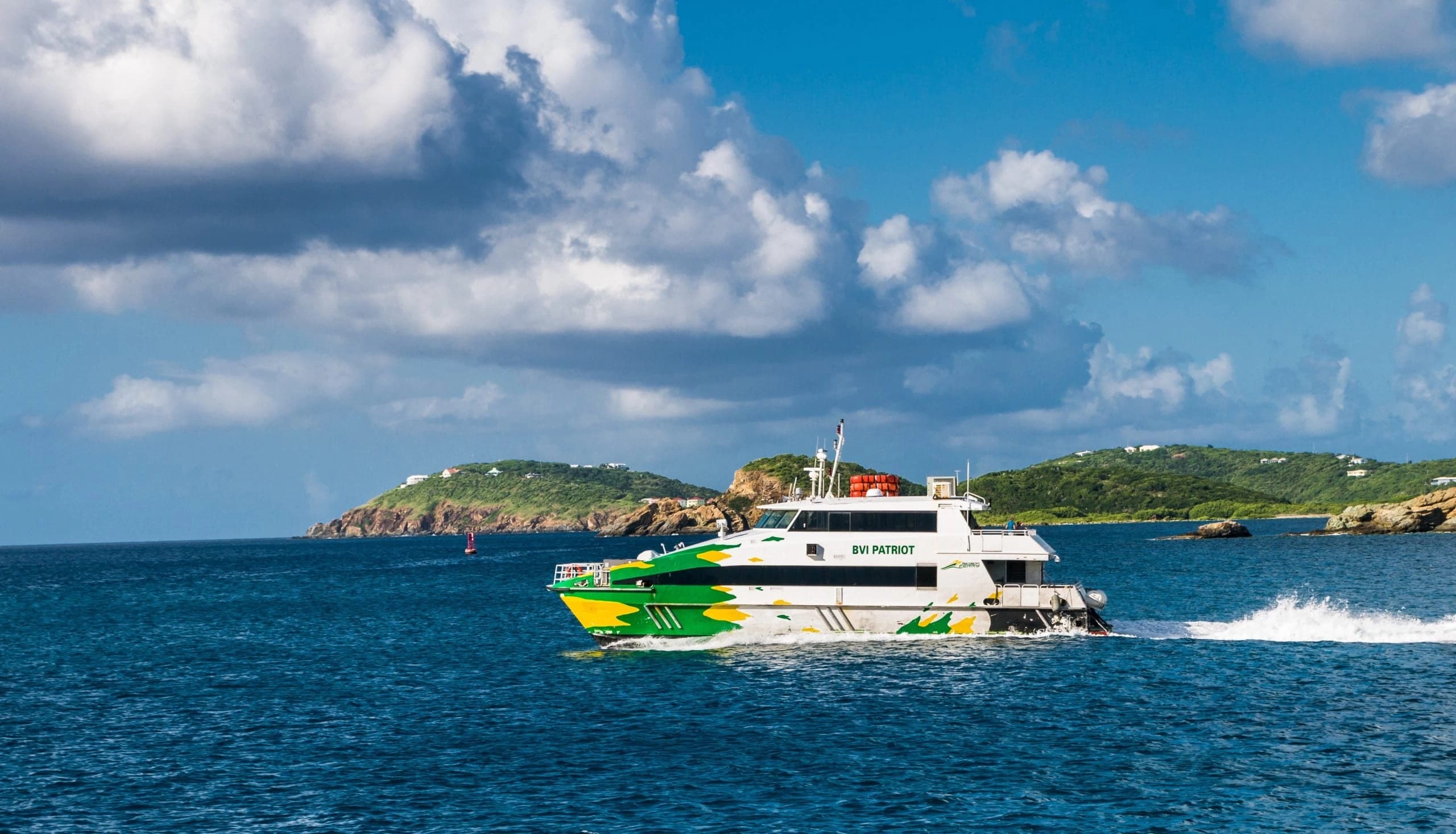
Ferries are a classic way into Tortola, especially from the US Virgin Islands. You clear BVI Immigration and Customs at the ferry terminal, so have your passport and embarkation card receipts ready. The main Tortola terminals are Road Town and West End (Soper's Hole).
| Route | Arrives at Tortola | Note |
|---|---|---|
| St. Thomas (USVI) ↔ Tortola | Road Town / West End | Clear BVI immigration; it's an international crossing |
| St. John (USVI) ↔ Tortola | West End (Soper's Hole) | Popular short hop; bring your passport |
| Virgin Gorda / Jost Van Dyke ↔ Tortola | Road Town / West End | Within the BVI, no re-clearance needed |
Operators such as Smith's Ferry, Speedy's and Native Son run these routes; schedules change seasonally, so check current timetables and allow time for immigration. Flying into St. Thomas (STT) and ferrying over is popular, from the airport it's a taxi to the Charlotte Amalie or Red Hook ferry dock, so leave a comfortable buffer between your flight and the boat.
Arriving by yacht or charter
The BVI is the sailing capital of the Caribbean, and clearance is a captain's job. On arrival, fly the yellow “Q” flag, and the captain clears in for the whole vessel at a designated port of entry before anyone else goes ashore. Most charters pre-file using SailClear to speed things up.
| Port of entry | Island |
|---|---|
| Road Town | Tortola |
| West End (Soper's Hole) | Tortola |
| Great Harbour | Jost Van Dyke |
| Spanish Town / St. Thomas Bay | Virgin Gorda |
- Passports for all crewEveryone aboard needs a valid passport; the captain presents them with the boat papers.
- SailClear pre-notificationFile your arrival online and bring the notification ID to the customs and immigration office.
- Cruising permit & park feesPay a cruising permit (per person, per day, seasonal) and, if using park moorings, National Parks Trust fees.
- Clear within opening hoursPorts of entry have set hours; after-hours clearance can be arranged in advance for an extra fee.
Skip the arrivals-hall scramble
Land at Beef Island, walk out, and find your name on a sign, or pick up a rental car and explore Tortola on your own schedule.
The customs declaration guide
Your Customs receipt from the embarkation card is your declaration. Officers may still ask questions and screen bags. The golden rule is simple: when in doubt, declare it. Declaring is free and easy; getting caught with something undeclared is not.
What you must declare
- Goods over your duty-free allowance, or anything for resale/commercial use
- Firearms, ammunition, and other weapons (require prior authorisation)
- Large sums of cash or currency
- Fresh food, plants, seeds, meat and animal products
- Pets and other live animals (with permits)
- Drones and certain electronics
- Controlled or unusual medications and large medicine quantities
- Professional or commercial equipment
BVI duty-free allowances
Per arriving traveller aged 18 and over, for personal, non-commercial use. Go over, and you may pay import duty on the excess.
| Category | Allowance (per adult 18+) |
|---|---|
| Cigarettes | 200 cigarettes |
| Cigars | 50 cigars |
| Spirits | 1 litre |
| Liqueurs (over 22% vol.) | 1 litre |
| Table wine | 2 litres |
| Fortified wine | 2 litres |
| Personal effects | Clothing, toiletries, camera, laptop, phone, for personal use |
| Cash & currency | Large amounts may need to be declared, check current Customs requirements |
Allowances are per person and can't be pooled. Duty-free figures are periodically updated by BVI Customs, differ between official notices, Tourism Board and cruise guidance, and may vary depending on how you arrive. Always verify the current limits with BVI Customs before relying on published quantities, especially for larger amounts or provisioning a charter.
Prohibited & restricted items
Violations mean confiscation, fines or prosecution. A few of these catch visitors out:
- Illegal drugs, strictly prohibitedNarcotics are illegal and penalties are severe. This includes items legal elsewhere, don't assume.
- Firearms & weapons, permit requiredFirearms, ammunition, spear guns and certain knives are controlled. Do not arrive with them undeclared.
- Marine souvenirs, do not exportTaking or exporting coral, queen conch shells, sea turtle shell/products, live shells or sea fans is illegal, these are frequent customs violations and harm the reefs.
- Food, plants & animals, restrictedFresh produce, meat, plants, seeds, soil and honey are commonly restricted or prohibited to protect local agriculture; declare any food or plant items.
- Counterfeit & obscene goods, prohibitedCounterfeit items and pornographic material are not allowed.
- Drones, declare & get authorisationDrone use may require authorisation depending on where you fly, particularly near airports, ports, government facilities and national parks. Declare a drone at customs and confirm current civil-aviation rules.
Travelling with children
- Every child needs a passport & formInfants included. Each child needs a valid passport for air travel and their own embarkation card entry.
- Consent letter for lone/single-parent travelIf a child travels without both parents, carry a signed consent letter from the absent parent(s) and supporting ID or a birth certificate.
- Guardians & groupsAdults travelling with children who aren't their own should carry written authorisation from the parents.
Travelling with pets
Bringing a pet to the BVI takes planning, start weeks ahead:
- Import permitApply for an import permit from the BVI Department of Agriculture before travelling.
- Health certificate & vaccinationsA recent veterinary health certificate and up-to-date rabies vaccination are typically required.
- Airline & routing rulesCheck your airline's pet policy and any transit-country rules on your connecting route.
- Confirm current requirementsRules and processing times change; verify directly with the Department of Agriculture.
Bringing medicines
- Original packaging + prescriptionKeep medicines in labelled original packaging and carry a copy of the prescription or a doctor's letter.
- Controlled medicines, declareNarcotic and controlled medicines, and large quantities, should be declared with documentation.
- Insulin, CPAP & liquid medsMedical devices and liquid medication are allowed; carry them in your hand luggage with documentation.
- Pack essentials in carry-onBring enough for your trip plus a buffer; island pharmacies may not stock every medication.
Money & currency in the BVI
One of the BVI's quiet perks: the US dollar is the official currency, so there's no exchange to think about if you're coming from the States.
| Feature | Details |
|---|---|
| Currency | US Dollar (USD), the official currency |
| Cards | Widely accepted at hotels and larger venues; carry cash for taxis, beach bars and small vendors |
| ATMs | Available in Road Town and main areas; fewer on sister islands, withdraw before island-hopping |
| Tipping | A service charge is often added; 10-15% is customary for good service otherwise |
| Currency declaration | Large amounts may need to be declared, check current Customs rules |
| Electricity | 110V, 60Hz; US-style Type A & B plugs |
| Driving | On the left; a temporary BVI permit is required |
The BVI imports nearly everything, so prices, especially for alcohol and dining, run high. Budget accordingly.
What happens at customs?
For most visitors it's quick and painless. Here's what to expect:
- You present your passport and embarkation card receipts.
- The immigration officer stamps your permitted stay and may ask about your plans, accommodation and onward travel.
- At customs you hand over your Customs receipt; most travellers are waved through.
- Bags may be screened or spot-checked, and agricultural items get particular attention.
- If you're carrying goods over your allowance, undeclared food, or large cash, expect questions and possible secondary inspection.
Common reasons travellers get delayed, and how to avoid them
- No embarkation cardFile it at bviedcard.gov.vg before you arrive and save the receipts.
- Passport too close to expiryAim for six months' validity; renew early if you're close.
- Undeclared food or agricultureDeclare all food, produce and plant items, when in doubt, declare.
- Medication without documentationOriginal packaging plus a prescription or doctor's letter for controlled meds.
- Large cash not declaredDeclare significant sums to avoid problems.
- No onward/return ticketHave proof of onward travel ready to show the officer.
In more serious cases, the same issues, no onward ticket, an incomplete embarkation card, insufficient funds, or a visit that looks like unauthorised work, can lead to refused entry. Travel with your documents in order and be ready to explain your plans, and it's rarely a problem.
Best time to visit Tortola
| Season | Months | What to expect |
|---|---|---|
| Peak / dry | Dec to Apr | Sunny, breezy, best for sailing and beaches; busiest and priciest |
| Shoulder | May to Aug | Warm, good value, generally lovely water |
| Low / storm season | Sep to Nov | Cheapest and quietest, but overlaps Atlantic hurricane season, watch forecasts |
Hurricane season runs June to November across the Atlantic; travel insurance is especially worth it in those months.
Health, water & food
- Water, check firstSupply is often cistern or desalinated and quality varies. Many visitors and resorts use bottled or filtered water; ask your accommodation.
- Before you goCheck current advice with your doctor and an official health authority (CDC or your national equivalent). Travel insurance with medical and evacuation cover is strongly recommended.
- Sun & seaThe trade winds hide how fast you burn. Reef-safe sunscreen, shade, water, and respect the currents on Atlantic-facing beaches.
- Food worth findingFresh fish, conch, roti and rum abound. The BVI's beach bars, from Cane Garden Bay to the legendary spots on Jost Van Dyke, are half the trip, browse restaurants to plan ahead.
Top things to do in and around Tortola
Once the paperwork's done, Tortola is your base for beaches, hikes and some of the best island-hopping in the Caribbean.
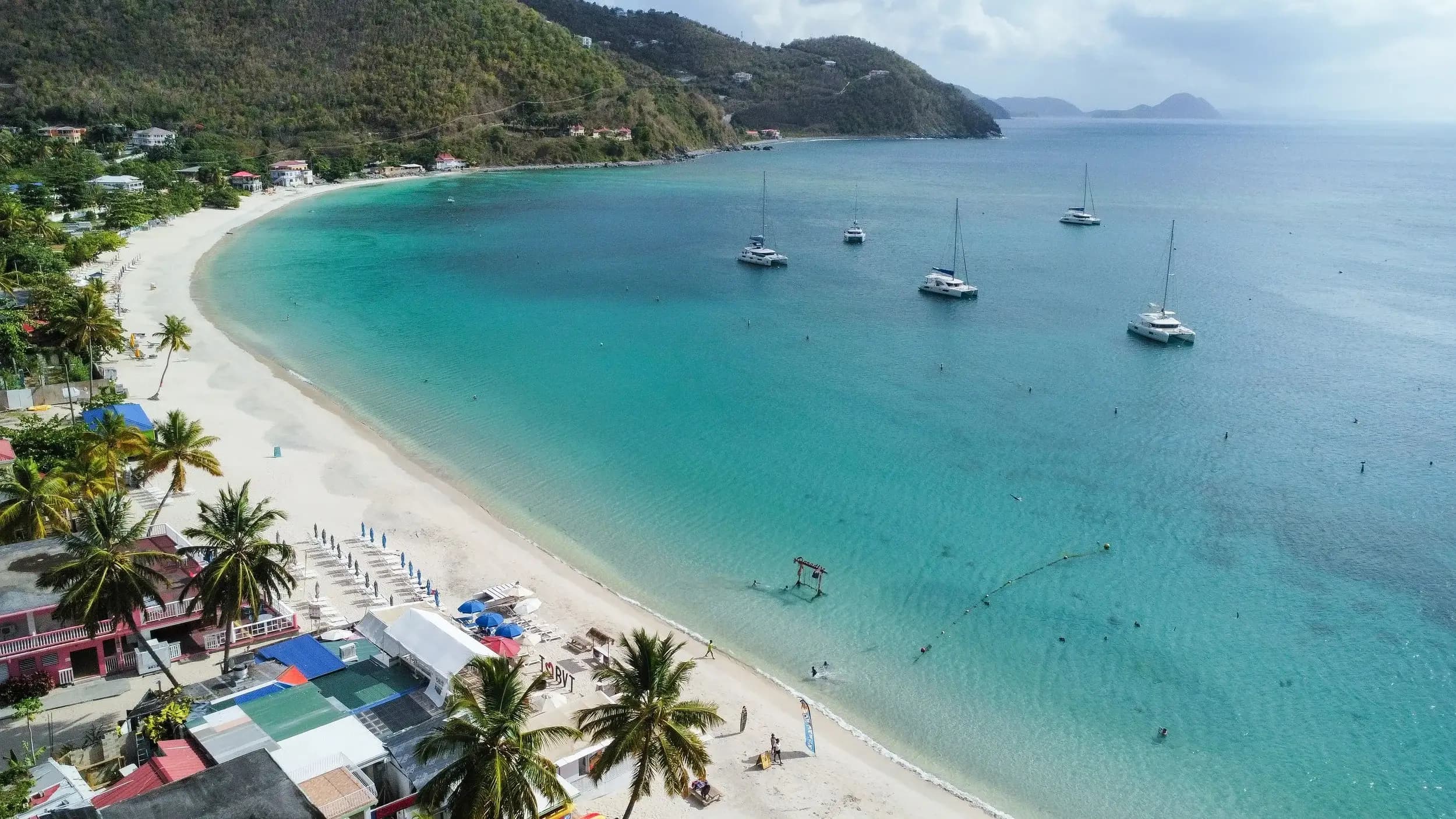
Cane Garden Bay
Tortola's postcard beach, calm water, beach bars and live music at sunset.
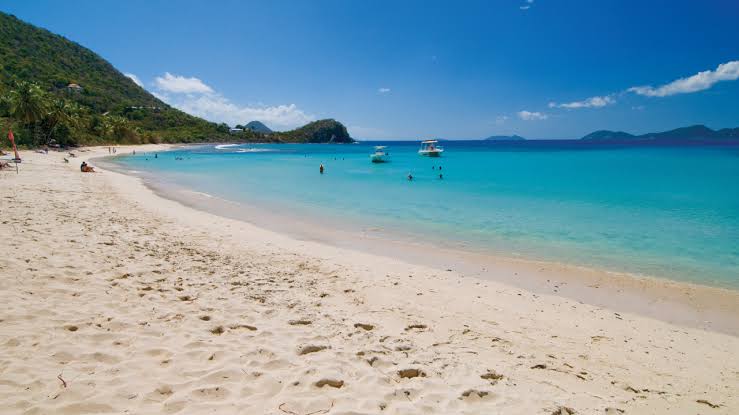
Smuggler's Cove
A quieter, snorkel-friendly cove at the west end, worth the bumpy road.

Sage Mountain National Park
The BVI's highest point, rainforest trails and views over the whole archipelago.
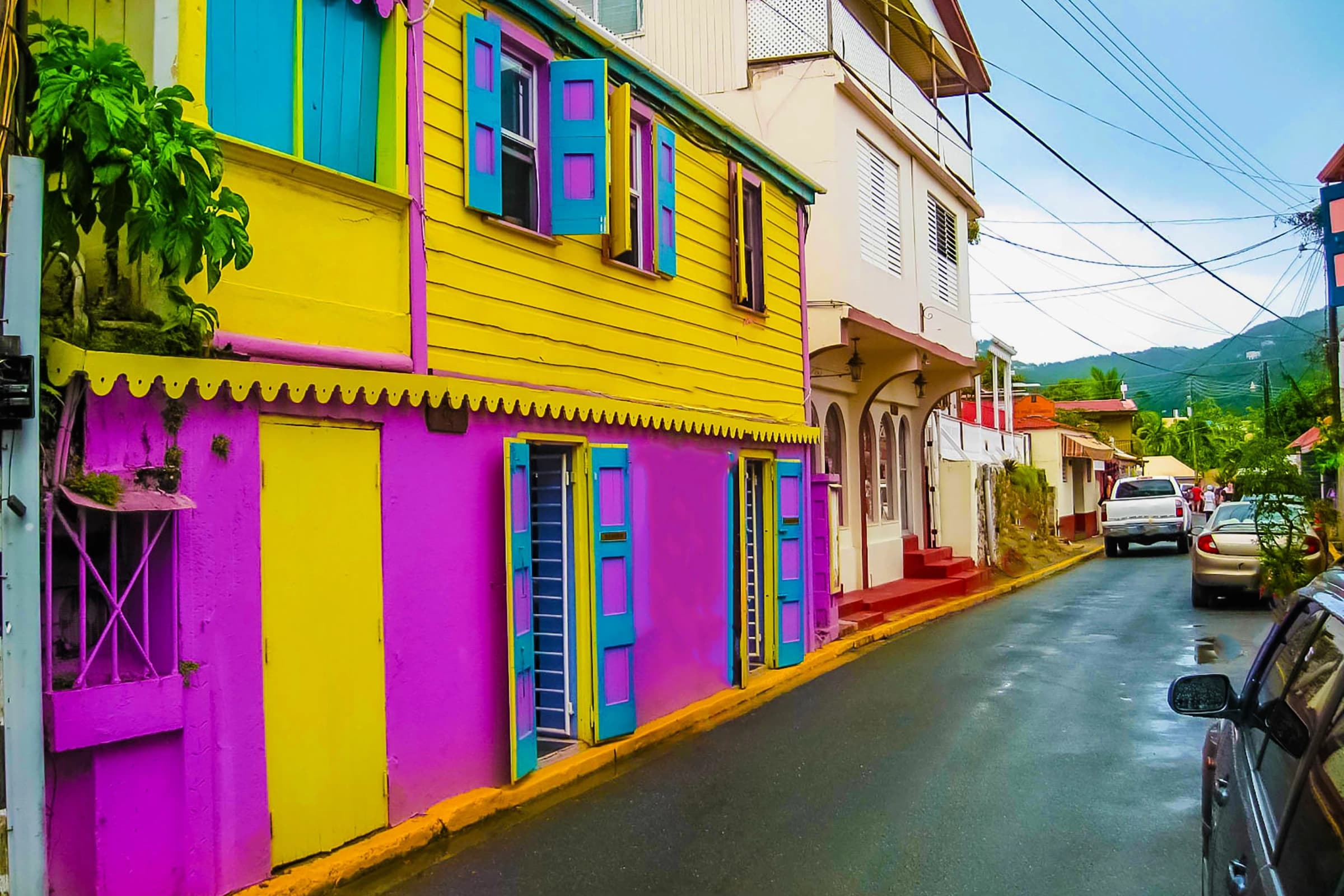
Road Town
The capital: harbour, markets, the botanic gardens and Tortola Pier Park.
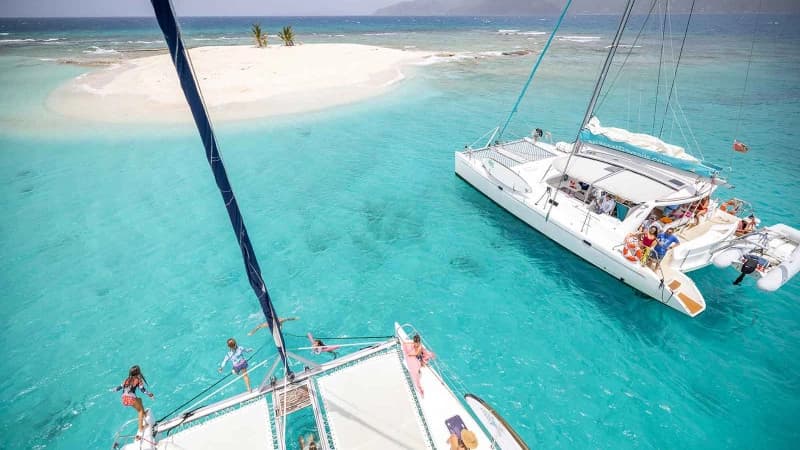
Day sail & The Baths
Charter or ferry to Virgin Gorda's giant granite boulders and grottoes.
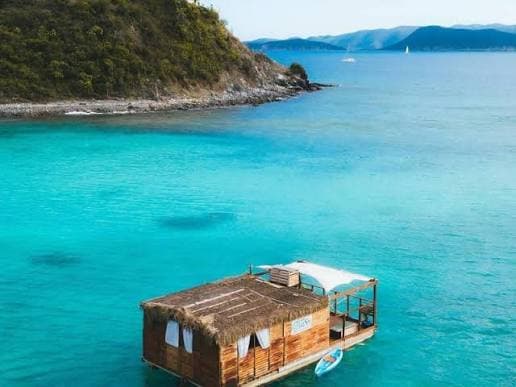
Jost Van Dyke
A short hop to White Bay's beach bars, some of the most famous in the Caribbean.
Keep planning: line up island tours, day sails, snorkeling trips and airport transfers so the only thing left to do is arrive.
A sample day in Tortola
- 8:00 amCoffee in Road TownBreakfast by the harbour before the heat builds.
- 9:30 amCane Garden BaySwim and stake out shade while the beach is quiet.
- 12:30 pmBeach-bar lunchFresh fish and a cold Painkiller, the BVI's own cocktail.
- 2:30 pmSage Mountain hikeCool rainforest trails and island-wide views.
- 5:30 pmSoper's HolePastel waterfront, shops and a sundowner at West End.
- 7:30 pmDinner & live musicBack to Cane Garden Bay for dinner as the music starts.
Got more time? Ferry to Virgin Gorda for The Baths, or spend a day on Jost Van Dyke's White Bay.
Where to stay
Your base shapes the trip, from Road Town's convenience to a quiet villa or a yacht:
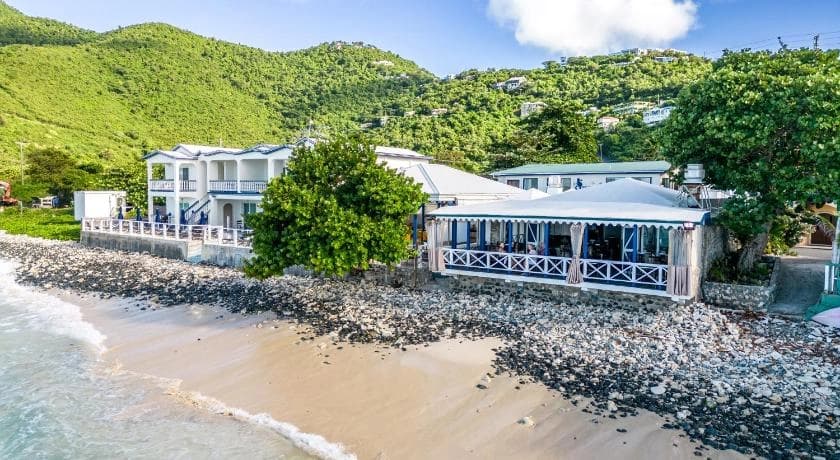
Road Town
Central, walkable, near the ferry docks and Pier Park. Best for first-timers and island-hoppers.
Cane Garden Bay
Beachfront, laid-back, music and sunsets. Best for a classic beach base.
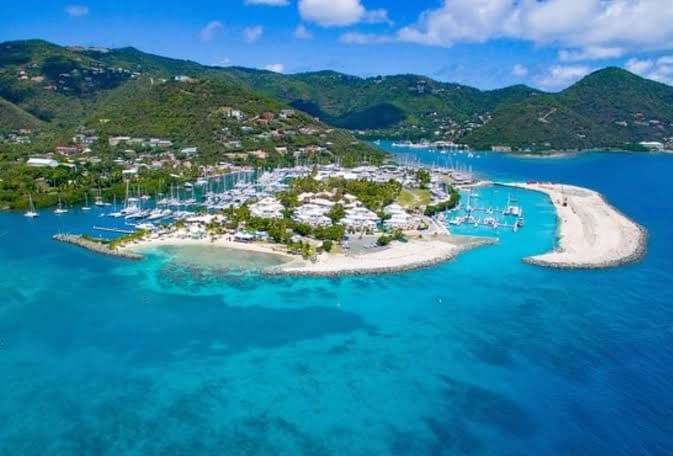
Charter yacht
Wake up in a new anchorage each day across the BVI. Best for sailors and groups.
Practical travel tips
Buffer your connections
Regional flights and ferries run on island time; leave slack between legs.
US plugs, no adapter for US devices
110V, Type A/B. UK/EU visitors need an adapter.
Sort connectivity
Check roaming or grab a local SIM/eSIM (Flow, CCT, Digicel). Wi-Fi is common at hotels.
Driving is on the left
Roads are steep and winding; a temporary BVI permit is required to rent.
Carry some cash
USD is standard, but taxis and beach bars often prefer cash.
Save emergency numbers
Emergencies: 999 (911 also works). Note your accommodation's contact.
Official BVI resources
This is an independent travel guide by CustomsBreeze. Confirm current requirements with the official sources below before you travel:
- bviedcard.gov.vgOfficial BVI online embarkation (Immigration & Customs) card portal
- bvitourism.comBVI Tourism Board, entry requirements, customs & immigration overview
- bvi.gov.vgGovernment of the Virgin Islands, Immigration & HM Customs
- gov.ukUK Government travel advice for the BVI
- travel.state.govUS State Department BVI travel information
