Aruba ED Card, Sustainability Fee & Entry Requirements
Aruba doesn't ease you in. You come down out of the clouds and the island is just there, flat, scrubby, sun-hammered, ringed by water in colours that look like a screensaver someone overcooked. The Dutch have run this rock with a quiet efficiency for a long time, and it shows the moment you step off the plane, including the paperwork. Before the first Balashi sweats through its label, there's the ED Card, Aruba's online entry form, and a small sustainability fee that's newer than most guidebooks admit. The good news: it's mostly painless if you do it before you fly. This guide covers the ED Card, the $20 fee, passports and visas, what customs actually lets you bring (sunscreen included, that's not a joke here), and how to get out of Queen Beatrix (AUA) and onto the sand.
- Capital
- Oranjestad
- Main airport
- Queen Beatrix (AUA)
- Currency
- Aruban Florin (USD accepted)
- Languages
- Dutch & Papiamento
- Time zone
- Atlantic (UTC-4, no DST)
- Best time
- Dec to Apr
- Power
- 127V · Type A & B (US-style)
- Entry form
- Online ED Card + $20

Planning your trip to Aruba?
Sort your airport transfer before you fly, or get a tailored quote for your Aruba trip.
How to complete the Aruba ED Card
Every air passenger entering Aruba, every adult, child and infant, regardless of nationality, must complete the Online ED Card (Embarkation/Disembarkation Card) before flying. It's filed at the official government portal, edcardaruba.aw, and it replaced the old paper landing card for good.
- 1File within 7 days of arrival
You can't submit it earlier than seven days before your arrival date (the system rejects the dates), and you cannot do it at the airport or on the plane. The sweet spot is 2-3 days before departure, enough buffer to fix a typo without it becoming a crisis.
- 2One card per person
A family of four means four separate ED Cards and four passports. Enter everything exactly as printed on the passport, a mistyped passport number is the kind of small error that ruins a morning, and pay the $20 sustainability fee if it applies to you.
- 3Get your "qualifier" QR code
On successful submission you receive a qualifier, a confirmation with a QR code, by email. Airlines check it at check-in (no qualifier, no boarding), and Aruban border control scans it on arrival. Screenshot it and keep it handy; phones die at the worst possible moment. Submitting the ED Card does not guarantee entry, the immigration officer at the border makes the final call. Cruise passengers are generally handled by the ship and exempt.
Is the Aruba ED Card free? The $20 sustainability fee, and third-party sites
The ED Card itself is free on the official portal, edcardaruba.aw, the only legitimate site. But since July 1, 2024, most visitors also pay a US$20 Sustainability Fee, collected through the same ED Card process (the platform was rebuilt in late 2024 with integrated payment).
Who's exempt from the $20 fee: children under 8, local residents, repeat visitors who already paid it earlier in the same calendar year, travellers in transit staying under 24 hours, and certain Aruban students abroad. Everyone else aged 8+ pays it once per visit.
Watch for the swarm of third-party look-alike sites (many with “edcard” or “aruba” in the domain) that charge an inflated “processing fee” to type your details into the free government form. Using one is your call, but you're paying a middleman, not Aruba. Stick to edcardaruba.aw.
Entry requirements
Have these ready before you reach immigration at Queen Beatrix (AUA):
- A valid passportIt should be valid for the duration of your stay; carry 6+ months' validity where possible, since airlines may enforce stricter rules at check-in via their own boarding policies. A US passport book is required for air travel, the passport card doesn't fly.
- Your ED Card qualifierThe QR confirmation from edcardaruba.aw, with the sustainability fee paid if it applies to you.
- A return or onward ticketOfficers may ask for proof of departure.
- Accommodation detailsYour hotel, resort or host address (you'll enter this on the ED Card too).
- Proof of sufficient fundsAruba's immigration guidance sets a benchmark of roughly US$75 per day if you're staying in a hotel, or about US$150 per day if staying with friends or family. Verify current figures with DIMAS.
Do I need a visa for Aruba? Visa requirements and length of stay
Most tourists don't need a visa. Aruba is part of the Kingdom of the Netherlands but runs its own entry rules and is not part of the European Schengen area. Admission is always the border officer's final call, confirm your nationality's status with DIMAS (Aruba immigration) before travelling.
| Country / region | Visa status (tourism) | Stay granted |
|---|---|---|
| USA | Visa free | Up to 90 days without an extension (special rule for US nationals) |
| Canada | Visa free | 30 days at the border, extendable via DIMAS |
| United Kingdom | Visa free | 30 days at the border, extendable via DIMAS |
| EU / EEA | Visa free | 30 days at the border, extendable via DIMAS |
| Netherlands (Dutch nationals) | Visa free | Up to 180 days |
| Holders of valid US/Canada/UK/Schengen multi-entry visas or residency | Often visa-exempt | Confirm before travel |
| Other nationalities | Visa may be required in advance | As granted |
How long can I stay in Aruba?
The standard admission is 30 days for most visitors, stamped by the officer on arrival. US nationals are the exception, they may stay up to 90 days without applying for anything. Anyone can apply to DIMAS to extend, up to a maximum of 180 days per calendar year, but extensions beyond 30 days require valid travel insurance and proof of funds. Aruba does not generally issue tourist visas on arrival.
Aruba customs allowances & duty-free limits
Per arriving traveller aged 16 and over, for personal, non-commercial use. Go over, and you'll pay import tax and excise duty on the excess. When in doubt, declare.
| Category | Allowance |
|---|---|
| Alcohol | 1 liter of spirits OR 2.25 liters of wine OR 3 liters of beer (one option, not combined) |
| Tobacco | 200 cigarettes OR 50 cigars OR 250g of tobacco (one option) |
| Perfume | A reasonable amount for personal use |
| Gifts & goods | Up to AWG 400 (about US$225) in value, duty-free |
| Personal effects | Clothing, toiletries, camera, laptop, phone, duty-free |
| Cash & currency | No limit on import, but declare US$10,000 or more (or equivalent) |
Allowances are per person and can't be pooled. Figures confirmed against the Aruba government customs page (gobierno.aw) and Departamento di Aduana (douane.aw); the cigar count and the AWG 400 gift value vary slightly between sources, so confirm before relying on them.
Prohibited & restricted items
Violations mean confiscation, fines or prosecution. When in doubt, declare. A few of these are distinctly Aruban and catch tourists out:
- Oxybenzone sunscreen, bannedAruba prohibits the import of sunscreens containing oxybenzone (non-reef-safe sunscreen) to protect its reefs. Bring reef-safe sunscreen instead. Yes, they do check, and yes, it gets confiscated.
- Single-use plastics, bannedAruba has banned single-use plastic bags and similar items; don't pack them in bulk.
- Marine souvenirs, do not remove or exportTaking coral, conch shells, sea stars or turtle eggs is illegal.
- Weapons & drugsFirearms and ammunition require permits; illegal narcotics, counterfeit goods and pornographic material are prohibited.
- Food, plants & animalsFresh/perishable foods, meat, plants and plant products are restricted or prohibited; pets need a veterinary health certificate plus, for dogs and cats, a rabies certificate.
- Prescription medicationCarry it in original packaging with the prescription. Large quantities should be declared.
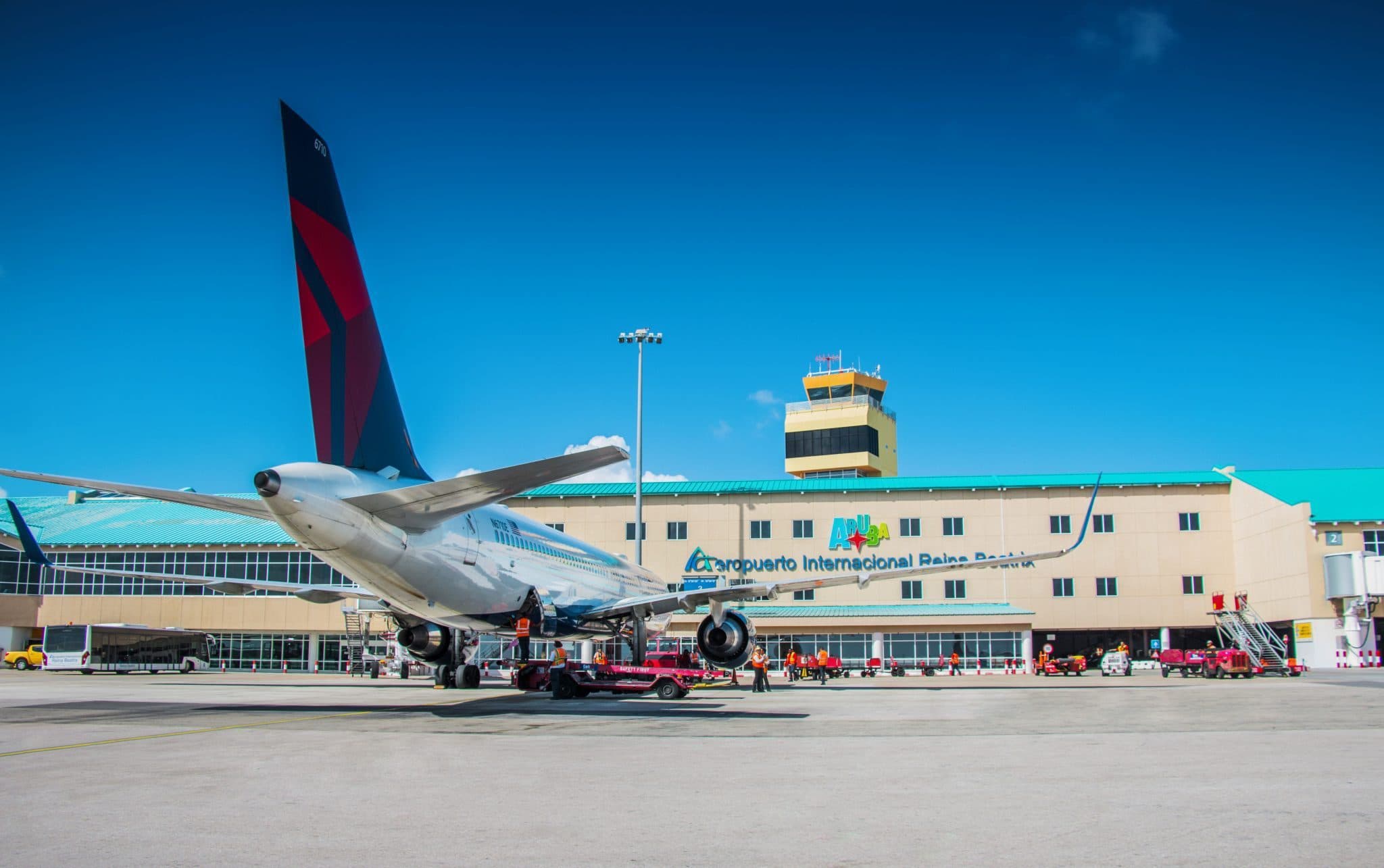
Arriving at Queen Beatrix Airport (AUA)
Aruba's airport tends to run more smoothly than much of the Caribbean, Dutch organization helps. After landing:
- 1 · ImmigrationPresent your passport and ED Card qualifier (QR code). The officer stamps your permitted stay.
- 2 · Baggage claimCollect your checked luggage.
- 3 · CustomsDeclare anything restricted or over your allowance; bags may be screened.
- 4 · Arrivals hallResort transfers, taxis, rental desks and tour operators are just outside.
Skip the arrivals-hall scramble
Land, walk out, and find your name on a sign. Book a verified driver to your Palm Beach or Eagle Beach resort before you fly.
Money matters
The official currency is the Aruban Florin (AWG), pegged to the US dollar, but in practice you'll barely touch it. US dollars are accepted almost everywhere, and cards are standard.
| Feature | Details |
|---|---|
| Currency | Aruban Florin (AWG), pegged at roughly 1.79 AWG = 1 USD |
| US dollars | Accepted nearly everywhere; cards widely accepted |
| Tipping | A service charge is often added; 10-15% is customary for good service |
| Hotel/sales taxes | A government room tax plus service charge are typically added to hotel bills; verify current figures |
| Sustainability fee | US$20 per visitor (8+), paid via the ED Card, see above |
| Currency declaration | Declare US$10,000 or more |
| Electricity | 127V; US-style Type A & B plugs (UK/EU travellers need an adapter) |
| Driving | On the right |
Aruba is not cheap, it imports nearly everything, and alcohol especially is pricey on-island. Budget accordingly.
Best time to visit Aruba
Warm, dry and breezy most of the year, generally 28°C to 32°C (82°F to 90°F), and, crucially, outside the main hurricane belt, so it dodges most of the storms that rattle islands to the north.
| Season | Months | What to expect |
|---|---|---|
| Peak / dry | Dec to Apr | Sunniest, breeziest, busiest and priciest, book early |
| Shoulder | May to Aug | Warm, excellent beach weather, better value |
| Lower | Sep to Nov | Hotter, cheapest, fewer crowds; minimal storm risk vs. the rest of the Caribbean |
Trade winds keep Aruba feeling cooler than the thermometer suggests, even in summer.
Health, water & food in Aruba
This is where the trip earns its keep.
- Water, drink itAruba's tap water is desalinated and famously safe and good-tasting. One less expense and one less worry.
- Before you goCheck current advice with your doctor and an official health authority (CDC or your national equivalent). Travel insurance with medical coverage is strongly recommended (and required if you extend your stay past 30 days).
- SunRelentless, and the trade winds trick you into not noticing you're burning. Reef-safe sunscreen (remember the oxybenzone ban), shade, water.
- Food, the part worth flying forAruba eats like the crossroads it is. Start with a pastechi, a fried stuffed pastry, from a roadside spot at breakfast. Find keshi yena, the island's great comfort dish: a shell of cheese stuffed with spiced stewed meat. Eat the fresh catch, wahoo, snapper, grouper, where the tablecloth is paper and the fish was swimming this morning, and wash it down with a cold Balashi.
Top things to do in Aruba
Twelve miles of white sand, cactus deserts and a lunar coastline, pastel Dutch streets and water so blue it looks retouched. Aruba is far more than its lobby bar.
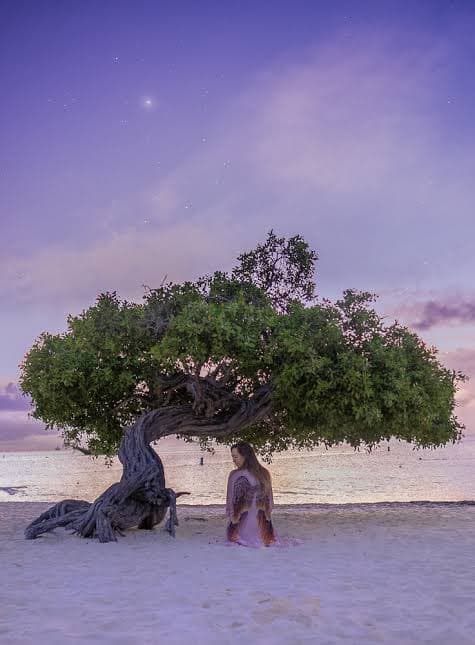
Eagle Beach
Wide, calm and regularly ranked among the best beaches on earth, with the famous wind-bent divi-divi trees leaning permanently sideways. Lower-key than Palm Beach and arguably the prettier of the two.
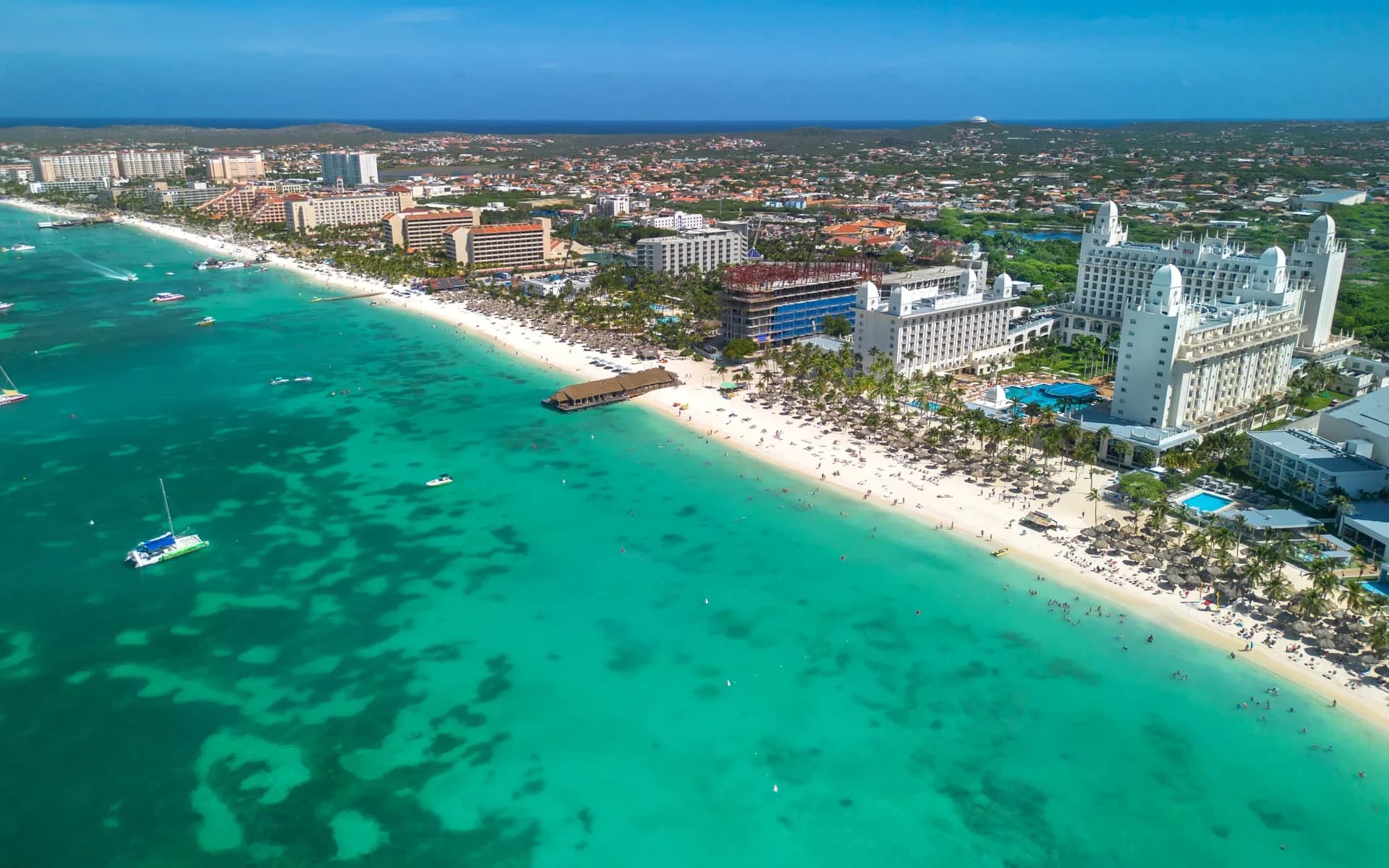
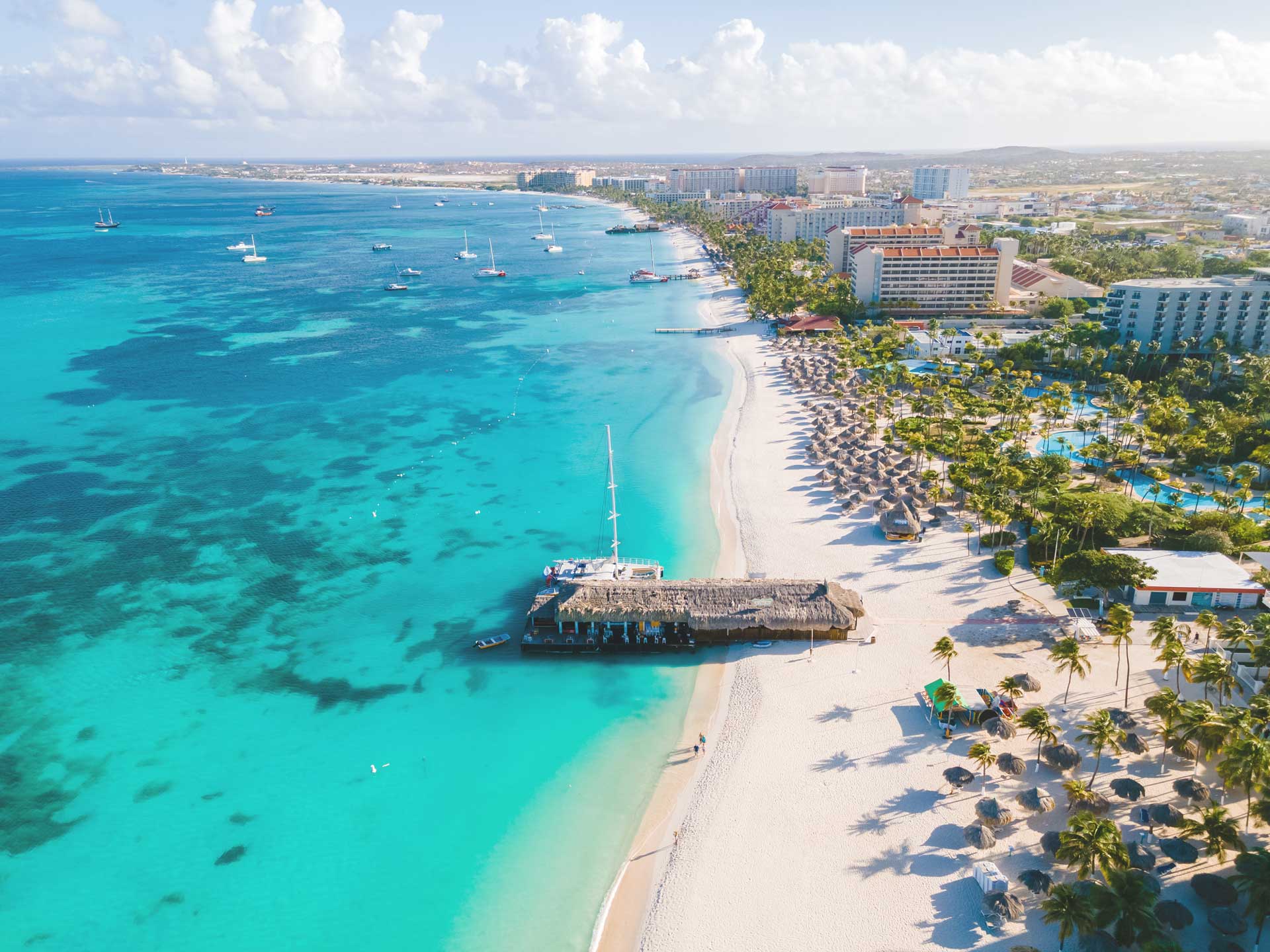
Palm Beach
The postcard: high-rise resorts, beach bars, watersports and water so blue it looks retouched. The social, busy stretch, sunset cocktails and pier-side dining.
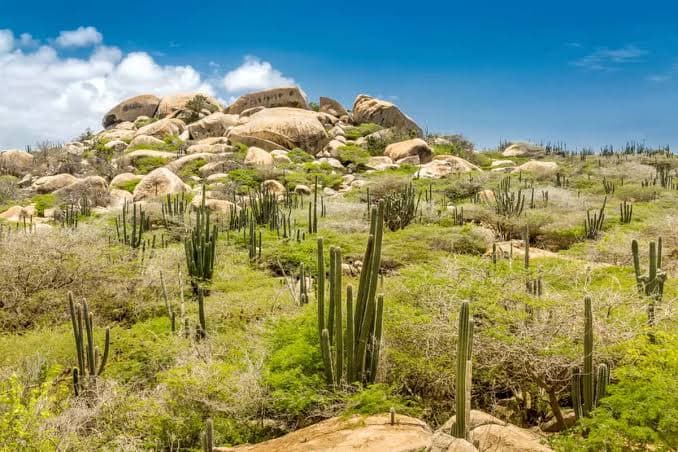
Arikok National Park
Nearly a fifth of the island, cacti, caves, gold-mine ruins and a wild, lunar coastline pounded by surf. The Aruba that isn't a resort.
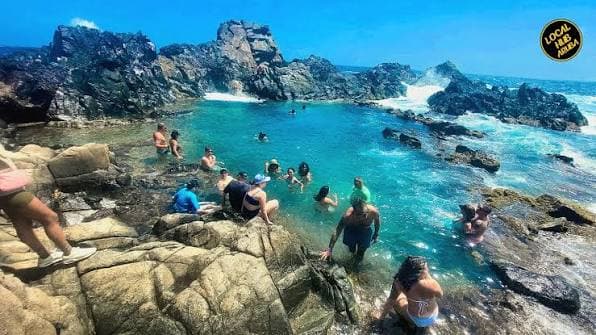
The Natural Pool (Conchi)
A volcanic-rock swimming hole inside Arikok, reachable only by 4x4, ATV, horseback or a hike. Rough trip, genuinely fun reward.
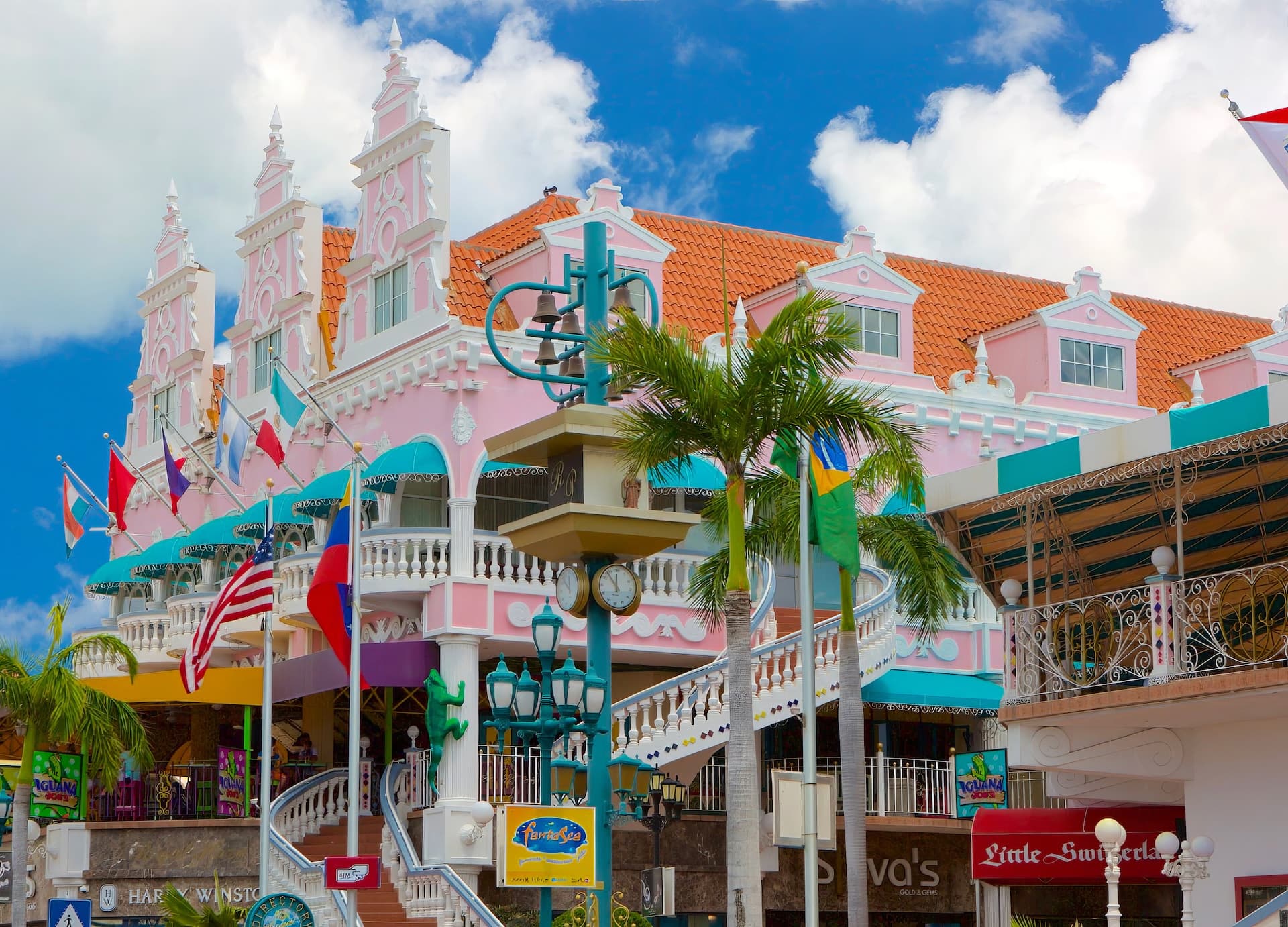
Oranjestad
Pastel Dutch-colonial buildings, the streetcar, shopping, casinos and seafood. Walkable, photogenic and easy.
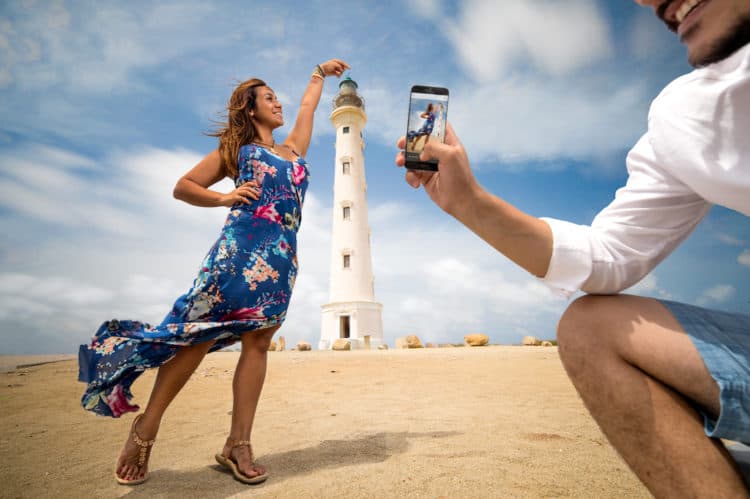
California Lighthouse & the north tip
Drive to the island's windswept northern point for big views, dunes and the landmark lighthouse, best at sunset.
A sample day in Aruba
Beat the heat to the sand, trade the beach for cactus and volcanic coast by midday, and finish at the lighthouse as the sky goes orange.
- 8:00 amPastechi & coffeeBreakfast like a local before the heat lands.
- 9:00 amEagle BeachStake out shade under the divi-divi trees while it's calm.
- 11:30 amOranjestadWander the pastel streets and the waterfront.
- 1:00 pmFresh fish lunchGrilled local catch, paper tablecloth, cold Balashi.
- 3:00 pmArikok or the Natural PoolTrade the sand for cactus and volcanic coast by 4x4.
- 6:30 pmSunset at the California LighthouseThen dinner, keshi yena if you can find it done right.
More time? Snorkel the Antilla wreck, ride to Baby Beach in the far south, or take a sunset sail.
Where to stay in Aruba
Each area has a distinct character, and choosing the right base shapes your whole trip. Here's how the most popular visitor areas compare:
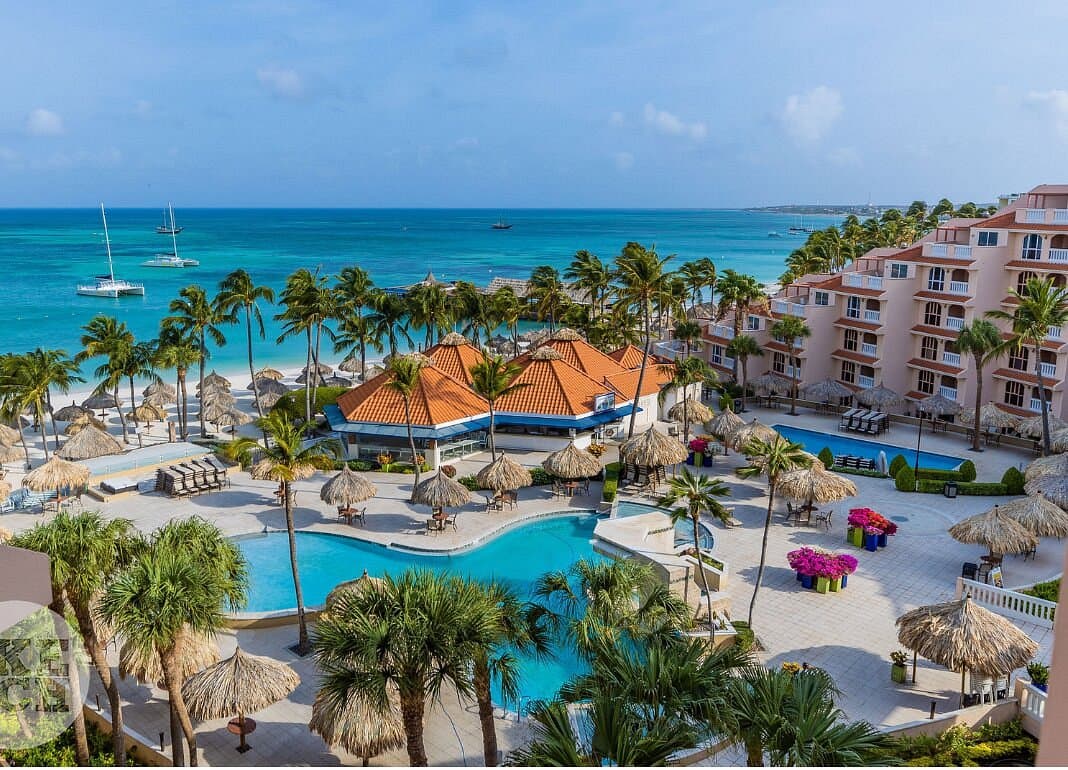
Palm Beach
Resorts, nightlife, casinos and watersports. Best for first-timers and anyone who wants everything on tap.
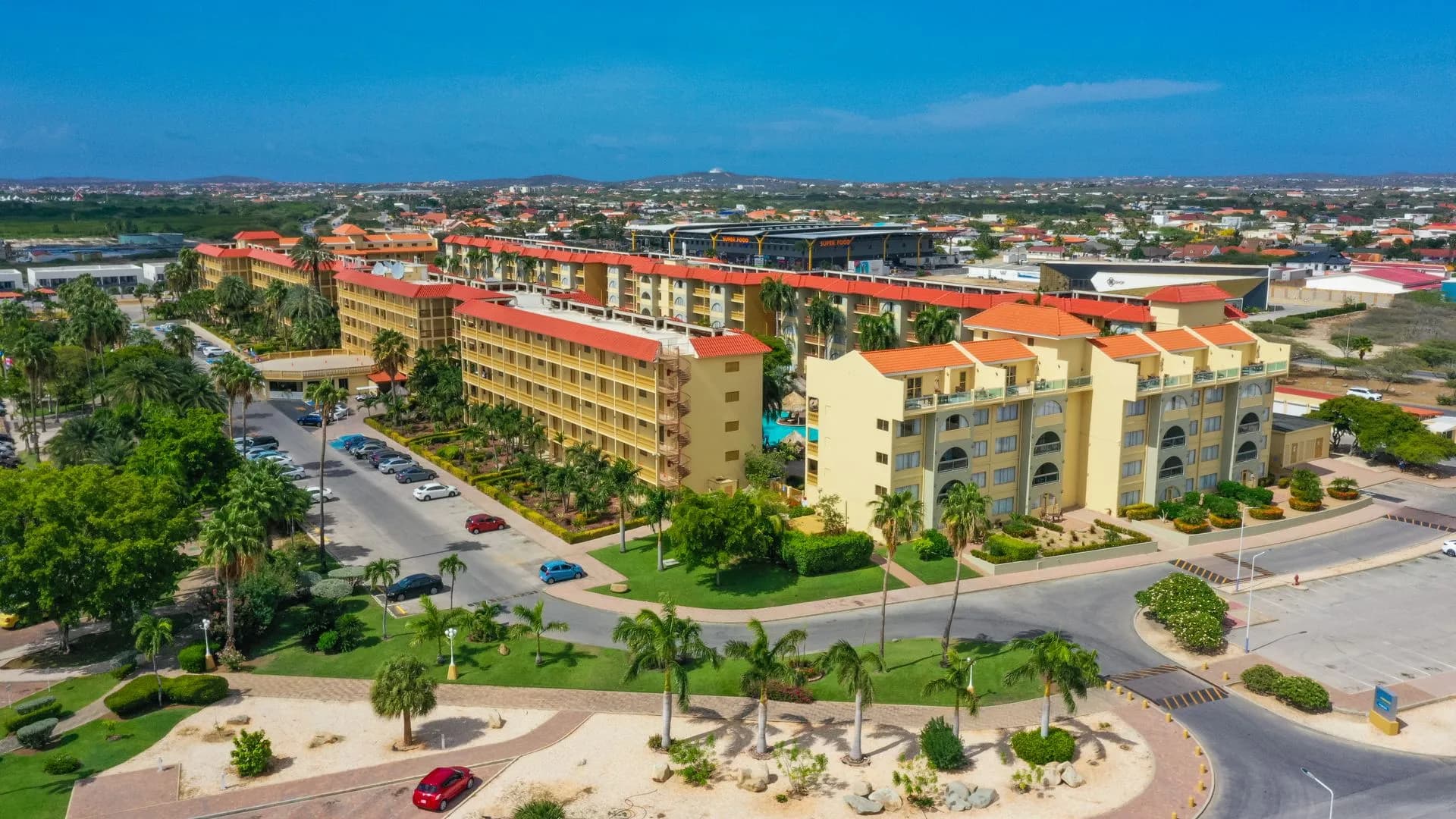
Eagle Beach
Quieter, boutique, beautiful. Best for couples and relaxation.
Oranjestad
Shopping, dining, cruise-port buzz and local atmosphere. Best for a more urban, walkable base.
Official Aruba resources
This is an independent travel guide by CustomsBreeze. Confirm current requirements with the official sources below before you travel:
- edcardaruba.awOfficial Aruba Online ED Card portal (and sustainability fee)
- aruba.comAruba Tourism Authority, ED Card & immigration overview
- dimasaruba.awDIMAS, immigration, length of stay & extensions
- douane.aw / gobierno.awAruba Customs (Departamento di Aduana), duty-free & restricted goods
- airportaruba.comQueen Beatrix International Airport