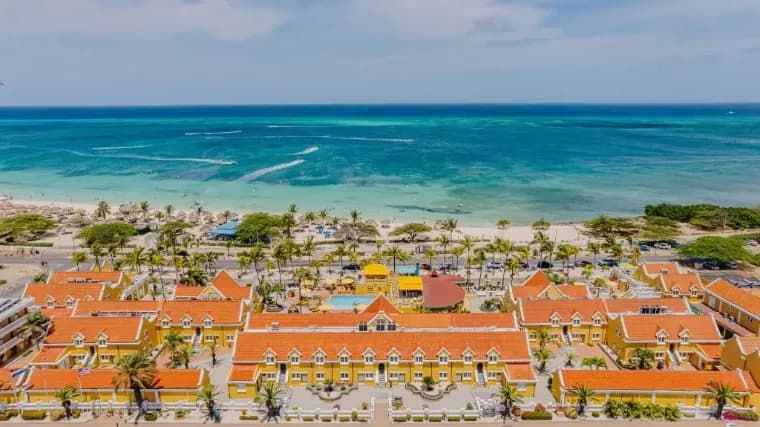
Curaçao Digital Immigration Card & Entry Requirements
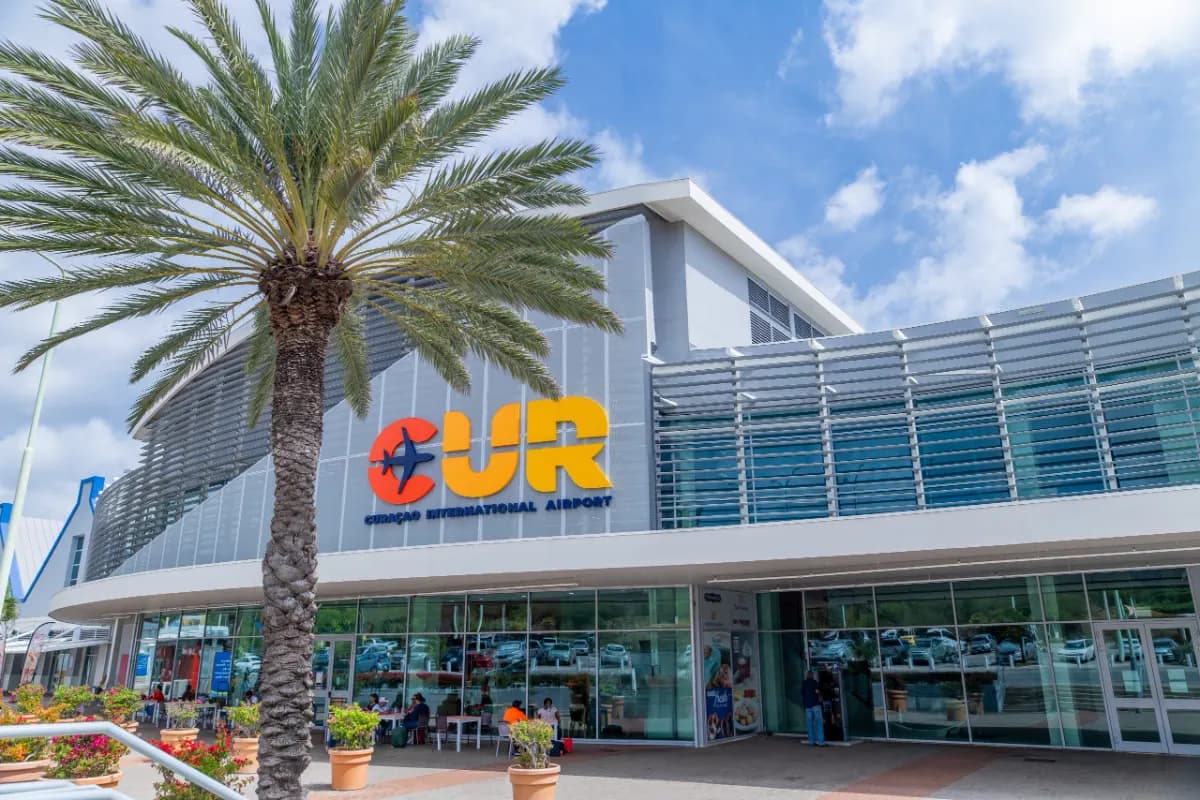
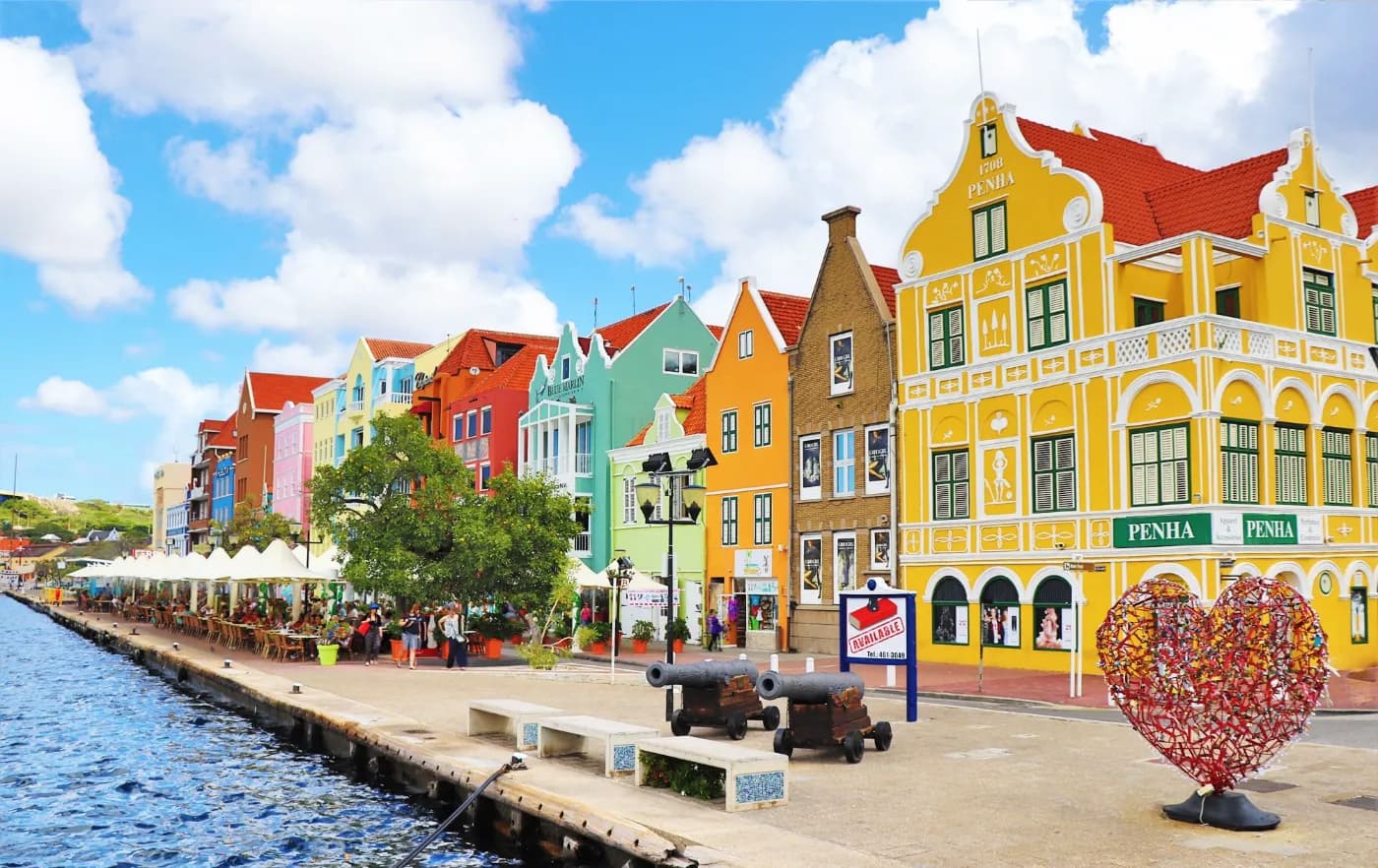
Willemstad hits you like a paint box spilled on the water: ochre, cobalt and blood-orange townhouses lined up along the channel, Dutch gables baking under a hard Caribbean sun. But before any of that, before the first cold Amstel Bright and the first plate of stewed goat, there's the paperwork. Curaçao asks one thing of you before you fly: the Digital Immigration Card (DI-Card), a free online arrival form that quietly retired the paper landing card back in 2019. It's mandatory for all international visitors (residents of Curaçao are the exception), you file it at the official portal, dicardcuracao.com, within seven days of departure, and it costs nothing. No app, no QR scanner, just a short form and a confirmation you show at check-in and on arrival. This guide walks the DI-Card start to finish, then the rest of the drill: passports and visas, duty-free allowances, the currency declaration threshold, prohibited items, and arrival at Curaçao International Airport (Hato, CUR).
- Capital
- Willemstad
- Main airport
- Curaçao International (Hato, CUR)
- Currency
- Antillean Guilder (ANG); USD accepted
- Languages
- Dutch, Papiamentu, English
- Time zone
- Atlantic (UTC-4, no DST)
- Best time
- Dec to Apr
- Power
- 127V · Type A & B (US-style)
- Entry form
- DI-Card (dicardcuracao.com)

How to complete the Curaçao Digital Immigration Card (DI-Card)
The DI-Card is filed online before you fly, and everything else happens on arrival at Hato. There's no app and no fee, just a short form on the official portal dicardcuracao.com and an email confirmation you keep on your phone. Here is the full sequence.
- 1Complete the DI-Card online before you fly
Within the 7 days before travel, fill out the free Digital Immigration Card at dicardcuracao.com. You need a valid passport and a working email address, and you enter passport details, flight information and where you are staying. Every traveller needs their own card, including babies and children, completed by a parent.
- 2Save your email confirmation
After you submit, a confirmation is emailed to you. This is your proof of qualification to travel and is mandatory. Keep a screenshot or printout as an offline backup in case of weak signal on arrival.
- 3Show your confirmation at check-in
Your airline will ask for the DI-Card confirmation at check-in before they board you. Without it you may be refused boarding, so complete it at least 24 hours before departure.
Who needs a DI-Card, and is it really free?
Every foreign traveller, of any nationality and any age, arriving by air or sea needs a DI-Card. Children and infants each need their own card, filled in by a parent. Residents of Curaçao are exempt (a resident is someone registered in Curaçao with valid residency; if you were born in Curaçao but live abroad, you still need a card, it's about residency, not birthplace). Travellers in transit who check in again with a different carrier are also required to complete it. If in doubt, fill it in.
The DI-Card is completely free on the official portal, dicardcuracao.com, the only legitimate site. Curaçao charges no government fee. The catch is the swarm of third-party look-alike websites (often with "dicard", "digicard" or "curacao" in the domain) that copy the official portal's look and charge an inflated "processing fee" to type your details into the free government form. The Curaçao authorities have publicly warned that these sites are not authorised. To stay safe, start from the official tourism site curacao.com or go straight to dicardcuracao.com, and remember there is no charge. The official support email is dicardsupport@curacao.com.
Entry requirements
Have these ready before you reach immigration at Hato (CUR):
- A valid passportValid for the duration of your stay; many travellers and airlines expect validity well beyond your departure date. A US passport book is required for air travel; the passport card is not valid for flights.
- Your DI-Card confirmationThe email confirmation from dicardcuracao.com, ready on your phone or printed, completed within 7 days before travel.
- A return or onward ticketOften requested, and a common reason travellers are turned away if they cannot show one.
- Proof of accommodation and sufficient fundsYour booking and evidence you can cover your stay.
Do I need a visa for Curaçao? Visa requirements and length of stay
Most tourists don't need a visa. Curaçao is part of the Kingdom of the Netherlands but runs its own entry rules and is not part of the European Schengen area. One thing that trips people up: the DI-Card is required regardless of your visa status, visa-free or not, it's a separate, mandatory step. Admission is always the border officer's final call, so confirm your nationality's status with a Dutch/Curaçao mission before travelling.
| Country / region | Visa status (tourism) | Stay granted |
|---|---|---|
| USA & Canada | Visa free (DI-Card required) | Up to 90 days per visit |
| United Kingdom | Visa free (DI-Card required) | Up to 90 days per visit |
| EU / EEA & Switzerland | Visa free (DI-Card required) | Up to 90 days per visit |
| Netherlands (Dutch nationals) | Visa free (DI-Card required) | Longer stays possible; different rules apply |
| Holders of valid US/Canada/UK/Schengen visas or permits | May qualify for an exemption | Varies by nationality; confirm before travel |
| Other nationalities | Visa may be required in advance | As granted |
How long can I stay in Curaçao?
For DI-Card purposes a "visitor" is someone staying 1 to 90 nights for leisure, business or family, without working for pay locally. Most visa-free nationals are admitted for in total. The exact length is set by the immigration officer on arrival. Residents of Curaçao do not need to complete the DI-Card.
Curaçao customs allowances & duty-free limits
Per arriving non-resident traveller aged 18 and over, for personal, non-commercial use. Go over, and the whole quantity can become dutiable; commercial quantities must be declared. Curaçao uses a green channel / red channel system, choose red if you have anything to declare. When in doubt, declare.
| Category | Allowance |
|---|---|
| Alcohol | 1 litre of distilled spirits OR 2.25 litres of wine OR 3 litres of beer (one option, not combined) |
| Tobacco | 200 cigarettes OR 50 cigars OR 100 cigarillos OR 250g of tobacco (one option) |
| Perfume | A reasonable amount for personal use, no specific restriction |
| Gifts & goods | Personal goods, souvenirs and gifts up to roughly ANG 400 in value; above this, declare to Customs (verify the current figure) |
| Personal effects | Clothing, toiletries, camera, laptop and phone for your own use enter duty-free |
| Cash & currency | No limit on import, but declare ANG 20,000 or more (about US$11,000, or the equivalent in any currency) |
Allowances are per person and can't be pooled, and goods can't be split between travellers to stay under a threshold. Customs thresholds are periodically updated and the exact gift-value figure varies between sources, so verify the current allowance directly with Curaçao Customs (Douane) before you travel.
Prohibited & restricted items
Violations mean confiscation, fines or prosecution. When in doubt, declare. A few of these catch tourists out, especially the drug rules, which are stricter than in the Netherlands:
- Drugs, zero toleranceUnlike the Netherlands, marijuana is illegal in Curaçao and even the smallest amount is punishable by law. Cocaine, heroin, MDMA and other narcotics are likewise illegal. There is no 'coffeeshop' culture here.
- Weapons & ammunitionFirearms, switchblades, explosives and similar weapons are prohibited without specific, pre-arranged government permits.
- Food, plants & animalsFresh and perishable foods, meat, plants and plant products are restricted or prohibited. Pets need a veterinary health certificate and, for dogs and cats, a valid rabies certificate, arrange import requirements well in advance.
Arriving at Curaçao International Airport (CUR)
International flights land at Curaçao International Airport (CUR), also known as Hato, a short drive from Willemstad. After landing:
- 1 · ImmigrationPresent your passport and DI-Card confirmation. The officer sets your permitted stay.
- 2 · Baggage claimCollect your checked luggage.
- 3 · CustomsTake the green channel if you have nothing to declare, or the red channel for anything restricted or over your allowance.
- 4 · Arrivals hallTaxis, pre-booked transfers, rental desks and resort shuttles are just outside.
Skip the arrivals-hall scramble
Land, walk out, and find your name on a sign. Book a local driver to your Willemstad, Jan Thiel or west-coast hotel before you fly.
Money matters
The official currency is the Curaçaoan / Netherlands Antillean Guilder (ANG), also called the florin, pegged to the US dollar. In practice you'll often pay in dollars. US dollars are widely accepted, and cards are standard, though you sometimes get fairer value paying in guilders.
| Feature | Details |
|---|---|
| Currency | Antillean Guilder (ANG / florin), pegged at roughly 1.79 ANG = 1 USD |
| US dollars | Widely accepted; cards widely accepted |
| Tipping | A service charge is often added; ~10–15% is customary for good service |
| Sales tax (OB) | An indirect turnover tax (OB) applies to most goods and services; hotels add tax plus a service charge. Rates change, so verify |
| Currency declaration | Declare ANG 20,000 or more (about US$11,000, or equivalent) |
| Electricity | 127V; US-style Type A & B plugs (UK/EU travellers need an adapter) |
| Driving | On the right |
Curaçao imports most goods, so prices, especially imported alcohol and groceries, can run higher than you'd expect. Budget accordingly.
Best time to visit Curaçao
Warm, dry and breezy most of the year, generally 28°C to 31°C (82°F to 88°F), and, crucially, outside the main hurricane belt, so it dodges most of the storms that rattle islands to the north. Steady trade winds keep Curaçao feeling cooler than the thermometer suggests, even in summer.
| Season | Months | What to expect |
|---|---|---|
| Peak / dry | Dec to Apr | Sunniest, busiest and priciest; book early |
| Shoulder | May to Aug | Warm, excellent beach and diving weather, better value |
| Lower | Sep to Nov | Hottest and most humid, cheapest, fewer crowds; minimal storm risk vs. the rest of the Caribbean |
Health, water & food in Curaçao
- Water, drink itCuraçao's tap water is desalinated and held to high standards, generally considered safe and good to drink straight from the tap.
- Before you goCheck current advice with your doctor and an official health authority such as the CDC or your national equivalent. Travel insurance with medical coverage is strongly recommended.
- Sun & foodThe sun is strong year-round, so sunscreen, shade and water, especially the first days. Try local specialities like keshi yena, fresh fish from the floating market, and a cold Amstel Bright.
Top things to do in Curaçao
A UNESCO-listed capital in candy colours, dozens of sheltered cove beaches, and some of the best shore diving on the planet. Curaçao is far more than its resort pools.
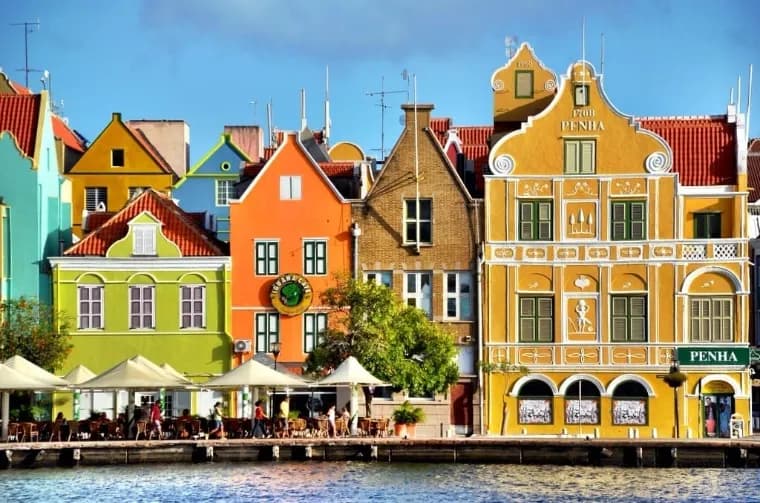
Willemstad & Handelskade
The UNESCO World Heritage capital: a row of pastel Dutch-colonial gables along St Anna Bay, the swinging Queen Emma pontoon bridge, and the Punda and Otrobanda districts to wander between.
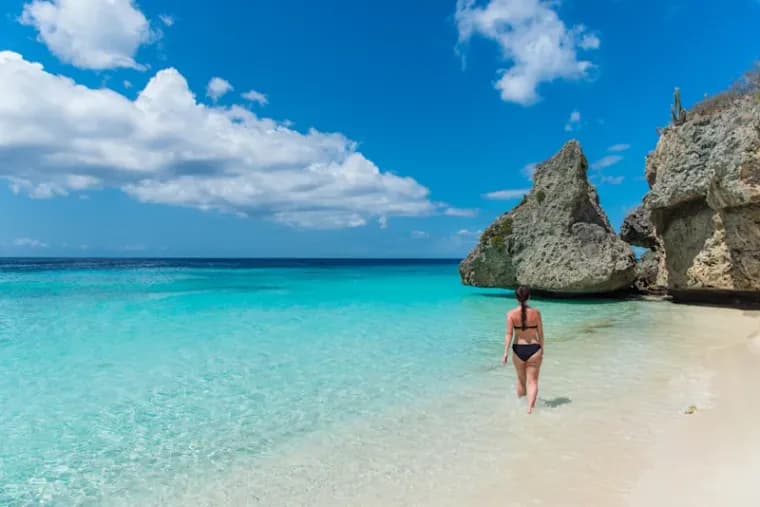
Cas Abao Beach
A postcard west-coast cove, powder sand, calm turquoise water and a house reef a few fin-kicks offshore. Loungers, a beach bar and easy snorkelling.
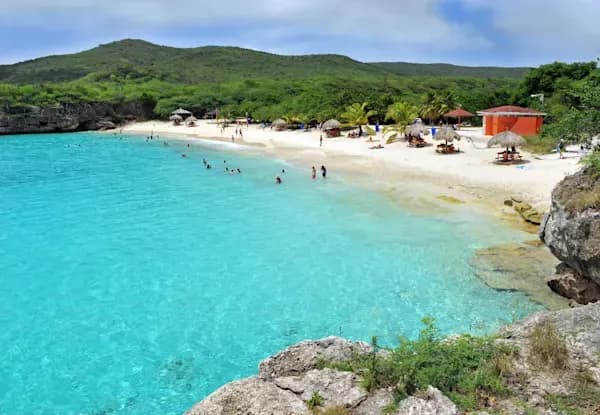
Playa Kenepa (Knip)
Grote and Kleine Knip, two of the island's most photographed coves, vivid blue water framed by low cliffs. Bring a snorkel and your camera.
A sample day in Curaçao
Beat the heat to a west-coast cove, break for the pastel capital, then end on a waterfront terrace as the sky goes orange.
- 8:00 amPastechi & coffeeBreakfast like a local before the heat lands.
- 9:00 amCas Abao or Playa KenepaSnorkel the house reef while the water is glassy and calm.
- 12:30 pmWillemstadCross the Queen Emma bridge and wander Punda's pastel streets.
- 1:30 pmFloating-market lunchFresh fish or a plate of keshi yena by the water.
- 3:30 pmChristoffel or a dive
Where to stay in Curaçao
Each area has a distinct character, and choosing the right base shapes your whole trip. Here's how the most popular visitor areas compare:
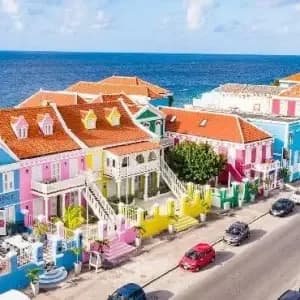
Willemstad & Pietermaai
Historic, walkable, full of restaurants and nightlife. Best for culture, dining and first-timers who want to be in the action.
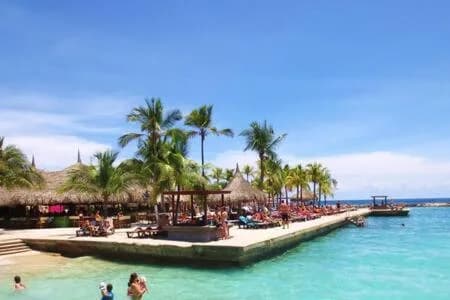
Jan Thiel & the southeast
Beach clubs, resorts and calm bays. Best for beach days, families and an all-in resort base.
Official Curaçao resources
This is an independent travel guide by CustomsBreeze. Confirm current requirements with the official sources below before you travel:
- dicardcuracao.comOfficial Digital Immigration Card (DI-Card) portal, free to file
- curacao.com (DI-Card)Official tourism board guidance on the Digital Immigration Card