Saint Lucia · The Helen of the West Indies
Saint Lucia Customs Form & Entry Requirements
Most air travellers to Saint Lucia are encouraged to complete the Electronic Immigration Form, a single online form that combines immigration and customs. File it free at the official government portal, travelslu.govt.lc, before you fly and present your QR code on arrival. This guide covers the entry form, passport and visa rules, duty-free limits, prohibited items and everything you need for a smooth trip through Hewanorra International Airport (UVF) near Vieux Fort in the south, or George F. L. Charles Airport (SLU) in Castries.
Planning your Saint Lucia trip?
Lock in your Saint Lucia airport transfer early — book a verified private driver, or request a tailored travel quote.
- Capital
- Castries
- Main airports
- Hewanorra (UVF) & G.F.L. Charles (SLU)
- Currency
- EC$ (US$1 ≈ 2.70)
- Language
- English & Kwéyòl
- Time zone
- AST (UTC−4)
- Best time
- Dec to Apr
- Power
- 240V · Type G plugs
- Customs form
- Electronic Immigration Form
A note on accuracy. Entry, visa and customs rules change without notice, and several details below (especially visa-free stay lengths and duty-free weights) vary between sources. Every figure here was checked against the Saint Lucia Tourism Authority and consulate publications, but always confirm current requirements through the official links before you travel.
How to complete the Saint Lucia Electronic Immigration Form
The form is for air arrivals. The official Saint Lucia Tourism Authority directs travellers to the government portal at travelslu.govt.lc, where the immigration and customs questions are combined into one submission. You can complete one form per family and fill it in anywhere with internet access, including the departure lounge or on arrival using the airport's free Wi-Fi.
- Open the official portalGo to travelslu.govt.lc on any phone, tablet or computer. Have your passport, flight details and accommodation address ready.
- Enter your details & declarationAdd personal and passport information exactly as printed, your flight number and airline, where you are staying, and answer the customs questions. One submission can cover everyone travelling together as a family.
- Submit & save your QR codeSubmit up to 3 days before travel. You will receive a QR code by email — save it to your phone and keep a printed or screenshot backup in case airport connectivity is poor.
Reporting on this form is not fully consistent across third-party sites — some describe it as strongly encouraged, others as mandatory for all air passengers. Treat completing it as a required step, and verify the current rule on the official portal before you fly.
The official form — watch for third-party fees
The official Saint Lucia Electronic Immigration Form is a government arrival form filed directly through the state portal at travelslu.govt.lc, and government arrival forms of this type do not normally carry a processing fee. A number of third-party "assisted service" websites (with names that can look official) will complete the same form on your behalf for a fee. Using them is optional and is not required to enter Saint Lucia.
Verify the cost on travelslu.govt.lc directly. If you are quoted a fee on any other site, you are paying a private intermediary, not the government.
Entry requirements
Have these ready before you reach immigration at Hewanorra (UVF) or George F. L. Charles (SLU):
- A valid passportRequired for all visitors. Many airlines and consulate notices recommend at least six months' validity beyond your travel dates and one blank page for the entry stamp. Passport cards are not accepted for international air travel.
- Your Electronic Immigration Form QR codeThe confirmation/QR code from travelslu.govt.lc, ready to show on a device or in print.
- Return or onward travelOfficers may ask for proof of a return flight, cruise departure or onward ticket. Travellers without proof of departure can face delays.
- Accommodation & sufficient fundsThe address of your hotel, villa or host, and evidence you can support yourself during your stay.
Visa requirements by nationality
Most short-stay visitors do not need a visa, but the visa-free period is much shorter than many people assume — for US and Canadian tourists it is 6 weeks (42 days), not six months. Permitted stay is always set by an immigration officer on arrival. Verify your own nationality's status with a Saint Lucia diplomatic mission before travelling.
| Country / region | Visa status | Typical visa-free stay |
|---|---|---|
| USA & Canada | Visa free | Up to 6 weeks (42 days) |
| UK & most Commonwealth | Visa free | Commonly cited as 6 weeks — verify exact length |
| EU / Schengen, Iceland, Norway, Switzerland | Visa free | Up to 90 days within any 180 |
| CARICOM states | Visa free | Up to 6 months |
| United Arab Emirates | Visa free | Up to 60 days |
| Many others (~60+) | Visa free | Up to 6 weeks (42 days) |
| Singapore | Visa free | Up to 15 days |
| Other nationalities | May require a visa / visa on arrival | Apply or confirm in advance |
Sources differ on a few nationalities (notably the exact UK figure), and the lists change. Treat the durations above as typical maximums, not guarantees. CARICOM/OECS nationals benefit from regional free-movement arrangements, and OECS citizens may enter with a national ID card. Cruise passengers visiting for the day are generally exempt.
Duty-free allowances for Saint Lucia
These apply per traveller aged 18 and over. Anything beyond the allowance, or any commercial goods, is dutiable. When in doubt, declare. Confirm current limits with the Saint Lucia Customs & Excise Department (customs.gov.lc).
| Category | Allowance |
|---|---|
| Wine or spirits | About 40 fl oz (≈1.1 L) of alcohol, duty free; excess up to a set limit is dutiable |
| Tobacco | 200 cigarettes or 50 cigars or ~225–250g of tobacco (one option, not combined) |
| Gifts & souvenirs | Up to EC$270 (≈US$100) in value, claimable once per year; not for alcohol, cigarettes or commercial goods |
| Personal effects | Clothing, toiletries and similar personal items for reasonable use |
| Cash & currency | Declare currency or negotiable instruments at or above US$10,000 (or equivalent) |
Two corrections from commonly circulated guides: the alcohol allowance is a single combined limit of roughly 40 fl oz / 1.1 L, not a separate "1 litre of spirits plus 1 litre of wine." And the tobacco weight is listed inconsistently across official sources, so verify with Customs if it matters to you. A service charge and environmental levy may apply to dutiable goods.
Prohibited & restricted items
Violations can lead to seizure, fines or prosecution. When in doubt, declare.
- Must be declaredFirearms and ammunition (a police permit/authorisation is required), prescription medication (carry the original prescription and packaging), commercial merchandise, large amounts of cash, and agricultural items.
- Permit / inspection requiredFresh fruit and vegetables, plants and seeds, meat and animal products, and live animals or pets (an import permit from Saint Lucia Veterinary Services is required). Species protected under CITES may need a permit.
- ProhibitedIllegal narcotics, counterfeit currency and goods, pirated products, indecent or obscene material, offensive weapons (including flick knives and firing devices disguised as pens/pencils), and illegal wildlife products. Matches containing white or yellow phosphorus also appear on the historical list.
At the airport — arrival at Hewanorra (UVF) or George F. L. Charles (SLU)
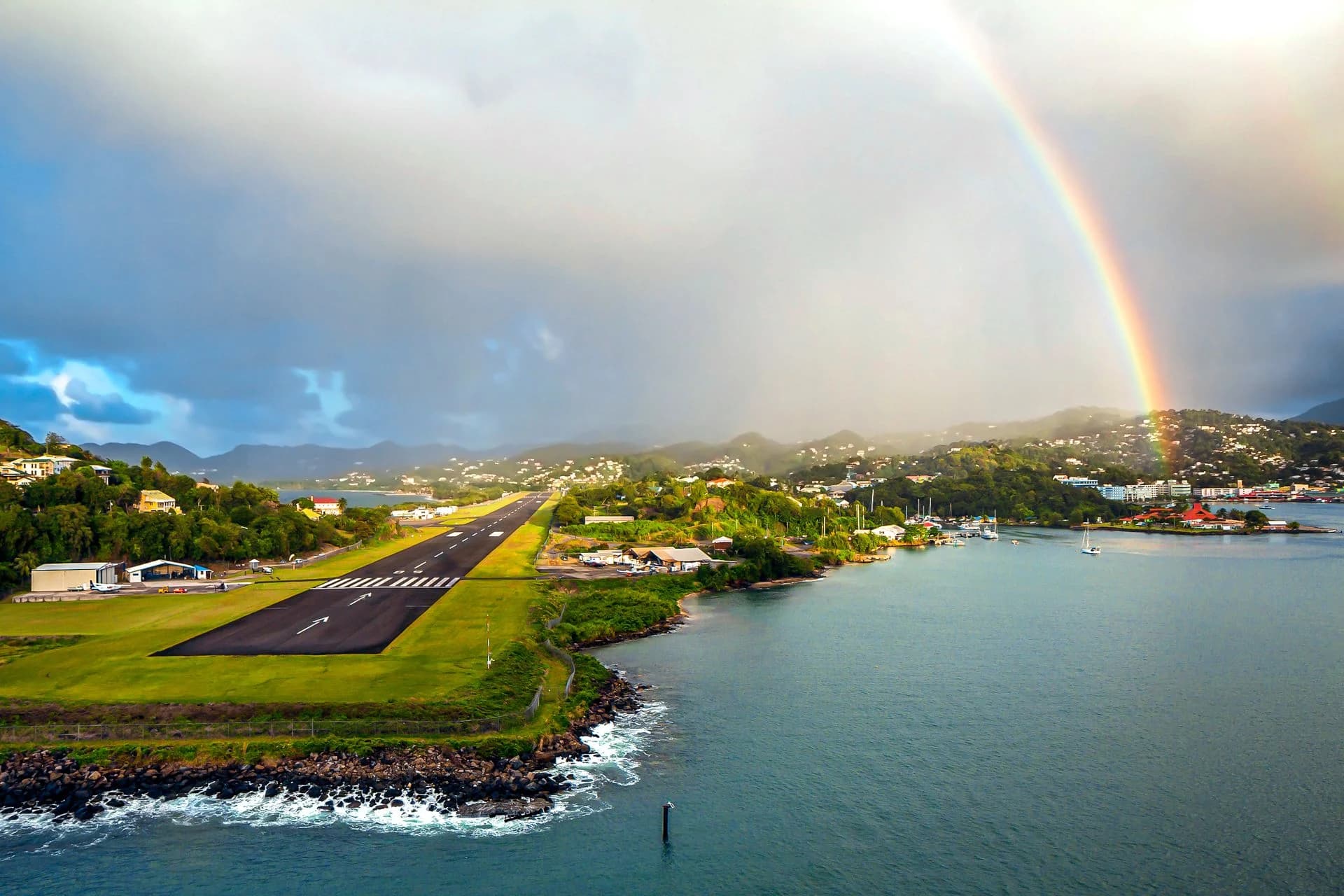
Most international visitors land at Hewanorra International (UVF) near Vieux Fort in the south; George F. L. Charles (SLU) in Castries handles mainly regional flights. After landing, have your passport and Electronic Immigration Form QR code ready.
- 1 · ImmigrationPresent your passport and QR code. Officers may ask your length of stay, where you are staying and the purpose of your trip, and may request your return ticket. Free Wi-Fi is available if you still need to complete your form.
- 2 · Baggage claimCollect all checked luggage before customs. Porters may be available at busy times.
- 3 · CustomsProceed through customs, declare any restricted goods, and undergo screening if selected.
- 4 · Arrivals hallBeyond customs you'll find pre-booked resort transfers, authorised taxis, rental-car desks and tour operators. Many southern and west-coast resorts are 60–90 minutes from UVF along scenic, winding roads.
Skip the arrivals-hall scramble
Have a verified driver meet you in arrivals, or request a quote for your transfers and tours.
Money matters
The Eastern Caribbean Dollar (EC$ / XCD) is the local currency and has long been pegged at roughly EC$2.70 to US$1. US dollars are widely accepted in tourist areas, though you'll often get fairer value paying in EC$ or by card.
| Feature | Details |
|---|---|
| Exchange rate | Fixed peg, approximately EC$2.70 ≈ US$1 |
| US dollars | Widely accepted; cards accepted at most resorts and restaurants |
| Tipping | Customary around 10–15% where no service charge is added |
| Departure tax | Generally included in your airfare for air passengers |
| Currency declaration | Declare cash or negotiable instruments at or above US$10,000 (or equivalent) |
| Electricity | 240V; British-style Type G three-pin plugs (bring an adapter) |
| Driving | On the left; roads are narrow and mountainous, and night driving is challenging for first-timers |
Health, water & food safety
Saint Lucia is an easy destination for most travellers, but a few precautions help.
- Before you goCheck current recommendations with your doctor and an official health authority. Mosquito-borne illnesses such as dengue can occur in the Caribbean periodically, so insect protection is sensible.
- Water & foodTap water is generally treated and considered safe in main towns and resort areas; bottled or filtered water is the safer choice in remote areas. Local Creole food is a highlight — favour busy spots with high turnover.
- Sun & heatThe tropical sun is strong. Prioritise hydration, shade, sunscreen and light clothing, especially in your first days.
Best time to visit Saint Lucia
Saint Lucia is warm year-round, averaging roughly 24°C to 31°C (75°F to 88°F). The main differences between seasons are rainfall, crowds and price.
| Season | Months | What to expect |
|---|---|---|
| Peak / dry season | Dec to Apr | Sunniest, calmest seas, busiest and priciest — book early |
| Shoulder season | May to Jun | Great value, warm temperatures, occasional brief showers |
| Rainy / hurricane season | Jun to Nov | Lowest prices, lush scenery; rain often comes in short bursts, direct storm hits uncommon but possible |
The Atlantic hurricane season runs roughly June to November; check forecasts and consider travel insurance if visiting then.
Top things to do in Saint Lucia
From climbing a volcanic peak to soaking in a drive-in volcano, here are the experiences first-time visitors love most.

The Pitons
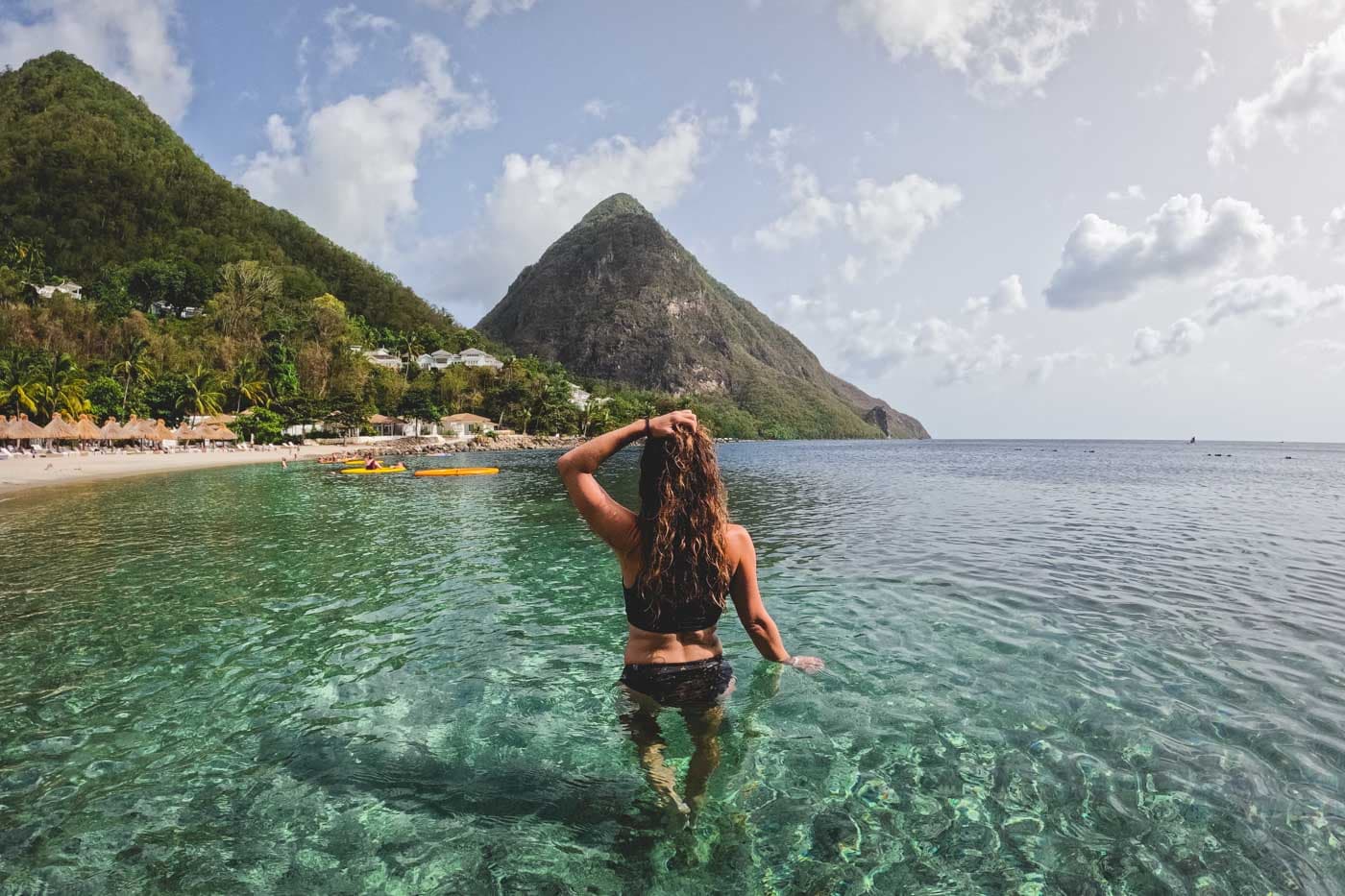
Gros Piton and Petit Piton are Saint Lucia's iconic twin volcanic peaks and a UNESCO World Heritage Site near Soufrière. Hike Gros Piton with a guide, or admire them from a catamaran cruise.
Sugar Beach
Set dramatically between the Pitons, Sugar Beach offers soft sand, clear water and excellent snorkelling.
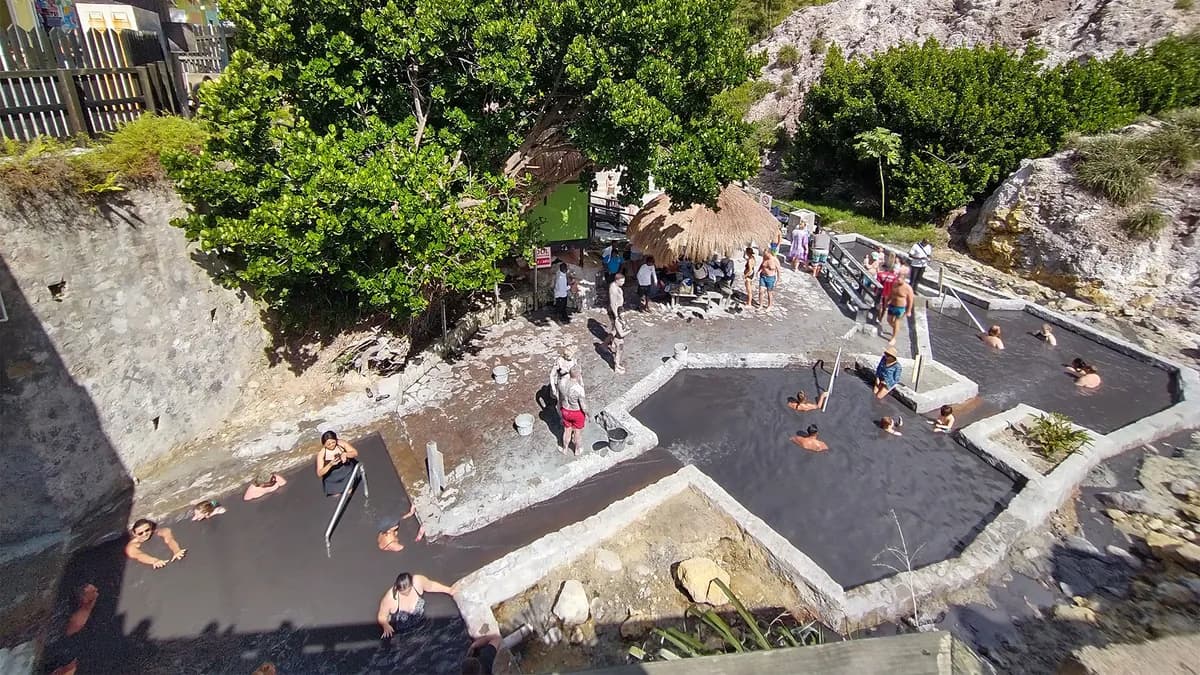
Sulphur Springs
Saint Lucia's famous "drive-in volcano" near Soufrière, where you can soak in warm geothermal mud pools.
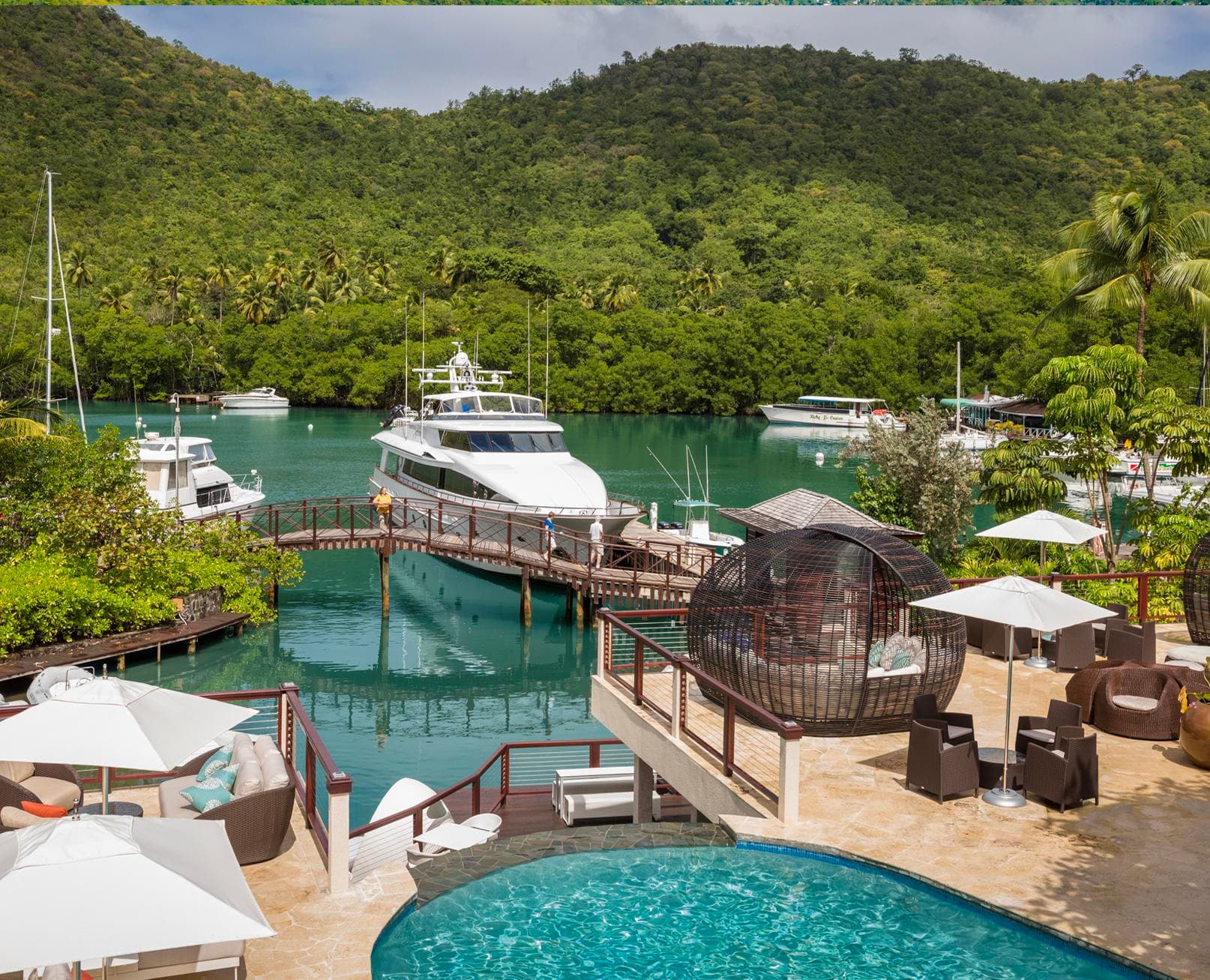
Marigot Bay
One of the Caribbean's prettiest natural harbours — a favourite for yachts, waterfront dining and sunset cruises.
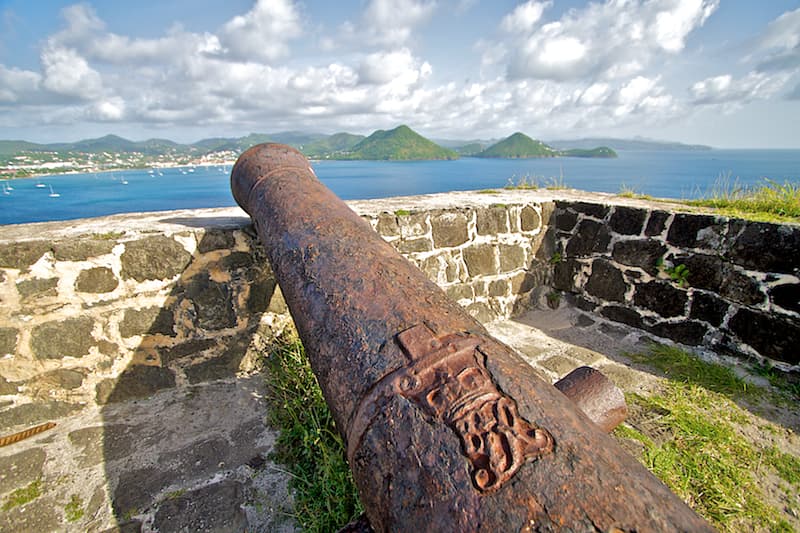
Pigeon Island National Landmark
Explore 18th-century military ruins, beaches and short hiking trails with panoramic views, near Rodney Bay in the north.

Rainforest & zip-lining
Soar through the lush interior canopy on an aerial tram or zip-line tour, then walk forest trails alive with hummingbirds and the island's famous Saint Lucia parrot.
A sample day in Saint Lucia
A relaxed Soufrière-based day mixing a little adventure with plenty of beach and scenery.
8:00 am
Creole breakfastSaltfish, green fig (banana) and local fruit with a cup of Saint Lucian coffee.9:30 am
Sulphur Springs & mud bathsSoak in the warm geothermal mud pools at the drive-in volcano before the midday heat.12:30 pm
Lunch with a Piton viewSettle in at a Soufrière restaurant overlooking the bay and the twin peaks.2:00 pm
Beach & snorkel timeStretch out and snorkel at Sugar Beach or Anse Chastanet through the warmest part of the day.5:00 pm
Catamaran sunset cruiseSail the west coast as the sun dips behind the Pitons.7:30 pm
Dinner & live musicRound off the evening with fresh local cooking and a live set.
Short on time or based up north? Swap in Rodney Bay's beaches, Pigeon Island and the Friday-night Gros Islet street party instead.
Where to stay — best regions in Saint Lucia
Saint Lucia's regions each have a distinct character — choosing the right base shapes your whole trip. Here is how the most popular visitor areas compare:
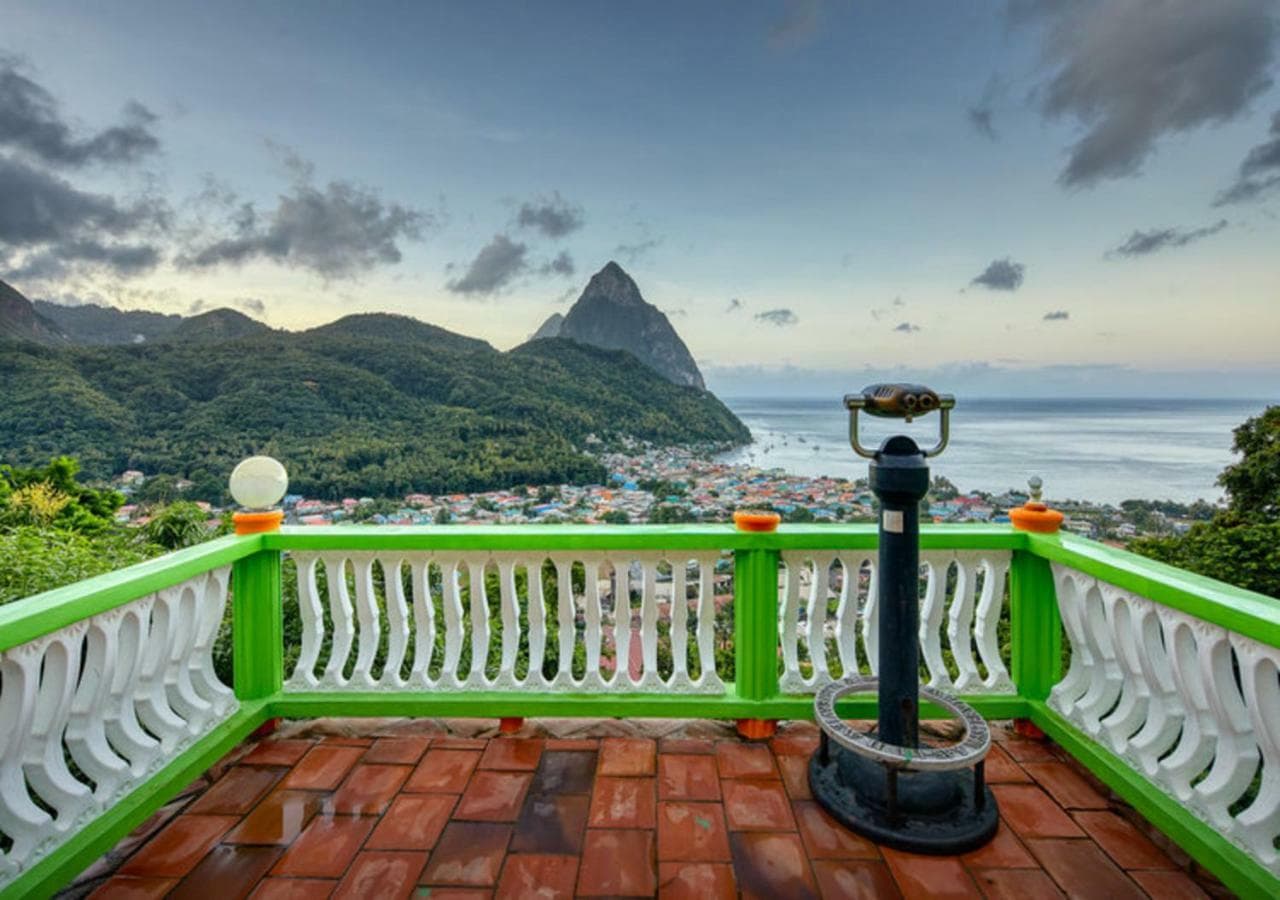
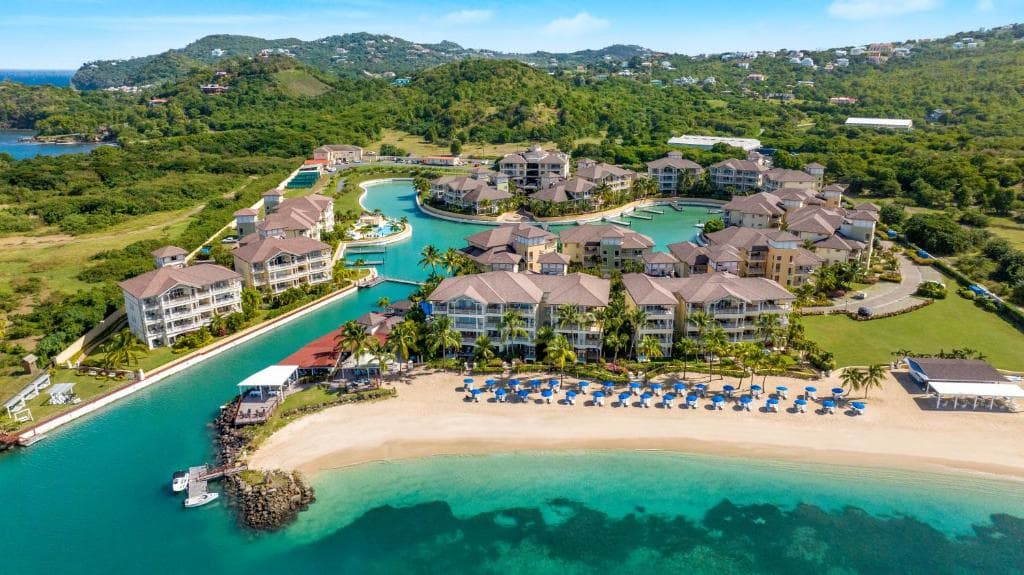
Southwest
Soufrière & the Pitons
The island's scenic heart — luxury and boutique resorts with Piton views, Sulphur Springs and the best beaches. Best for: Honeymoons, special occasions and scenery (allow 60–90 min from UVF).
North
Rodney Bay & Gros Islet
The liveliest area: marina, restaurants, nightlife, Reduit Beach and Pigeon Island. Best for: First-timers, families, dining and nightlife.
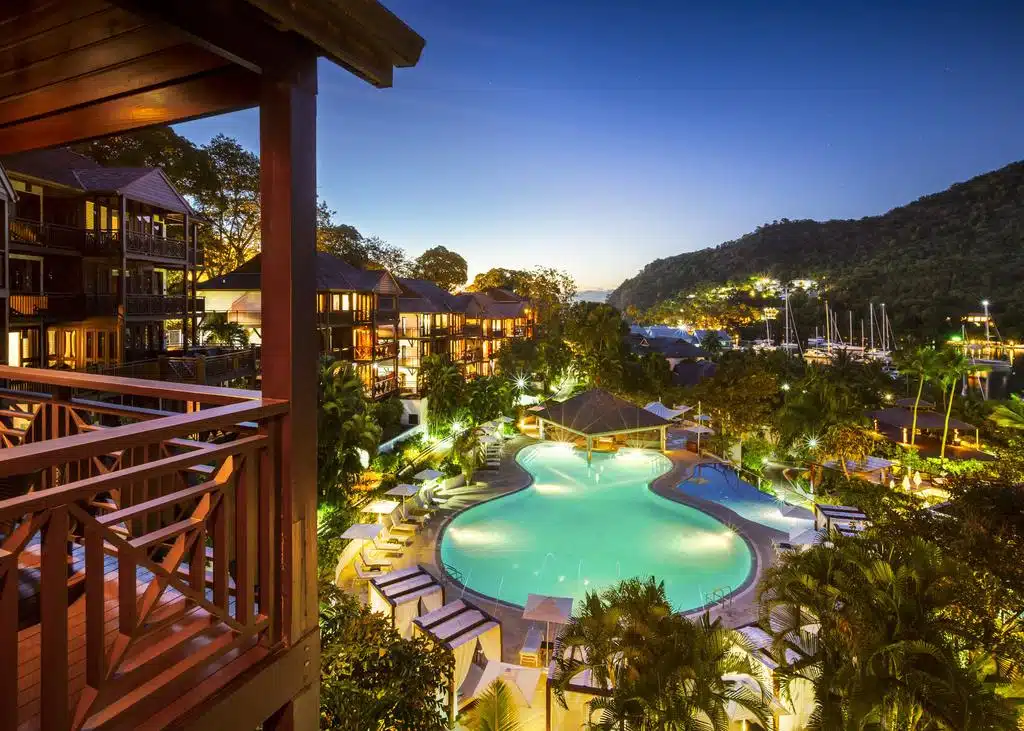
Central / west
Marigot Bay & Castries
A sheltered yacht harbour and the capital — convenient and central. Best for: Sailing, a central base and shorter transfers.
Official Saint Lucia resources
This is an independent travel guide by CustomsBreeze. Always confirm current requirements with the official sources below before you travel:
- travelslu.govt.lcThe official government Electronic Immigration Form portal
- stlucia.orgSaint Lucia Tourism Authority — entry, visa & trip-planning information
- customs.gov.lcSaint Lucia Customs & Excise Department — duty-free & restricted goods
- Your government's travel-advice serviceAnd the nearest Saint Lucia diplomatic mission, for visa specifics.