St. Kitts & Nevis eTA & Entry Requirements
Some islands wear their history lightly. St. Kitts wears it like a sugar stain that never quite washed out. You ride an old narrow-gauge railway that once hauled cane, past the ruins of the mills and the great hump of Mount Liamuiga, a volcano that has the good manners to stay asleep, and you start to understand that this small, green, two-island federation has been somebody's prize for four hundred years. The British and the French fought over it like dogs over a bone. Now the only people storming the beaches are cruise passengers, and the only fortress still standing, Brimstone Hill, is a UNESCO site with one of the great views in the Caribbean. But before the black-and-gold sand and the first cold Carib, there is, as ever, a form. For 2026, St. Kitts and Nevis runs a digital border: foreign visitors complete an Electronic Travel Authorisation (eTA) and an online immigration and customs form before they fly, at knatravelform.kn. Skip it and the airline may not let you board.
- Capital
- Basseterre · Charlestown (Nevis)
- Main airport
- Robert L. Bradshaw (SKB)
- Currency
- East Caribbean dollar (USD accepted)
- Language
- English
- Time zone
- Atlantic (UTC-4, no DST)
- Best time
- Dec to Apr
- Power
- 230V · Type G & D (UK-style)
- Entry form
- eTA + ED Form (knatravelform.kn)
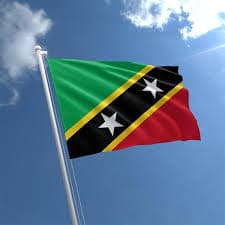
How to complete the St. Kitts and Nevis Travel Form & eTA
St. Kitts and Nevis moved to an Electronic Border Management System. Foreign visitors must submit two things before departure through the official portal knatravelform.kn (or the e-Border mobile app): an Electronic Travel Authorisation (eTA), which is digital permission to travel for holders of non-SKN passports, and the online Immigration and Customs ED Form, the digital arrival declaration that replaced the old paper card. The eTA is not a visa and does not by itself guarantee entry, but airlines check it and the federation expects it before you board.
- 1Apply before you depart
All travelers must submit their information prior to departure; failure to comply can mean being denied boarding or a penalty on arrival. Don't leave it to the airport, and apply several days ahead to be safe.
- 2Have your documents ready
The system is biometric: you scan your passport, take a selfie, and upload supporting documents (return ticket, accommodation, and proof of funds are commonly requested). Group applications repeat the steps for each traveler.
- 3Pay any service charge, then save your approval
Pay the government service charge if it applies, then keep the approved eTA and form confirmation on your phone or printed to show at check-in and on arrival. The form's status has been described as mandatory for 2026; confirm the latest requirements and processing time on knatravelform.kn.
Is there a fee for the St. Kitts and Nevis eTA? Watch for third-party sites
This one is different from some Caribbean entry forms: the St. Kitts and Nevis system can carry a government service charge for foreign visitors, paid during the application on knatravelform.kn. Certain travelers are exempt, including CARICOM nationals, accredited diplomats on duty, children under 2, active military and search-and-rescue personnel, and SKN dual nationals or OECS citizens who upload proof of their status.
Because there is an official charge, confirm the current amount on the official portal before you pay anywhere else. Plenty of third-party sites will offer to handle the eTA for an added markup; the official site is knatravelform.kn, run by the Ministry of National Security.
Entry requirements
Have these ready before you reach immigration at SKB:
- A valid passportAt least 6 months of validity beyond your departure date is the safe standard, and airlines may enforce it at check-in. A US passport book is required for air travel; the passport card is not valid for flights.
- Your approved eTA and travel formFrom knatravelform.kn, ready on your phone or printed.
- A return or onward ticketOften requested, and a common reason travelers are turned away if they cannot show one.
- Proof of accommodation and sufficient fundsYour booking and evidence you can cover your stay.
Do I need a visa for St. Kitts and Nevis? Visa requirements and length of stay
Most tourists do not need a visa: nationals of more than 100 countries enter visa-free for tourism (they still need the eTA). Admission is the immigration officer's decision, so confirm your nationality's status before traveling.
| Country / region | Visa status (tourism) | Typical stay |
|---|---|---|
| USA & Canada | Visa free (eTA required) | Commonly up to 90 days |
| United Kingdom | Visa free (eTA required) | Commonly up to 90 days |
| EU / EEA | Visa free (eTA required) | Commonly up to 90 days |
| Most Commonwealth & Latin American countries | Visa free (eTA required) | Commonly up to 90 days |
| CARICOM nationals | Visa free (form fee waived) | As granted |
| Visa-required nationalities | eVisa / entry visa in advance | Present approval (and any fee) at entry |
How long can I stay in St. Kitts and Nevis?
Visa-free visitors are commonly admitted for up to 90 days, but always check the duration the officer actually stamps. Staying longer than about three months means applying for an extension or residence. Travelers whose nationality requires a visa apply for an electronic entry visa in advance and present the approval (and any required fee) to an immigration officer on arrival.
Duty-free allowances for St. Kitts and Nevis
Per arriving traveler aged 18 and over, for personal, non-commercial use. Go over the allowance, or carry commercial goods, and you may owe duty. When in doubt, declare.
| Category | Allowance |
|---|---|
| Tobacco | 200 cigarettes OR 100 cigarillos OR 50 cigars OR 250g of tobacco (one option) |
| Alcohol | 1.5 liters (about 50.7 fl oz) of wine or spirits |
| Personal effects | Clothing, toiletries, jewelry, camera, laptop and phone for personal use enter free |
| Returning-resident goods | Up to EC$400 in goods for residents who have been abroad more than 7 days |
| Cash & currency | No limit on import or export, but all currency must be declared on arrival |
Allowances are per person and not transferable between travelers. Figures cross-checked against IATA, travel-guide sources and St. Kitts and Nevis Customs (skncustoms.com); confirm the alcohol volume before relying on it.
Prohibited & restricted items
Violations can mean seizure, fines or prosecution. When in doubt, declare. A few of these surprise visitors:
- Camouflage clothing, restrictedLike several Caribbean countries, St. Kitts and Nevis restricts camouflage or military-style clothing that resembles the kit of its Defence Force or Police. Leave the camo print at home to avoid trouble at customs.
- ProhibitedIllegal narcotics and drug paraphernalia, pornographic or obscene material, counterfeit currency, flick knives and offensive bladed weapons, disguised firearms, matches containing white or yellow phosphorus, and goods bearing the national Coat of Arms or Flag without approval.
- Permit or permission requiredFirearms and ammunition, military-grade night-vision equipment, and items covered by CITES (certain plants, animals and their products) need permits or written permission.
- PetsCats and dogs need a veterinary good-health and rabies certificate from the point of origin plus an import permit from the Ministry of Agriculture, with advance notice to the airline.
- Prescription medicationCarry it in original packaging with the prescription, and declare large quantities.
Arriving at Robert L. Bradshaw Airport (SKB)
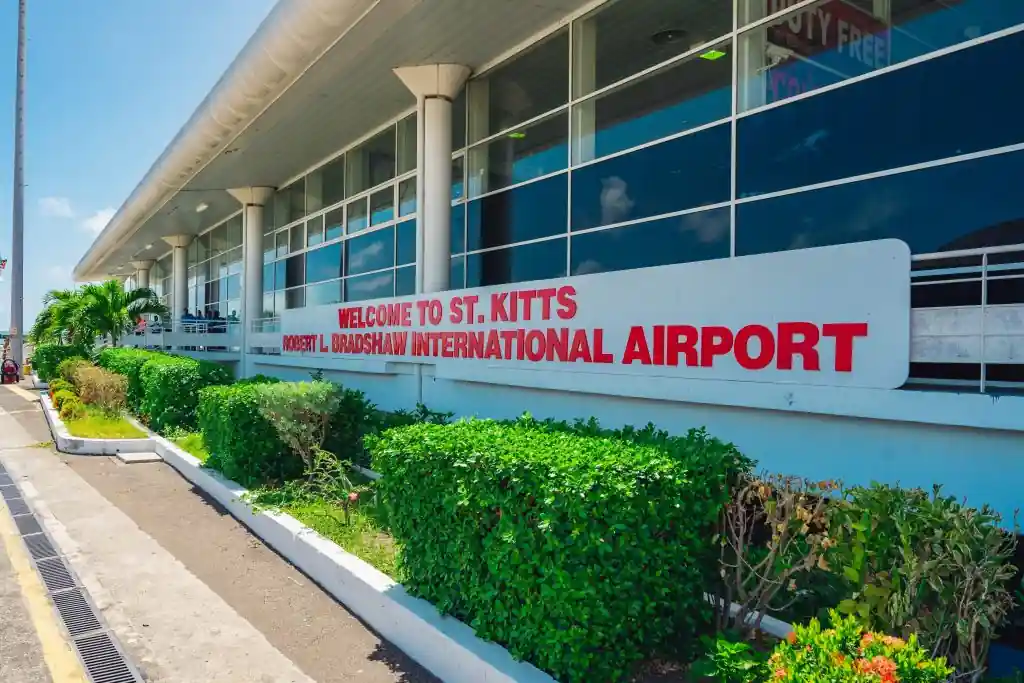
Most international visitors land at Robert L. Bradshaw International (SKB) near Basseterre on St. Kitts; Vance W. Amory International (NEV) on Nevis is smaller and takes few international flights. Note that baggage is cleared at your first airport of entry, even if you are connecting onward to Nevis. After landing:
- 1 · ImmigrationPresent your passport and approved eTA / travel form. The officer stamps your permitted stay.
- 2 · Baggage claimCollect your checked luggage.
- 3 · CustomsDeclare anything restricted or over your allowance; expect possible screening.
- 4 · Arrivals hallTaxis, pre-booked transfers, rental desks and tour operators are just outside; the Nevis ferry and sea bridge connect the two islands.
Skip the arrivals-hall scramble
Land, walk out, and find your name on a sign. Book a verified driver to your Frigate Bay, Basseterre or South East Peninsula hotel before you fly.
Money matters
The currency is the East Caribbean dollar (XCD / EC$), shared across much of the Eastern Caribbean and pegged to the US dollar at a fixed 2.70 to US$1 since 1976. US dollars are accepted widely, cards are accepted at most hotels and larger businesses, and ATMs are easy to find on St. Kitts.
| Feature | Details |
|---|---|
| Currency | East Caribbean dollar (EC$ / XCD), pegged at 2.70 to US$1 |
| US dollars | Widely accepted; carry small bills for taxis and markets |
| VAT | Standard 17%, reduced 10% for tourism; hotel and restaurant bills include it |
| Service charge | Around 10% is often added; tip on top only for exceptional service |
| Departure tax | No separate tax collected at the airport; any departure tax is included in your airfare |
| Currency declaration | Declare your currency on arrival (no limit on amount) |
| Electricity | 230V, UK-style Type G and D plugs; US devices need an adapter and possibly a converter |
| Driving | On the left (a local driver's permit is usually required to rent; the rental company arranges it) |
Best time to visit St. Kitts and Nevis
Warm year-round, generally 79°F to 88°F (26°C to 31°C). The islands sit inside the hurricane belt, so the seasons matter.
| Season | Months | What to expect |
|---|---|---|
| Peak / dry | Dec to Apr | Sunniest, calmest, busiest and priciest; book early |
| Shoulder | May to Jun | Warm, better value, occasional showers |
| Low / hurricane | Jun to Nov | Cheapest, hottest, higher rain and storm risk; insure the trip |
Health, water & food in St. Kitts and Nevis
The islands eat like the sugar plantations they were and the proud little nation they became.
- WaterTap water on St. Kitts is generally treated and considered potable, but bottled water is widely available if you prefer it.
- Before you goCheck current advice with your doctor and an official health authority such as the CDC or your national equivalent. Travel insurance with medical coverage is strongly recommended.
- SunStrong year-round. Sunscreen, shade and water, especially the first days.
Food is the Heart of St. Kitts & Nevis
To understand St. Kitts and Nevis, start at the table. Not the buffet line, not the resort steakhouse, but the roadside cookshop tucked beneath a tamarind tree, where lunch is served in a foam container and everyone seems to know everyone else. This is where the islands reveal themselves.
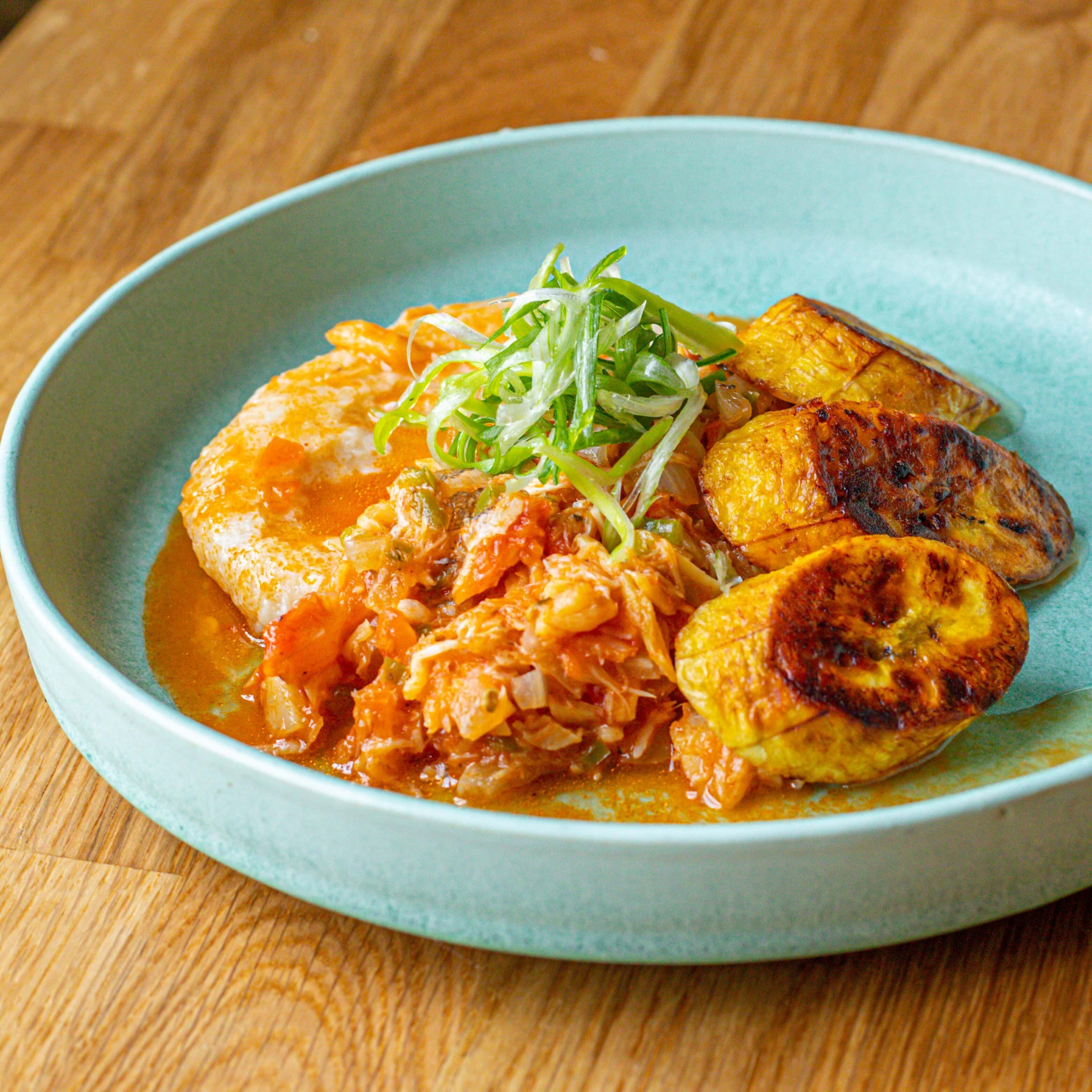
Begin with the national dish: stewed saltfish with spicy plantains, coconut dumplings, and breadfruit. It's a meal born from centuries of trade routes, colonial history, and Caribbean ingenuity, simple ingredients transformed into something deeply satisfying. One plate tells a story that stretches from West Africa to the Atlantic and back again.
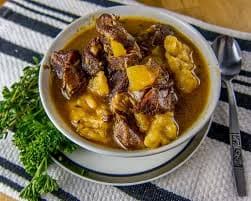
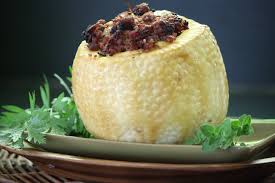
On Nevis, seek out goat water, the island's beloved national stew. Rich with herbs, peppers, and slow-cooked goat, it's the sort of dish that sparks fierce debate among locals. Every family has its recipe. Every cook swears theirs is the only one worth eating.
Along the coast, beach shacks and casual lolo grills serve snapper landed that morning, grilled lobster when in season, and conch prepared every way imaginable. Pull up a plastic chair, listen to the waves, and order whatever the fishermen are eating. It's usually the right decision.
The islands also reward those willing to linger. A cold bottle of Carib beer arrives slick with condensation. Fresh tamarind juice appears on a hot afternoon. Rum punches are mixed generously, often stronger than expected. And if someone offers you a glass of CSR, a local cane spirit brightened with a splash of Ting, accept politely and pace yourself. Island hospitality can be wonderfully enthusiastic.
One final piece of advice: keep an eye on your lunch. The vervet monkeys that roam parts of St. Kitts are undeniably photogenic, but they've spent generations perfecting the art of opportunistic theft. Turn your back for a moment, and your beachside meal may suddenly become theirs.
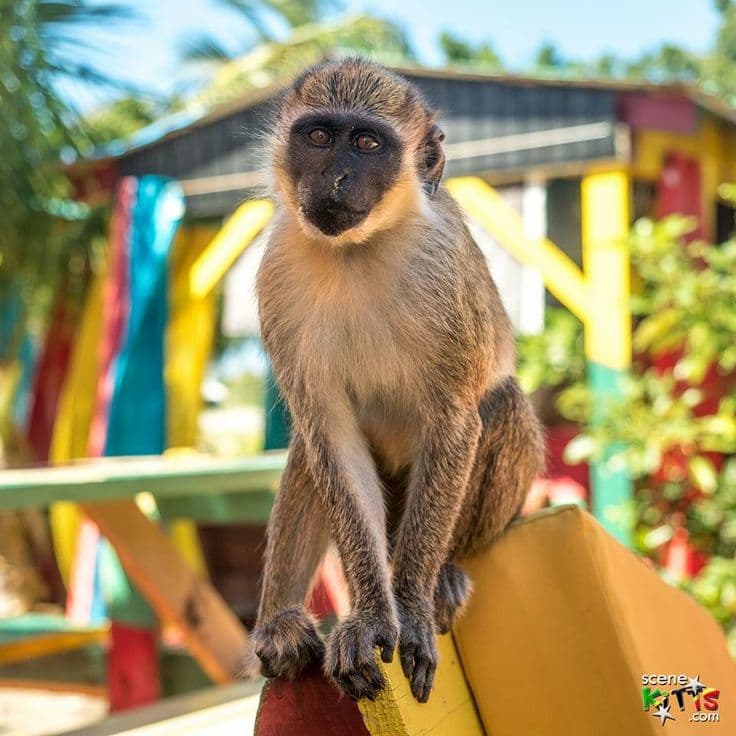
Top things to do in St. Kitts and Nevis
Sugar-train history, a UNESCO fortress, a sleeping volcano and the quieter island next door. Here's where to start.
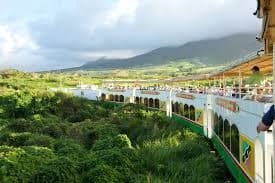
St. Kitts Scenic Railway
The “Sugar Train,” a narrow-gauge railway built to haul cane, now a slow, scenic loop past old mills, villages and coastline. A genuinely unique way to read the island's history.
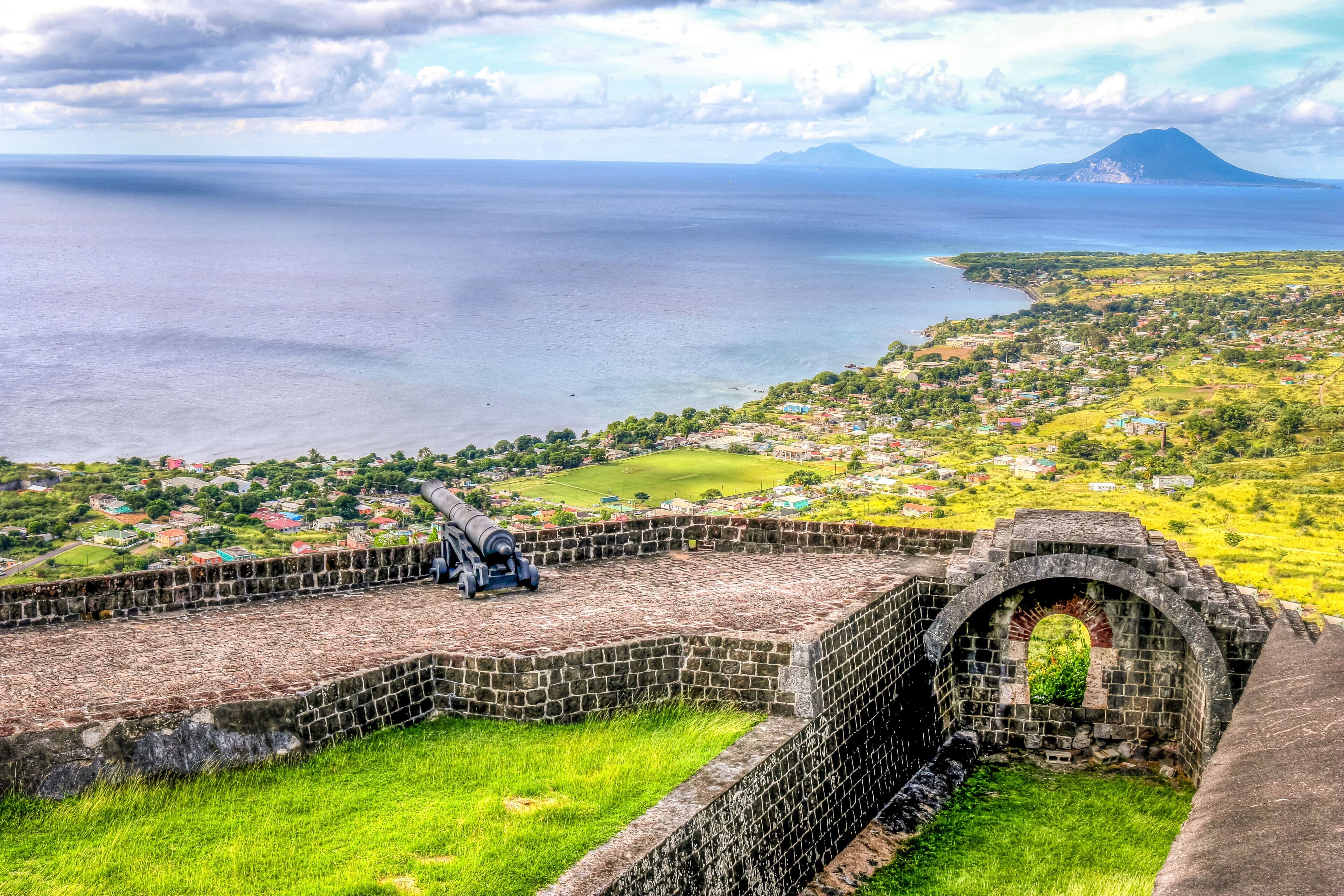
Brimstone Hill Fortress
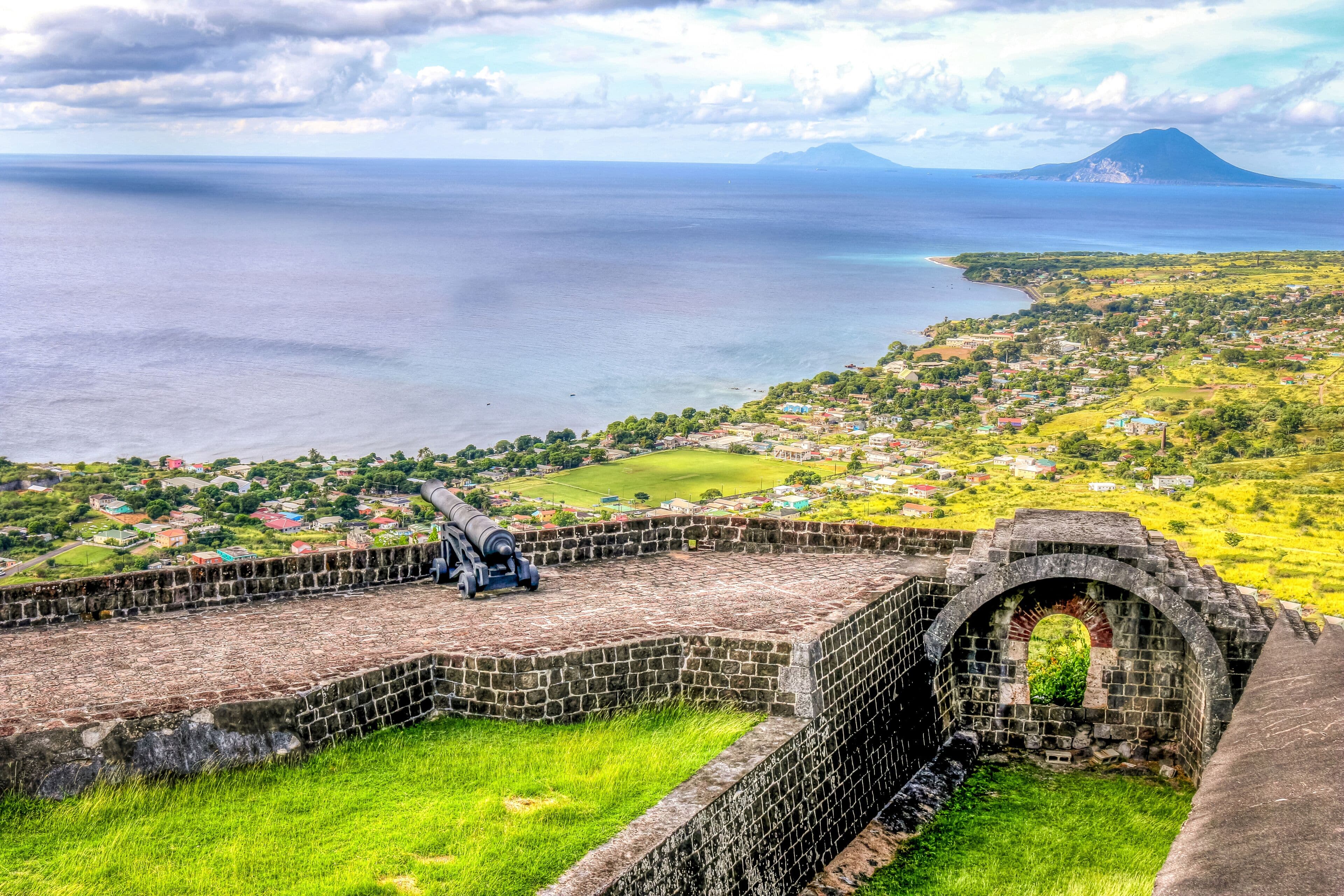
A UNESCO World Heritage fortress high on a volcanic hill, with cannons, ramparts and a view that takes in neighboring islands on a clear day. The “Gibraltar of the West Indies.”
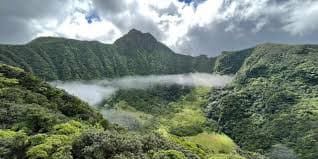
Mount Liamuiga
The dormant volcano that crowns St. Kitts. A guided hike climbs through rainforest to the crater rim for big views and bragging rights.
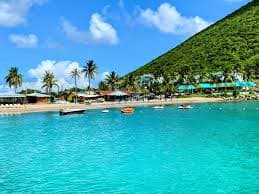
Frigate Bay & “The Strip”
The island's beach-bar heartland: South Friars Bay and Frigate Bay, with sand, swimming and a row of laid-back bars for sunset and music.
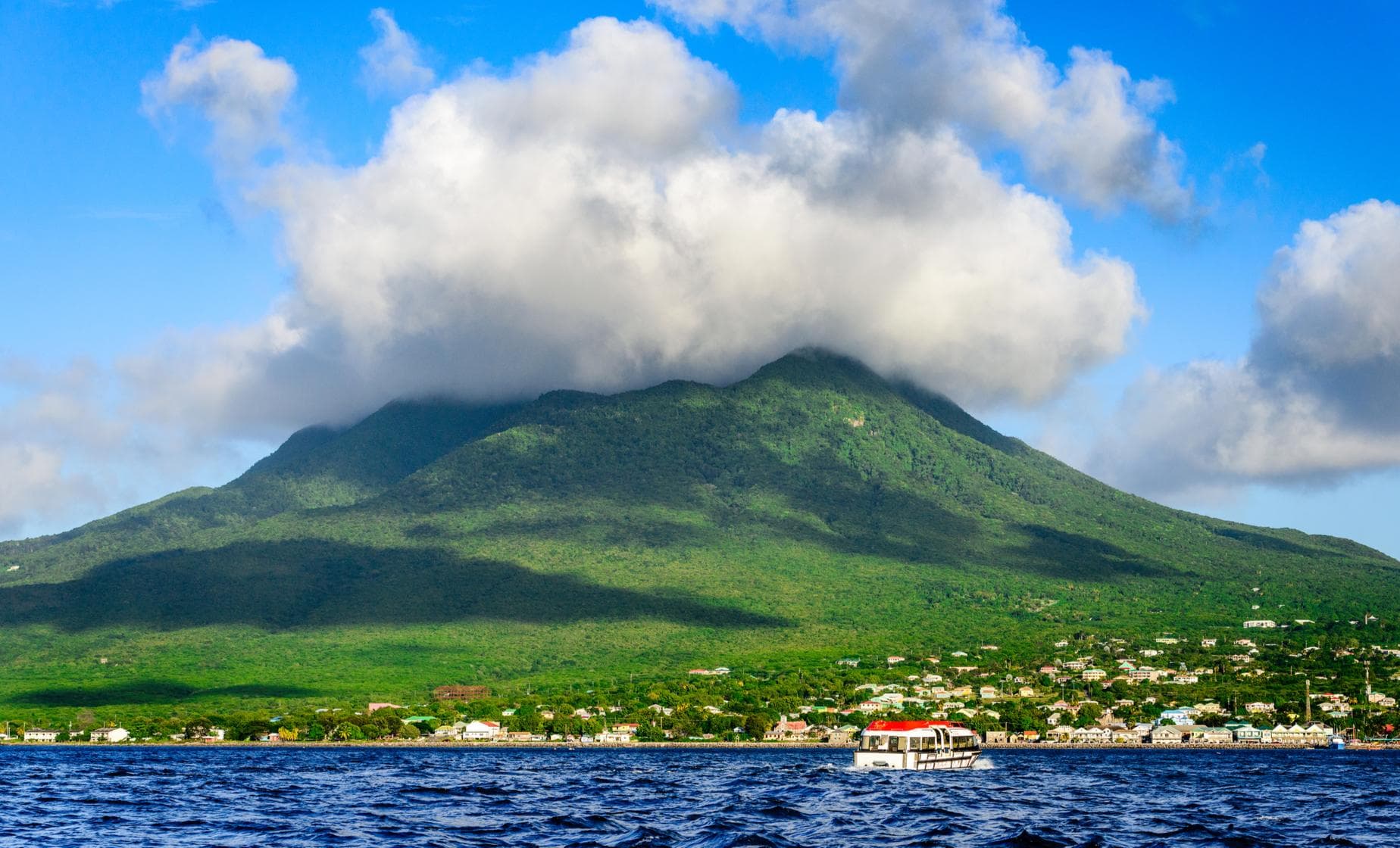
Nevis: Pinney's Beach & Charlestown
A short ferry away, Nevis is quieter and lovelier: long Pinney's Beach, the historic streets of Charlestown (birthplace of Alexander Hamilton), hot springs and the cone of Nevis Peak.
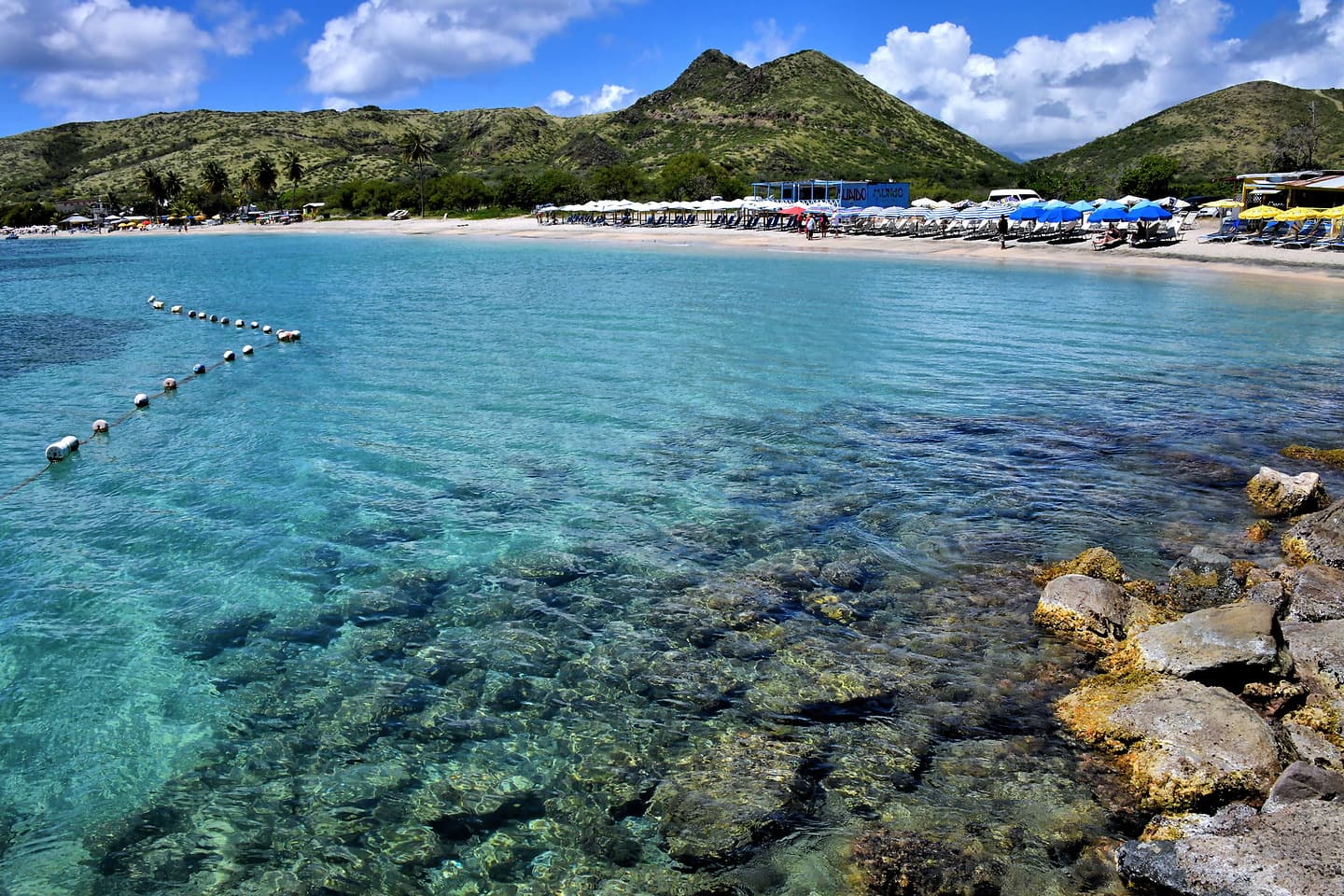
Cockleshell Bay & the South East Peninsula
Calm, postcard beaches at the island's tail, with Nevis framed across the channel and beach restaurants for a long lunch.
A sample day in St. Kitts
Beat the cruise crowds to the fortress, browse the batik gardens, then settle onto the sand and finish with a sunset on The Strip.
- 8:00 amSlow breakfastCoffee and saltfish before the heat.
- 9:00 amBrimstone HillBeat the cruise crowds to the fortress and the view.
- 11:30 amRomney ManorGardens and Caribelle Batik in the hills, with a giant old saman tree.
- 1:00 pmBeach lunchDown to Frigate Bay or the South East Peninsula for fresh fish.
- 3:00 pmBeach timeSwim, snorkel, or just plant yourself on the sand.
- 6:30 pmSunset on The StripThen dinner and a CSR and Ting to finish.
More time? Ride the Scenic Railway, hike Mount Liamuiga, or ferry to Nevis for a slower day.
Where to stay in St. Kitts and Nevis
Each area has a distinct character, and choosing the right base shapes your whole trip. Here's how the most popular visitor areas compare:
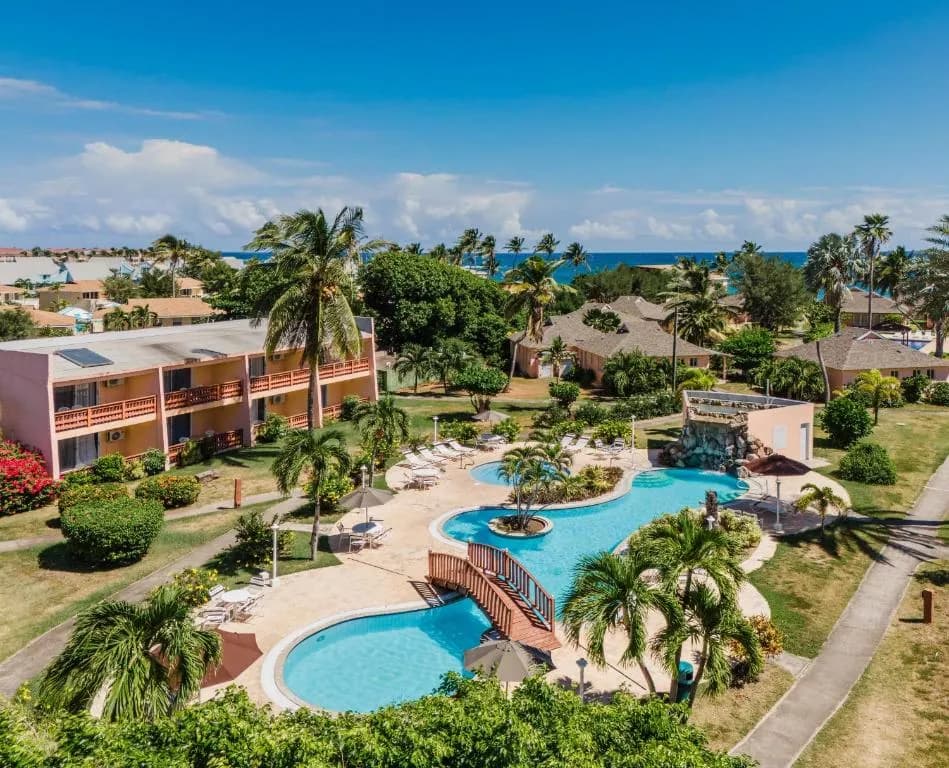
Frigate Bay
Central, beachy and social, close to the bars and golf. Best for first-timers and an easy base.

Basseterre
The capital and cruise port: shops, restaurants and local life. Best for culture and convenience.
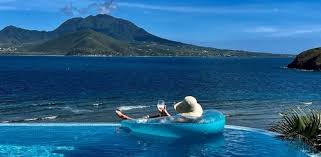
South East Peninsula
The best beaches and upscale resorts, with views across to Nevis. Best for beaches and luxury.
Official St. Kitts and Nevis resources
This is an independent travel guide by CustomsBreeze. Confirm current requirements with the official sources below before you travel:
- knatravelform.knOfficial Electronic Border Management System (eTA & Immigration/Customs ED Form)
- mofa.gov.knMinistry of Foreign Affairs (visa information)
- skncustoms.comSt. Kitts and Nevis Customs & Excise Department (duty-free & prohibited goods)
- stkittstourism.knSt. Kitts Tourism Authority
- nevisisland.comNevis Tourism Authority