Turks & Caicos · British Overseas Territory in the Caribbean
Turks and Caicos Entry Requirements, Immigration Form & Customs
There's a moment over the Caicos Banks when the water below stops being water and becomes a colour a paint company would get sued for inventing. Then a flight attendant hands you a small paper form and a pen that barely works, and the spell breaks just long enough to remember: paradise still has paperwork. The good news is Turks and Caicos has no app, no portal, no QR code. You fill out the paper immigration form on the plane, walk up to an officer, and that's it. This guide covers the form, passports and visas, the 90-day stay, what you can bring through customs, the departure fees nobody warns you about, and how to get out of Providenciales (PLS) and onto Grace Bay before your drink melts.
A note on accuracy. Turks and Caicos is a British Overseas Territory that runs its own immigration and customs policy, and the rules, duty-free values, departure fees, and stay length change without much fanfare. Everything here was checked against the official TCI tourism board, the TCI Border Force and the Airports Authority, but confirm current requirements through the official links below before you fly, especially the duty-free figures, which vary between sources.
How the Turks and Caicos immigration form works
Unlike many Caribbean destinations, Turks and Caicos has no online entry portal and no advance digital form. There's no E-Ticket, no QR code and nothing to “complete 72 hours prior.” The process is refreshingly analog, which is exactly why people overthink it and get fleeced by sites charging for a form that's free and waiting on your seat-back tray.
- Get the form on the planeAirlines hand out the official Turks and Caicos immigration form during the flight. If yours doesn’t, there are copies at the entrance to the arrivals building. One form per person; minors are included with a parent or guardian. Home-printed or downloaded forms are not accepted, you must use the official card-stock form.
- Fill it out with the basicsYour passport details, flight information, where you’re staying in the islands, and the length and purpose of your visit. Complete it in black or blue ink only, other colours are refused. Bring a pen; the one in the seat-back pocket is a coin flip.
- Present it to the immigration officerHand over the completed form with your passport and the officer stamps you in. A separate customs declaration form is required only if you exceed your duty-free allowance, it’s no longer handed out routinely. If you’re over, take the “Goods to Declare” lane and an officer will give you one.
Is there a Turks and Caicos online form or fee? Watch for third-party sites
A number of third-party websites advertise “Turks and Caicos entry forms,” “eVisas” or “travel authorizations” and charge for them. For visa-exempt travellers (US, Canada, UK, EU and others) these are not required and not official. The UK's new Electronic Travel Authorization applies to the United Kingdom only, it does not apply to Turks and Caicos, which sets its own rules.
To be clear: visa-exempt visitors do not need an ETA or eVisa. If a site charges you for a mandatory “entry form” or “authorization,” treat it with suspicion and verify against the official government sources listed below.
Entry requirements
Have these ready before you reach immigration:
- A valid passportFor US, UK and Canadian passport holders, the passport must be valid for the duration of your stay. For all other nationalities, it must be valid for at least six months beyond your intended departure. Airlines may still enforce six-month validity at check-in based on their own policies, so carry 6+ months whenever possible.
- A valid onward or return ticketOfficers and airlines may ask to see it.
- Your completed immigration formThe official paper form from the flight or the arrivals hall, completed in black or blue ink.
- Accommodation & sufficient fundsWhere you're staying, and evidence you can support your stay.
Do I need a visa for Turks and Caicos? Visa requirements by nationality
Most short-stay tourists do not need a visa. Permitted stay is ultimately the immigration officer's call, confirm your own nationality's status with the TCI Border Force before travelling.
| Country / region | Visa status (tourism) | Typical stay |
|---|---|---|
| USA & Canada | Visa free | Up to 90 days (often stamped 30, extendable) |
| United Kingdom | Visa free | Up to 90 days (often stamped 30, extendable) |
| EU / EEA | Visa free | Up to 90 days (often stamped 30, extendable) |
| Many Commonwealth & other countries | Visa free | Up to 90 days (often stamped 30, extendable) |
| Holders of certain valid US/UK/Canada visas or residency | May be exempt | Confirm before travel |
| Other nationalities | Paper visa required in advance | As granted |
How long can I stay in Turks and Caicos?
Visitors may be granted entry for up to 90 days, but officers commonly stamp 30 days on arrival even if your return ticket is further out. You can extend by visiting an office of the Immigration Department and paying an extension fee. Working on a tourist stamp is prohibited.
Duty-free allowances for Turks and Caicos
Each arriving visitor over the age of 17 may bring the following into the islands duty-free, for personal, non-commercial use (goods that will remain in the country):
| Category | Allowance |
|---|---|
| Alcohol | 1 quart of spirits (~1 litre) OR 2 litres of wine (under 42% proof), one or the other, not both |
| Tobacco | 200 cigarettes OR 100 cigarillos OR 50 cigars OR 125g of tobacco (one option) |
| Perfume | 50g of perfume OR 0.25 litre of eau de toilette |
| Goods & gifts | Up to US$1,000 of goods/gifts that will remain in the islands |
| Personal effects | A reasonable amount of personal items (camera, laptop, phone) |
| Cash & currency | Declare US$10,000 or more (or equivalent) |
Anything over the allowance is dutiable, typically at around 30%. Basic food products and books are generally exempt. The customs form is only required if you exceed the US$1,000 allowance. Allowances confirmed against the official TCI tourism board (reviewed April 2026); confirm with the TCI Customs Department before travel.
Prohibited & restricted items
Violations can mean steep fines or prison. When in doubt, declare.
- Cannabis, CBD and THC, banned, no exceptionsThe big one for US travellers: cannabis is a Class A controlled substance and importing it in any form is illegal, including CBD oil and THC gummies, with no exemption for medical marijuana. Penalties run up to a 5-year sentence and fines up to US$75,000. Leave it at home.
- Weapons, prior authorization requiredFirearms, firearm parts and ammunition, plus “Hawaiian slings” and certain spearfishing gear, are prohibited without written prior authorization. Other controlled drugs and narcotics, and pornography / obscene publications, are also prohibited.
- Conch, shells, coral & prescriptionsVisitors may export a maximum of three mature conch shells; coral cannot be legally exported, and your home country may need a CITES permit to import conch products. Carry prescription medication in original packaging with a doctor’s prescription. Fresh, unprocessed food, plants and animal products are restricted; pets require documentation.
At the airport, arrival
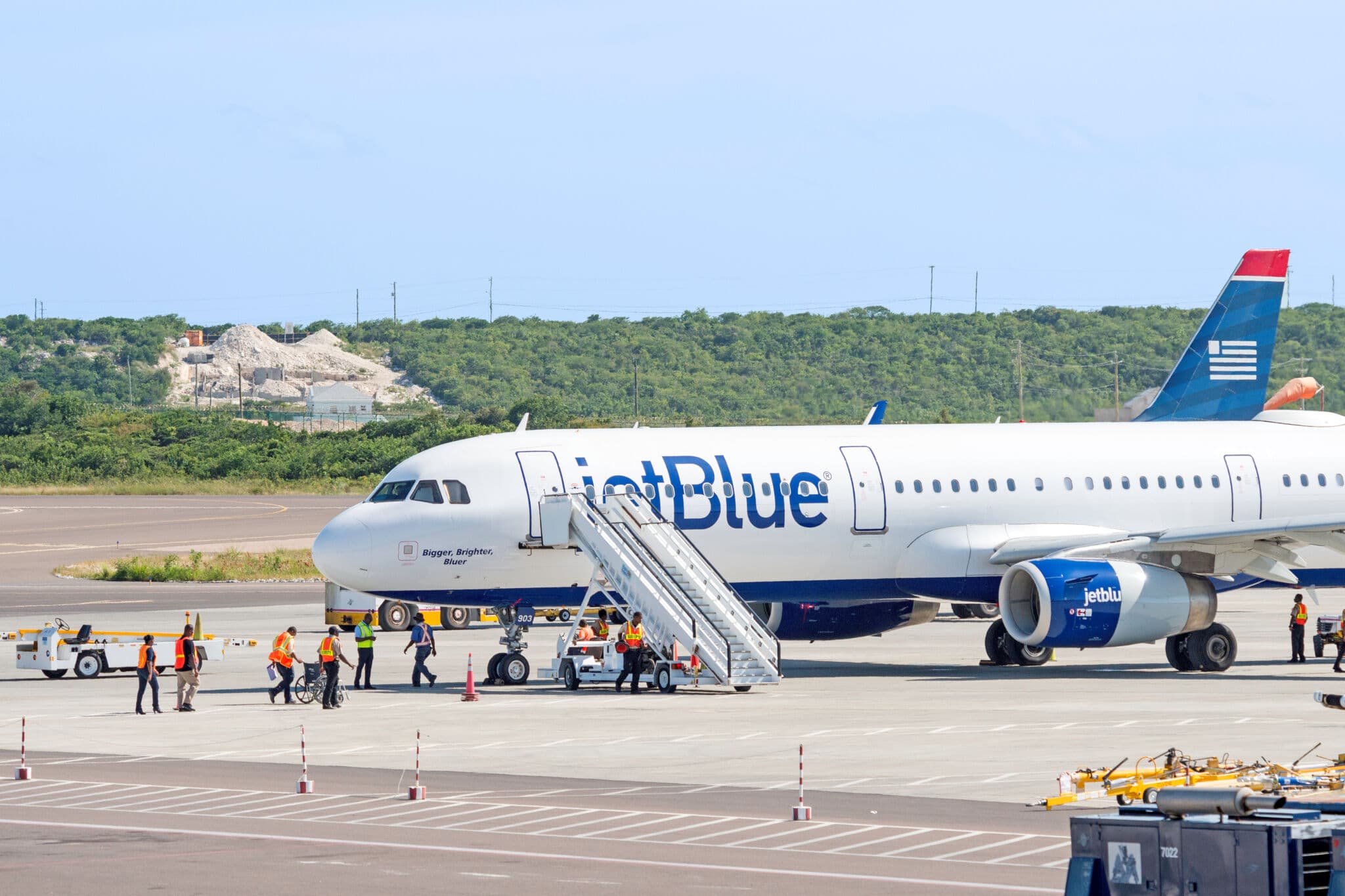
Almost everyone flies into Providenciales International (PLS), the country's main gateway; others use Grand Turk (GDT), South Caicos (XSC), or smaller airstrips. The arrivals process is short:
- 1 · ImmigrationPresent your passport and completed immigration form. The officer stamps your permitted stay.
- 2 · Baggage claimCollect your checked luggage.
- 3 · CustomsProceed through; complete a customs form only if you’ve exceeded your duty-free allowance, and declare anything restricted.
- 4 · Arrivals hallTaxis, pre-booked transfers, car-rental desks and tour operators are just outside. PLS is small and the arrivals area gets crowded when several flights land together. Have your form filled out and your pen back in your pocket before you reach the hall.
Skip the arrivals-hall scramble
Land, walk out, and find your name on a sign. Book a verified driver to your Grace Bay resort or villa before you fly.
Money matters
Good news for US travellers: the US dollar is the official currency of Turks and Caicos. No exchange, no mental math, no surprise conversion fees on every coffee. Just know that the islands are genuinely expensive, they import nearly everything, and prices reflect it.
| Feature | Details |
|---|---|
| Currency | US Dollar (USD), official currency; no exchange needed |
| Cards | Widely accepted at resorts, restaurants and shops |
| Government tax | A government accommodation tax (~12%) is added to hotel bills, with a similar tax on restaurant bills (TCI has no VAT or income tax), verify current rate |
| Service charge | Hotels and restaurants often add 10-15% service; tip on top only for exceptional service |
| Departure fees | Several departure-related fees (departure tax, airport development charge, security & user fees) totalling roughly US$60 are normally included in your airfare, confirm with your airline |
| Currency declaration | Declare cash of US$10,000+ |
| Electricity | 120V; US-style Type A & B plugs (UK/EU travellers need an adapter) |
| Driving | On the left; most tourists use their home licence for short stays, though some rental companies may require a temporary local permit, confirm with the rental company |
Best time to visit Turks and Caicos
Warm year-round, generally 27°C to 32°C (80°F to 90°F). The seasons split on rain, crowds and price.
| Season | Months | What to expect |
|---|---|---|
| Peak / dry | Nov to Apr | Sunniest, calmest seas, busiest and most expensive, book well ahead |
| Shoulder | May to Jun | Warmer, good value, occasional showers |
| Low / hurricane | Jun to Nov | Lowest prices, hottest, higher rain and storm risk, insure the trip |
Humpback whales pass through the Columbus Passage near Salt Cay and Grand Turk roughly January to April, one of the country's great wildlife spectacles. Dates vary year to year.
Health, water & food in Turks and Caicos
This is where the trip earns its keep.
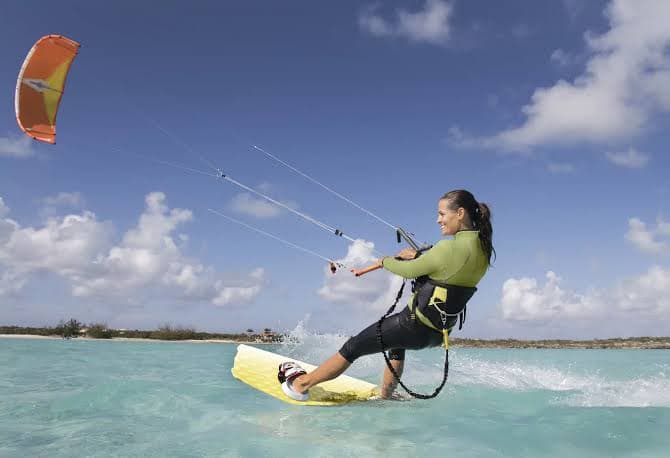
- Before you goCheck current advice with your doctor and an official health authority (CDC or your national equivalent). As of 2026 the TCI tourism board states all COVID-19 entry requirements have been removed, but verify before travel. Travel insurance with medical coverage is strongly recommended, especially if you’re diving, kiteboarding or boating, since serious care often means evacuation off-island.
- Food, the part that mattersThe honest truth is the islands run on conch. Cracked conch, fried golden and chewy-tender. Conch fritters with a beer at a shack with its feet in the sand. Conch salad cut and dressed in front of you, lime and scotch bonnet and onion, the freshest thing you’ll eat all trip. Find the grilled snapper, drink the rum punch you’ll regret at exactly the right moment. The resort buffet is fine; the plastic chair with the line out front is where the islands actually feed you. Most resorts provide treated or bottled water; bottled is the easy default.
- Sun & seaThe sun is relentless and the reef is sharp. Reef-safe sunscreen, shade, water, and water shoes if you’re exploring the rocks.
Top things to do in Turks and Caicos
Twelve miles of powder-white sand, the world's third-largest barrier reef, a surreal still-water lagoon and quiet outer islands that feel like the Caribbean before the resorts. Turks and Caicos is far more than its lobby bar.
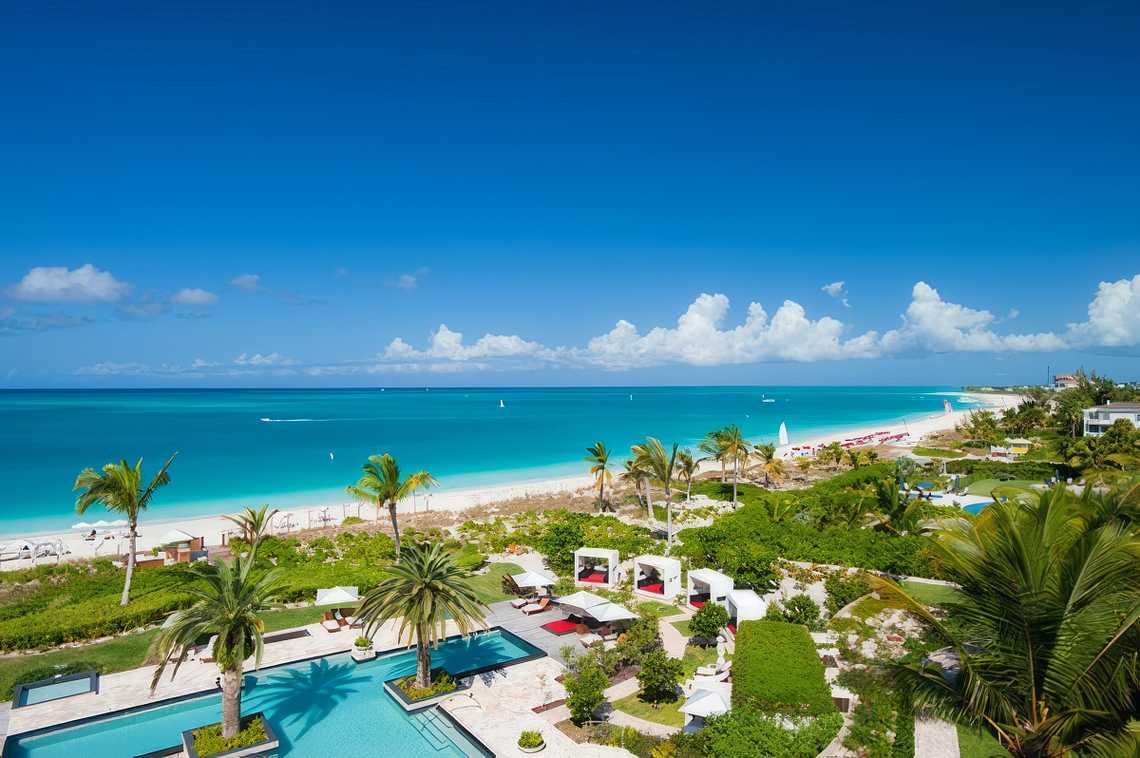
Grace Bay Beach
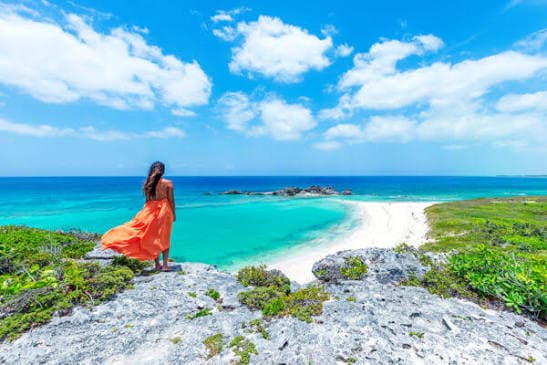
The headliner, and it earns it: twelve miles of powder-white sand and impossibly clear water on Providenciales, regularly ranked among the best beaches on earth. Calm, reef-protected, and exactly as good as the photos.

Snorkeling & diving the reef
TCI sits on the third-largest barrier reef system in the world. Snorkel the Bight Reef (Coral Gardens) right off the beach, or dive the dramatic wall that drops thousands of feet just offshore.
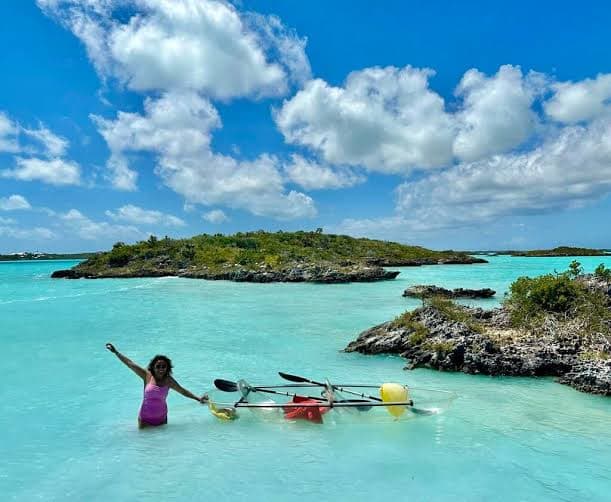
Chalk Sound
A surreal, enclosed lagoon of still, pale-turquoise water dotted with tiny rock islets, best seen by kayak or paddleboard.
A sample day in Turks and Caicos
Built around Providenciales, adapt it to your island. Beat the sun to the sand, snorkel before it heats up, conch for lunch, and rum punch as the sky goes orange.
- 8:00 amSlow startCoffee and breakfast, then beat the sun to the sand.
- 9:00 amGrace BayWalk the beach while it's quiet; swim before it heats up.
- 11:00 amSnorkel the Bight ReefRight off Coral Gardens, no boat required.
- 1:00 pmConch, obviouslyCracked conch or conch salad at a beachside shack.
- 3:00 pmChalk Sound or a boat tripPaddleboard the lagoon, or head out to the cays.
- 6:30 pmSunset & dinnerRum punch as the sky goes orange, then fresh fish to finish.
More time? Take the ferry to North & Middle Caicos, or a day boat to Iguana Island and the cays.
Where to stay, best islands & areas in Turks and Caicos
Each island has a distinct character, and choosing the right base shapes your whole trip. Here's how the most popular visitor areas compare:
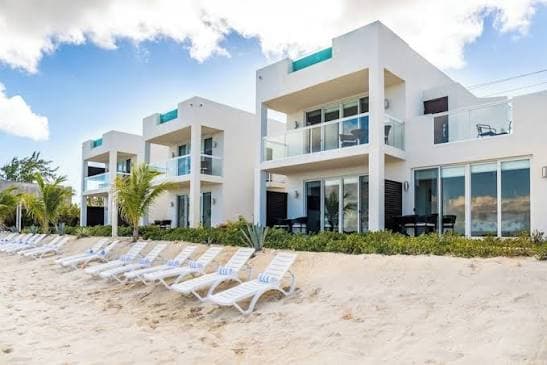
Providenciales (Provo)
The hub: Grace Bay's resorts, restaurants, dive shops and the airport. Best for first-timers and beach lovers (PLS).
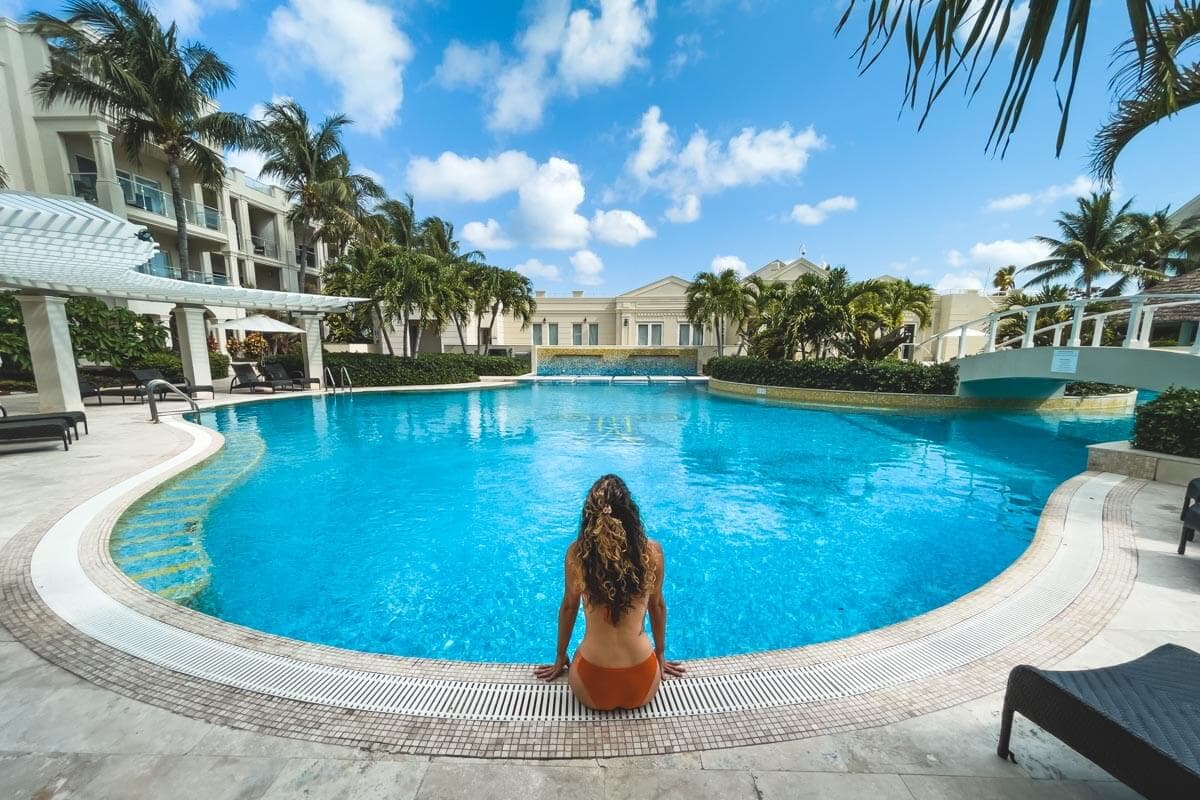
North & Middle Caicos
Quieter, greener and wilder. Best for empty beaches, caves and nature over nightlife.
Official Turks and Caicos resources
This is an independent travel guide by CustomsBreeze. Always confirm current requirements with the official sources below before you travel:
- borderforce.gov.tcTCI Border Force, entry requirements & passport rules
- gov.tc/immigrationMinistry of Immigration & Border Services, visas, extensions & forms
- gov.tcTCI Customs / Revenue Department, duty-free allowances & restricted goods