Last updated: August 9, 2026 · Entry requirements last verified: August 9, 2026 against France-Visas, the French Interior Ministry, French Customs (douane.gouv.fr), the official EU ETIAS pages and the Guadeloupe Islands Tourist Board.
Guadeloupe Entry Requirements, Customs & Travel Guide 2026
A butterfly-shaped archipelago where the boulangerie opens at six and the volcano steams behind it. Guadeloupe is an overseas region and department of France and an outermost region of the European Union, but it sits outside the Schengen Area. That makes the paperwork simpler than most of the Caribbean for some travellers and stranger than expected for others, because a standard Schengen visa does not by itself admit you. Here is what applies to you.
- Status
- Overseas region of France
- Airport
- Guadeloupe – Maryse Condé (PTP)
- Currency
- Euro (EUR)
- Language
- French & Creole
- Driving side
- Right
- Main islands
- Grande-Terre & Basse-Terre
- Entry authority
- French Border Police
- Best time
- Dec – May
What do I need, based on my nationality?
Requirements follow your citizenship. Guadeloupe applies French entry rules for the overseas departments, which overlap with, but are not identical to, the rules for mainland France. When you are unsure, the France-Visas visa wizard asks for your nationality, residence, trip purpose and destination, and answers for your exact case.
EU, EEA & Swiss Citizens
A valid national identity card or passport is enough. No visa, and no 90-day cap, because freedom of movement applies. For French citizens this is domestic travel within France.
U.S., Canadian & UK Citizens
A valid passport, no visa, for tourist stays of up to 90 days in any 180-day period. ETIAS does not apply, because Guadeloupe is outside the Schengen Area.
Why Guadeloupe is European but not Schengen
Guadeloupe is an outermost region of the European Union. EU law applies, the currency is the euro, and EU citizens have full freedom of movement. But the Schengen Agreement covers a defined territory that excludes France's overseas departments, so border checks still happen on arrival and Schengen travel documents do not transfer. In practice: a Schengen visa alone will not admit you here, and ETIAS and the EU Entry/Exit System apply at Schengen borders rather than at Pointe-à-Pitre. If you are connecting through Paris or another Schengen country, that leg follows Schengen rules on its own terms, and some nationalities need an airport transit visa even without leaving the terminal.
Do U.S. citizens need a visa for Guadeloupe?
No. U.S. citizens can visit Guadeloupe for tourism for up to 90 days within any 180-day period without a visa. What you do need is a valid passport. Unlike Puerto Rico or the U.S. Virgin Islands, this is foreign travel, and a driver's licence will not board you.
What to have ready at the border
- A passport valid past your stayThe exact validity rule depends on your nationality. France applies a three-months-beyond-departure and issued-within-ten-years standard at its Schengen borders, and many airlines apply a similar margin for the overseas departments, so six months is the safest planning assumption. Verify your own case on France-Visas before booking.
- Return or onward ticketBorder officers can ask to see proof that you are leaving within your authorised window.
- Accommodation detailsA hotel booking, gîte reservation or a host's attestation d'accueil if you are staying with someone.
Requirements for EU, EEA and Swiss citizens
Travelling to Guadeloupe from within the EU is close to domestic travel. A valid national identity card is sufficient; a passport is optional. There is no visa requirement and no 90-day cap on tourist stays, since freedom of movement applies. French citizens are simply moving between two parts of France.
One practical note: because Guadeloupe sits outside the EU VAT and excise territory, the goods you carry between mainland Europe and Guadeloupe are subject to duty-free style allowances rather than the unlimited personal movement you would have between, say, France and Spain.
Do Canadians need a visa for Guadeloupe?
No. Canadian citizens need only a valid passport to visit Guadeloupe for tourism, for up to 90 days in any 180-day period. No visa and no ETIAS are required, since Guadeloupe sits outside the Schengen Area.
Why Guadeloupe works well for Canadian travellers
- Seasonal direct flights from MontrealAir Transat and Air Canada Rouge have both run seasonal direct service from Montréal-Trudeau to Pointe-à-Pitre, cutting out a connection through Paris or Florida. Schedules change season to season, so confirm with the airline.
- French-speaking travellers have an advantageGuadeloupe is genuinely French rather than tourist-English. Québécois French carries you much further here than it would in most of the Caribbean, though the accent and some vocabulary differ from Antillean French.
- Provincial health coverage does not follow youRAMQ and other provincial plans generally do not cover care in Guadeloupe. Carry private travel medical insurance, as you would for any trip outside Canada.
Requirements for UK travellers
British citizens need a valid passport and can stay up to 90 days in any 180-day period without a visa. No ETIAS is required for Guadeloupe. If your itinerary routes through mainland France or another Schengen country, that leg is governed by Schengen rules, which is where the EU Entry/Exit System and, in time, ETIAS apply.
Who needs a visa, and which one?
If your nationality requires a visa for France, you need one issued for the French overseas departments, sometimes called a DFA visa for the départements français d'Amérique. This is the detail that trips people up: a Schengen visa, however valid, does not admit you to Guadeloupe. If your trip covers both Guadeloupe and mainland France, you need two separate visas.
- Check the territorial validityThe visa sticker states where it is valid. If Guadeloupe or the French overseas departments are not named, it will not work at PTP.
- Apply through a French consulateApplications go through the French embassy or consulate serving your country, with the usual documentation: passport, photos, itinerary, accommodation, insurance and proof of funds.
- Apply well in advanceProcessing times vary by nationality, consular post, season and application type. Book refundable travel until the visa is issued.
Is there a customs form for Guadeloupe?
There is no routine arrival card for tourists, and no online customs form to complete before you fly. Guadeloupe uses the standard French red-channel, green-channel system: you declare only if you have something to declare. Walk through the green channel if your goods are within the allowances, and use the red channel if they are not.
When you must file a declaration
You need to complete a customs declaration if you exceed the duty-free allowances below, if you are carrying restricted or prohibited goods, or if you are carrying cash and equivalent bearer instruments worth €10,000 or more (French Customs). The threshold covers cash, bearer instruments, gold and prepaid cards; it can be filed online in advance through the DALIA service. The rule is enforced, and failing to declare carries real penalties.
Duty-free allowances on arrival
Guadeloupe sits outside the EU VAT and excise territory, so allowances apply even when you are arriving from mainland France. Typical limits for air travellers:
| Category | Allowance | Notes |
|---|---|---|
| Goods & souvenirs | Up to €430 | Per air traveller aged 15 and over; €150 for travellers under 15 |
| Tobacco |
Driving in Guadeloupe: right side, French rules, mountain roads
Guadeloupe drives on the right, with French road signage and European roundabout conventions. If you drive in North America or continental Europe, the mechanics will feel familiar. The challenge here is the terrain and the traffic, not the side of the road.
- The Pointe-à-Pitre area jams badly at rush hour; budget extra time crossing between Grande-Terre and Basse-Terre
- Basse-Terre's mountain roads are narrow, steep and often wet, with limited guardrails on the Route de la Traversée
- Signage is in French only, and GPS coverage in the rainforest interior can be patchy
- Public transport is more limited outside the main towns, so most visitors exploring beyond the resort strips rent a car

Run a car rental company or restaurant in Guadeloupe?
Customs Breeze lists local rental companies and restaurants for travelers planning their visit. You can also contact us about getting listed.
Planning a different island? Browse car rentals in other Caribbean destinations or restaurants across the Caribbean and Central America.
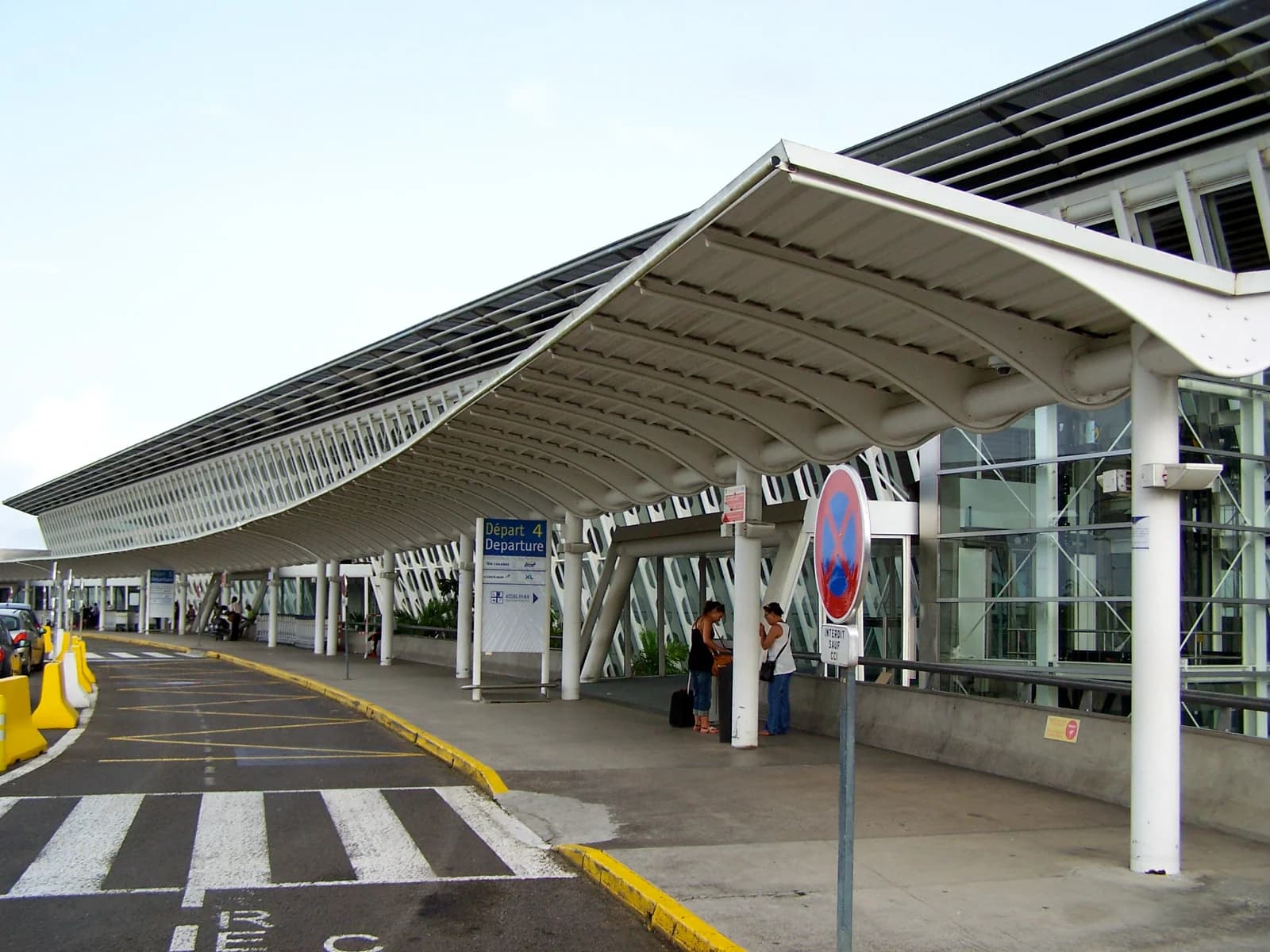
Guadeloupe – Maryse Condé Airport (PTP) Arrival Guide
Guadeloupe – Maryse Condé Airport, renamed from Pôle Caraïbes in 2024, sits in Les Abymes just outside Pointe-à-Pitre and is the archipelago's main international gateway.
- Airport code
- PTP
- Distance to Pointe-à-Pitre
- ~3 km
- Distance to Le Gosier
- ~10 km
- Ground transport
- Taxi, rental car, transfer
Arrivals clear French border police, so expect a passport check and an entry stamp if you are a third-country national. Wait times vary with the arrivals schedule, and long-haul flights from Paris arrive as large single waves. Rental desks sit in the arrivals hall, and the airport is served by taxis, rental cars and the Karu'lis public transport network. Taxi fares are metered, with higher night and Sunday tariffs published by the operator, so a pre-booked transfer is often the calmer option after a long flight.
Where to stay in Guadeloupe
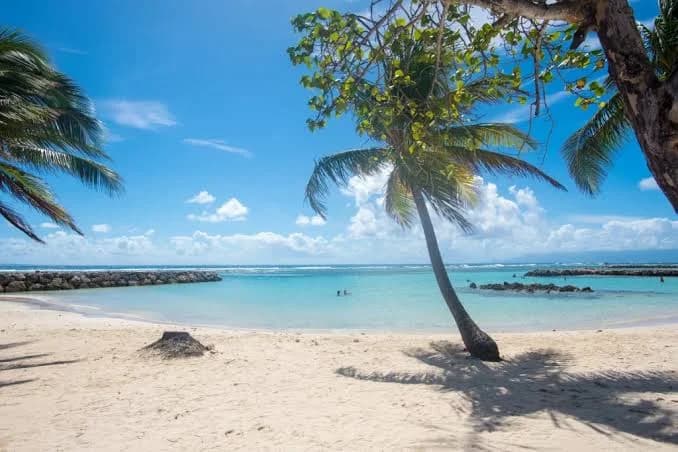
Le Gosier & Sainte-Anne
The south coast of Grande-Terre: calm swimming beaches, most of the island's hotels, and a short drive from the airport. Best for first-time visitors and families.
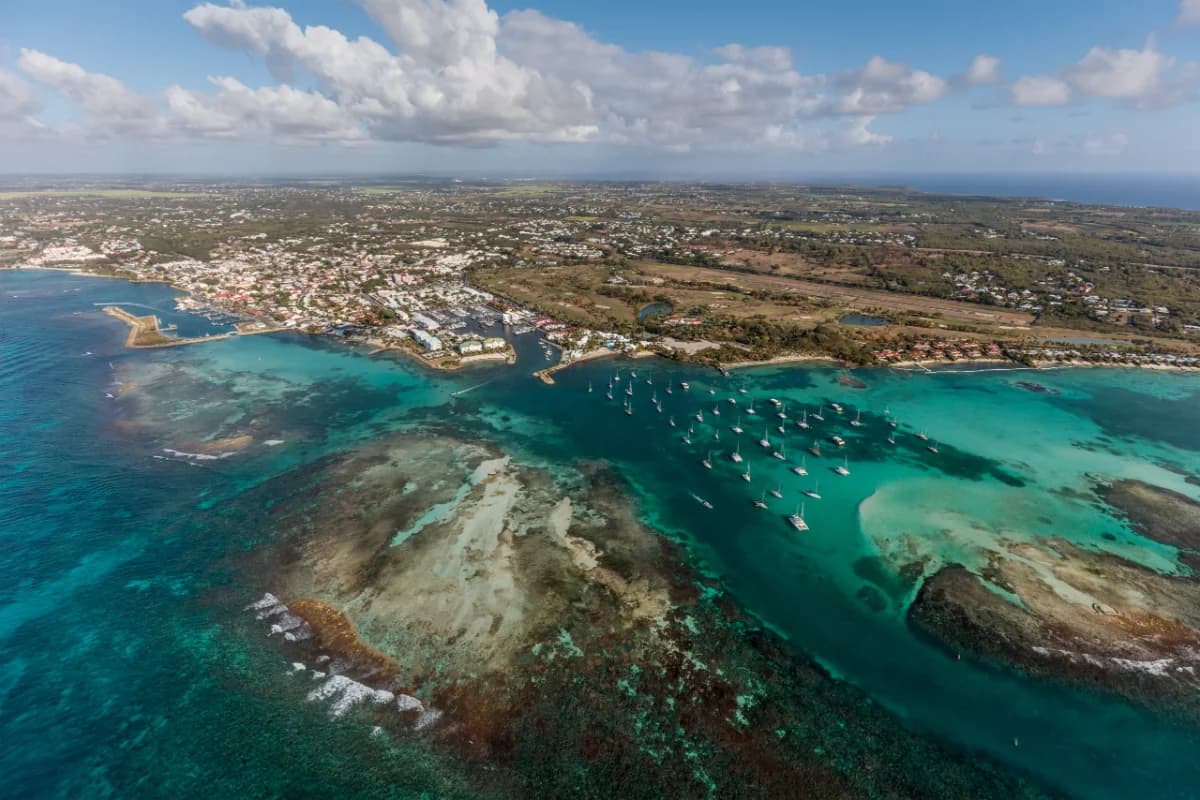
Saint-François
A marina town at the eastern tip with the best concentration of restaurants, plus ferries to La Désirade and Marie-Galante. Best for food and easy island-hopping.
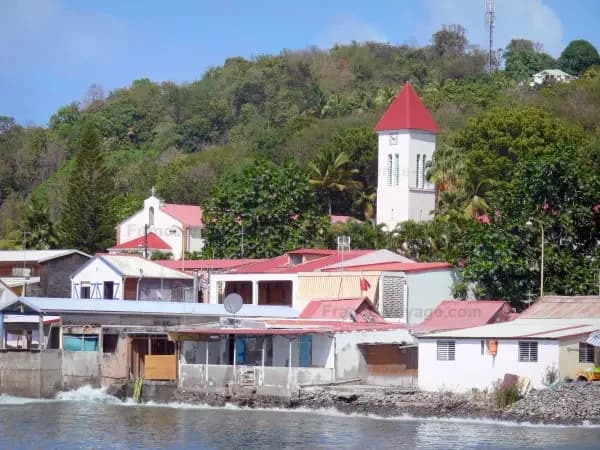
Deshaies & Bouillante
Basse-Terre's west coast: fishing villages, black-sand coves, the botanical garden and the Cousteau reserve.
Top things to do in Guadeloupe

La Soufrière Volcano
An active volcano and the highest point in the Lesser Antilles. The summit hike takes about two hours through steam vents and cloud forest.
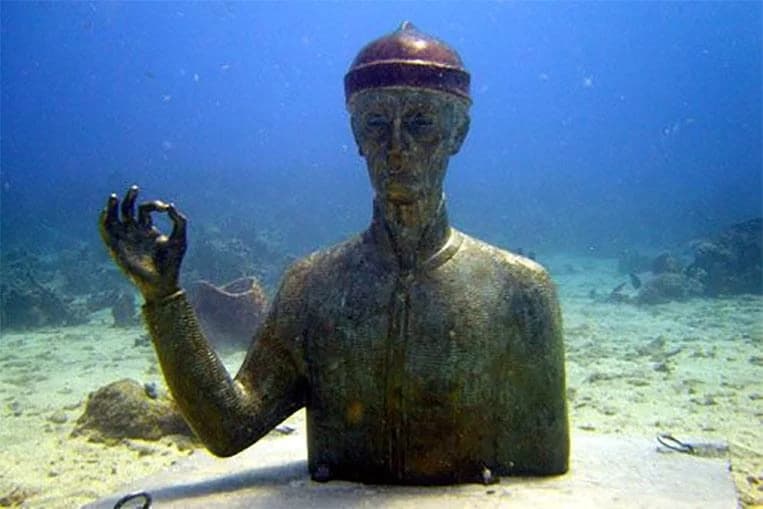
Cousteau Reserve
The marine reserve off Pigeon Island that Jacques Cousteau helped protect, and still the best diving and snorkeling on the archipelago.
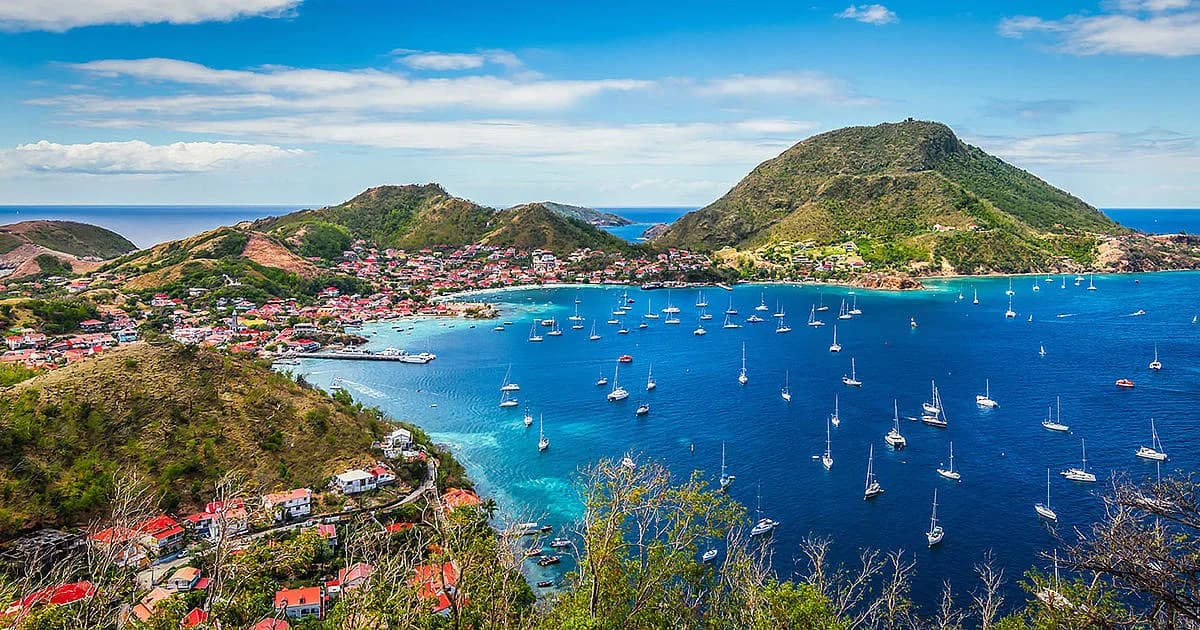
Les Saintes
A ferry ride to one of the world's most photographed bays, with a fort on the hill and goats on the road down.

Best time to visit Guadeloupe
| Season | Months | What to expect |
|---|---|---|
| Carême (dry season) | Dec – May | Warm, dry and breezy. Busiest and most expensive, especially around Carnival. Book well ahead |
| Shoulder | May – Jun | The end of the dry season into the start of the wetter months: greener, with occasional showers, fewer visitors and better rates |
| Hivernage & hurricane season | Jun – Nov | Humid with heavier rain. Hurricane season runs June to November, with peak risk around August and September. Lowest prices; watch forecasts and consider insurance |
Practical travel information
Travel checklist
EU / EEA / Swiss
- Valid national ID card or passport
- No visa, no 90-day cap
- EHIC card for healthcare
U.S. & Canadian
- Valid passport covering your stay
- No visa for stays up to 90 days
- Return ticket and accommodation details
Official resources
Customs Breeze is an independent travel resource, not a government service. Confirm current entry requirements with official sources before you fly:
- france-visas.gouv.frOfficial French visa portal: the visa wizard covers the overseas departments separately from Schengen
- France in the Schengen areaFrance-Visas: confirms the overseas departments sit outside the Schengen Area and need their own visa