Puerto Rico · Caribbean · an unincorporated territory of the United States
Puerto Rico Entry Requirements & the Customs-Form Question
Here is the good news: for US travelers there is no customs form. Puerto Rico is a Caribbean island that is part of the United States, so if you are a US citizen or permanent resident flying in from the mainland, this is a domestic trip — no passport, no visa, no customs declaration. International visitors from Europe, Canada, Latin America and the Caribbean follow US entry rules (ESTA or a US visa) and clear US Customs and Border Protection in San Juan. The one inspection most travelers run into comes on the way home: the USDA agricultural screening of every bag leaving the island for the mainland.
- Status
- US territory (US dollar, US law)
- Main airport
- Luis Muñoz Marín (SJU)
- Currency
- US dollar (USD)
- Language
- Spanish & English
- Time zone
- Atlantic (UTC-4, no DST)
- Best time
- Dec to Apr
- Power
- 120V · Type A & B (US plugs)
- Entry form
- None for US travelers
A note on accuracy. Puerto Rico is part of the United States, so federal agencies set the rules: the TSA for what ID you need to fly, US Customs and Border Protection for international arrivals, and the USDA (APHIS) for the agricultural inspection on departure. Everything here was checked against those federal sources, but rules and prohibited-item lists change. Confirm the current requirements through the official links below before you travel.
Do I need a customs form for Puerto Rico? (No, and here is why)
Puerto Rico is an unincorporated territory of the United States and sits inside the US customs and immigration zone. That one fact does most of the heavy lifting here. There is no arrival customs declaration form, no immigration counter, no entry fee when you fly in from the mainland. You are not “entering a country.” You never left the one you started in.
What actually applies comes down to who you are and where you're flying from:
- US citizens & permanent residents, from the mainlandA domestic trip. No passport, no visa, no form. Bring a REAL ID-compliant license, or another TSA-accepted ID such as a US passport, for the flight and you're set. The only checkpoint you'll meet is the USDA bag screening on the way out.
- International visitors, arriving directly into Puerto RicoPuerto Rico is a US port of entry. You clear US Customs and Border Protection and need the same documents you'd need for the mainland: an approved ESTA or a US visa.
- Anyone connecting onward to the US Virgin Islands or other islands
Coming from Europe, Latin America or the Caribbean? Entry rules by where you fly from
Puerto Rico keeps US time, US money and US law, but it is still an island in the middle of the Caribbean, and people arrive from everywhere. The rule that decides your entry requirement is not where Puerto Rico sits on the map — it is the passport in your pocket and the country you took off from.
| Where you're traveling from | What you need for Puerto Rico | Arrival |
|---|---|---|
| US mainland (citizens & residents) | REAL ID-compliant ID or US passport. No visa, no form | Domestic; no checkpoint |
| Europe & the UK (Visa Waiver countries) | Passport + an approved ESTA. No separate Puerto Rico form | Clear US CBP on arrival |
| Canada | Valid passport; tourists usually need no visa, but must meet US entry rules | Clear US CBP on arrival |
| South America (Brazil, Argentina, Colombia, etc.) | Usually a US B-2 visitor visa in advance; Chile uses ESTA | Clear US CBP on arrival |
| Central America & Mexico | US visa in advance (Mexicans may use a B1/B2 or BCC) | Clear US CBP on arrival |
| Other Caribbean islands | Depends on nationality: ESTA, a US visa, or none for US citizens | Clear US CBP on arrival from a foreign island |
The one inspection that matters: USDA agricultural screening on departure
This is the part that catches first-timers off guard. Because Puerto Rico is a tropical island, the US Department of Agriculture (USDA / APHIS) screens every bag leaving for the US mainland, checked and carry-on alike, to keep plant pests and diseases from hitching a ride north. Your luggage goes through a USDA inspection station, usually before you ever reach the airline check-in counter at SJU. Get there early.
- 1Find the USDA inspection first
At Luis Muñoz Marín (SJU), bags get screened at a USDA station before check-in. It's fast, but a long line at a busy hour can swallow 20 to 30 minutes. Build in the buffer.
- 2Leave the prohibited produce behind
Certain fresh fruits and plants that can carry pests simply do not get to leave. See the list below. If you're not sure about a souvenir, declare it to the agent — better that than watching them take your whole bag apart.
- 3Pack the good stuff with confidence
Rum, coffee, hot sauce, sealed sweets, baked goods and most souvenirs travel just fine. This is a plant-and-pest screening, not a duty check. There is no customs allowance to sweat between Puerto Rico and the mainland.
What you can, and can't, bring back to the mainland
Many fresh fruits, vegetables, plants and other agricultural products may be restricted or prohibited, and the USDA list shifts with pest conditions. The golden rule never changes: when in doubt, declare it.
| Category | Status leaving Puerto Rico |
|---|---|
| Rum, coffee & processed foods | Allowed. Puerto Rican rum, roasted coffee, hot sauce, sealed candy and baked goods travel freely |
| Most tropical fruit | Generally not allowed. Fresh fruits that can carry pests (soursop / guanábana, certain mangoes, citrus with leaves) are typically prohibited |
| Plants & cuttings | Restricted. Live plants, cuttings and seeds usually need a permit; soil is prohibited |
| Cut flowers & foliage | Some allowed, some restricted. Certain species (those with berries or soil) are held back; ask the USDA agent |
| Cash & currency | No customs declaration between PR and the mainland; US reporting rules apply for international travel |
Figures cross-checked against USDA APHIS guidance for travelers leaving Puerto Rico; the prohibited-produce list is updated periodically.
What ID do I need to fly to Puerto Rico?
Because it's a domestic US flight, you bring what you'd bring for any flight inside the United States. The REAL ID rules apply.
- A REAL ID-compliant ID (adults)Since May 2025, the TSA wants a REAL ID-compliant driver's license (look for the star) or another accepted ID to board domestic flights. A plain non-REAL-ID license no longer cuts it on its own.
- Or a US passport / passport cardEither one works at the TSA checkpoint if your license isn't REAL ID-compliant. You don't need a passport for Puerto Rico, but it's a painless fallback.
- ChildrenKids under 18 generally don't need ID for domestic flights when traveling with an adult. Confirm your airline's policy anyway.
Do I need a visa for Puerto Rico? Visa rules & length of stay
It depends on your passport, because Puerto Rico runs on US federal entry rules. US citizens and residents need nothing. Everyone else gets admitted under the same system that governs the rest of the country.
| Traveler | What's required | Typical stay |
|---|---|---|
| US citizens & permanent residents | No passport, no visa (REAL ID to fly) | No limit; it's US soil |
| Visa Waiver Program countries (UK, EU, etc.) | Approved ESTA + passport | Up to 90 days (US admission) |
| Canada | Passport; short tourist visits usually need no visa, but US entry rules still apply | As granted by CBP |
| Visa-required nationalities | US visa (e.g. B-2 tourist) in advance | As granted on the visa |
How long can I stay in Puerto Rico?
US citizens and residents can stay as long as they please. International visitors are bound by the terms of their US admission: the 90-day Visa Waiver Program stay, or whatever their visa allows. That clock runs against the United States as a whole, not Puerto Rico on its own.
Prohibited & restricted items
Two different rulebooks apply depending on which way you're pointed. When in doubt, declare.
- Leaving PR: fresh produce, plants & soilThe USDA holds back fresh fruits and plants that can carry pests, plus soil and unpermitted live plants. This is the inspection almost every departing visitor runs into.
- Arriving from abroad: standard US prohibitionsFor international arrivals, US CBP rules apply: no illegal drugs, no Cuban-origin goods beyond the allowance, no counterfeit items, and agricultural products must be declared.
- Firearms & weaponsFederal and Puerto Rico law both apply. Flying with a firearm follows TSA rules (declared, unloaded, locked hard case); Puerto Rico layers its own strict local weapons laws on top.
Arriving at Luis Muñoz Marín International (SJU)
Most visitors land at Luis Muñoz Marín International (SJU) in Carolina, just east of San Juan. Rafael Hernández (BQN) in Aguadilla and Mercedita (PSE) near Ponce handle the west and south. Arriving from the mainland is almost suspiciously simple:
- 1 · No immigration or customsFrom the mainland you just walk off the plane. No counters, no forms. International arrivals clear CBP first.
- 2 · Baggage claimCollect your checked luggage on the lower level.
- 3 · Ground transportOfficial taxis (fixed tourist-zone rates from SJU), rideshare, rental desks and pre-booked transfers are all just outside.
- 4 · Onward to the islandsFerries and short flights from SJU and Ceiba (RVR) connect to Vieques and Culebra.
Skip the airport scramble
Land, walk out, and find your name on a sign. Book a local driver to your Condado, Isla Verde or Old San Juan hotel before you fly.
Money matters
Puerto Rico makes life easy for US travelers: the money is the US dollar, the outlets are the same, and your US phone plan usually treats the island as home turf.
| Feature | Details |
|---|---|
| Currency | US dollar (USD); no exchange needed for US travelers |
| Cards & ATMs | Widely accepted; ATMs everywhere in San Juan and tourist areas |
| Sales tax (IVU) | About 11.5% on most goods and prepared food, often added at the register |
| Tipping | US-style: 15 to 20% at restaurants; check whether a service charge is already on the bill |
| Mobile data | Most US carriers treat Puerto Rico as domestic; confirm with your plan |
| Electricity | 120V, Type A & B (US plugs); no adapter needed for US devices |
| Driving | On the right; US and Canadian licenses are valid. Speed limits in mph, distances often in km |
Best time to visit Puerto Rico
Warm all year, generally 78°F to 88°F (26°C to 31°C). The island also sits inside the hurricane belt, so the calendar matters.
| Season | Months | What to expect |
|---|---|---|
| Peak / dry | Dec to Apr | Sunniest and driest, also busiest and priciest; book early, especially around the holidays |
| Shoulder | May to Jun | Warm, better value, the odd afternoon shower |
| Low / hurricane | Jun to Nov | Hottest and wettest, higher storm risk, best deals; insure the trip |
Health, water & food in Puerto Rico
- WaterTap water in San Juan and most populated areas is treated to US EPA standards and is generally safe. Bottled water is everywhere if you'd rather, especially right after a storm.
- Before you goUS healthcare standards apply, and US health insurance generally behaves as in-network or domestic. Confirm with your provider. Check current CDC advice for the Caribbean, including mosquito-borne illness precautions.
- SunStrong year-round. Reef-safe sunscreen, shade and water — especially the first days and on the cays.
Food is the Heart of Puerto Rico
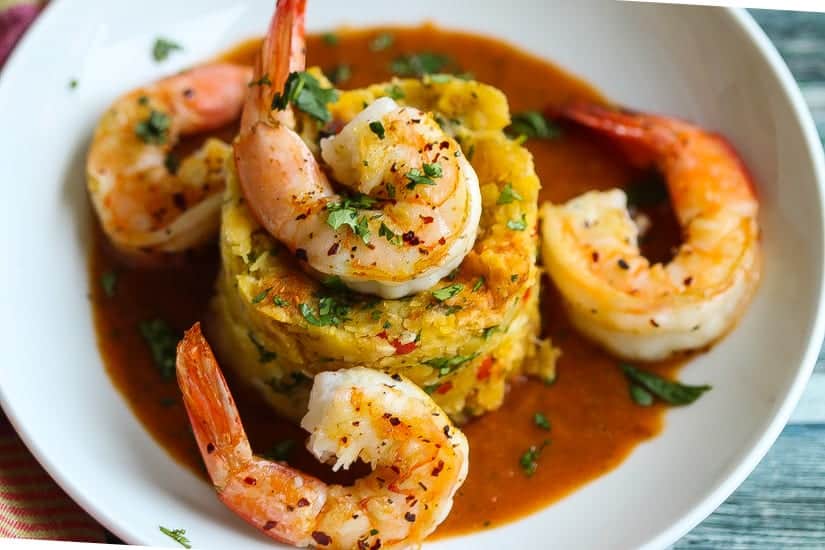
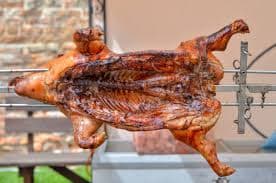
You want to understand Puerto Rico? Start at the table. And the right table might be a roadside kiosko in Luquillo, a smoke-wreathed lechonera up in the hills of Guavate, or a plastic chair planted in the sand with a cold Medalla sweating in your fist.
Top things to do in Puerto Rico
Five centuries of history, the only tropical rainforest in the US forest system, glowing bays and two car-free islands offshore. Here's where to start.
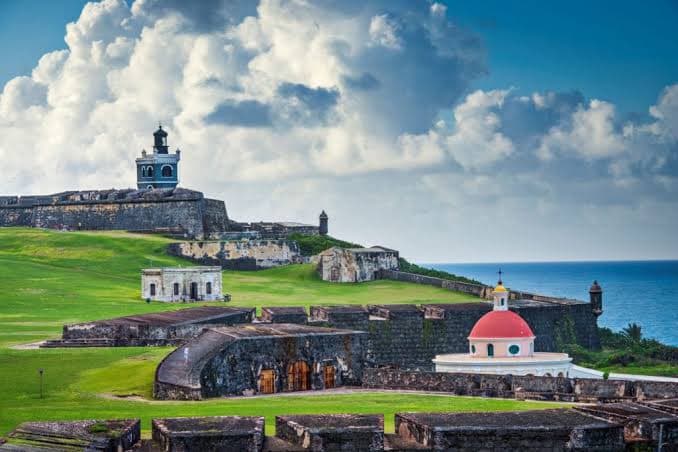
Old San Juan & El Morro
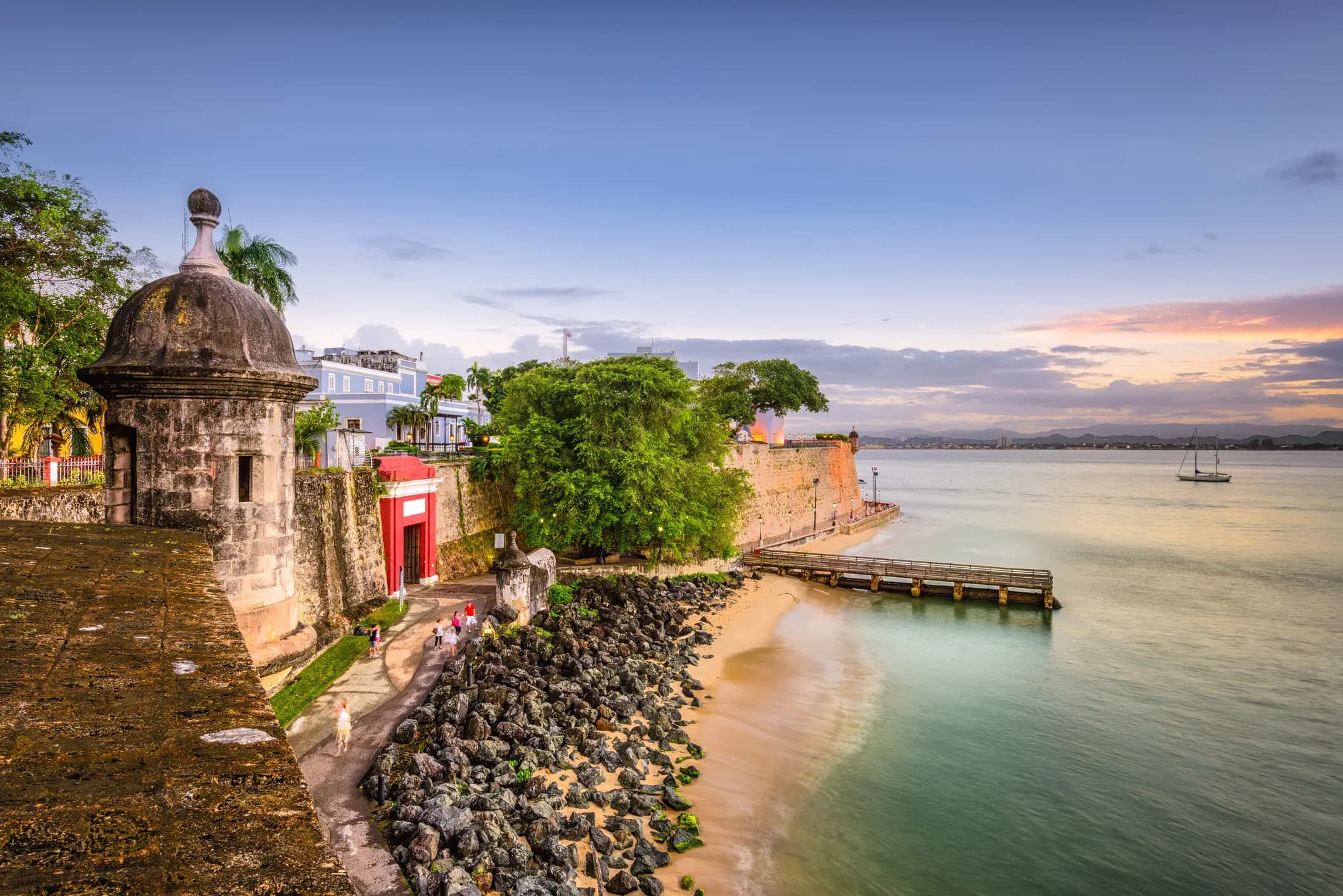
Five hundred years of blue cobblestones, pastel facades and the great seaside forts of El Morro and San Cristóbal. A UNESCO World Heritage site you can wander for a whole day.
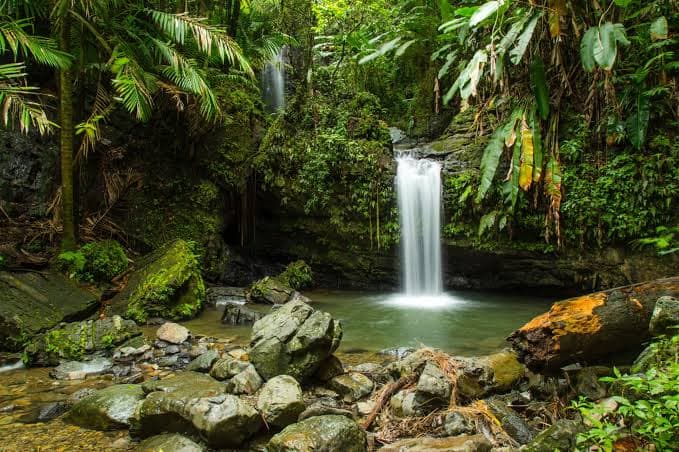
El Yunque National Forest
The only tropical rainforest in the US National Forest System: waterfalls, natural pools, lookout towers and the chorus of the tiny coquí frog.

Bioluminescent bays
Paddle after dark through water that lights up at every stroke. Mosquito Bay on Vieques is the brightest in the world; Laguna Grande near Fajardo is the easy day-trip.
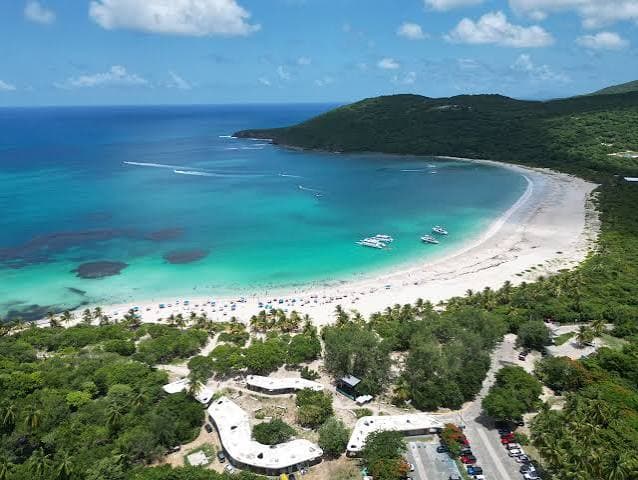
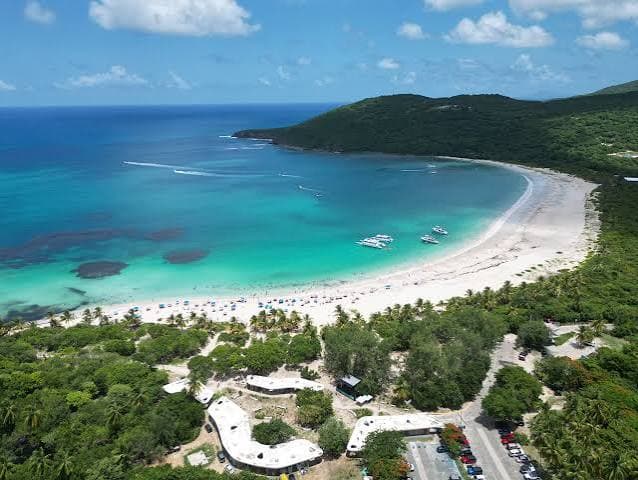
Culebra & Flamenco Beach
A sample day in San Juan
Beat the heat in the old city, cool off in the rainforest, then end on the sand with a plate of fried snacks and a cold Medalla.
- 8:00 amCoffee & mallorcaA cortadito and a sweet, buttery mallorca before the heat builds.
- 9:00 amOld San JuanWalk the cobblestones to El Morro before the cruise crowds arrive.
- 12:00 pmMofongo lunchA proper sit-down plate in the old city, or kiosko snacks if you're moving fast.
- 2:00 pmEl Yunque or the beachDrive 45 minutes to the rainforest waterfalls, or straight to Isla Verde / Condado sand.
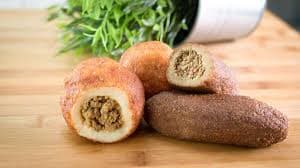
- 6:00 pmSunset at the kioskosLuquillo's row of food stands for alcapurrias, pinchos and a cold Medalla.
- 9:00 pm
Where to stay in Puerto Rico
Each area has a distinct character, and choosing the right base shapes your whole trip.

San Juan
Condado & Isla Verde
Beachfront hotels, dining and nightlife minutes from the airport and Old San Juan. Best for first-timers and an easy base.

San Juan
Old San Juan
Sleep inside the historic walls amid forts, plazas and restaurants. Best for history and atmosphere.